
Lieferung heute & morgen

Qualitätsgarantie

Willkommens-Angebote freischalten: KOSTENLOSE Lieferung | Bis zu 80 % RABATT | Kostenlose 30-Tage-JoyPlus-Testphase
App herunterladen
A wooden chopping board is part of the everyday essentials in many German kitchens. Even so, some product claims can lead to poor purchasing decisions: one board may look sturdy in product images but be too thin for vigorous chopping. Another may have a decorative surface but be difficult to use hygienically for separate food preparation. The term “antibacterial” is no substitute for proper cleaning and drying either.
Before buying, you should check three common pitfalls:
A bamboo chopping board is made from a fast-growing grass and, depending on the design, is manufactured from several bonded strips or a solid panel. Bamboo is often described in product information as dense and hard-wearing. However, whether a particular design is right for you also depends on its construction, thickness and care instructions.
A walnut chopping board stands out thanks to its darker colour. Depending on its shape, it can be used both for food preparation and as a serving board. Variations in colour and grain are normal with natural wood.
Acacia wood is often used for a wooden cheese board or a decorative serving board. For example, the Secret-de-Gourmet-Mina design has a diameter of 30 cm and, according to the product description, is intended for cheese, cold meats, fruit and snacks.
Beech is another classic type of wood for a kitchen wooden board. The Suncha beechwood board is listed as measuring 34 × 24 × 2.2 cm. For regular chopping, it is not just the type of wood that matters: a smooth surface and sufficient material thickness are also important.
A compact board may be enough for small kitchens or occasional food preparation. Families and keen home cooks often benefit from a working surface measuring around 40 cm or more in length. A large chopping board gives you more room for vegetables, bread or several ingredients, but it also requires a sufficiently large, non-slip surface to stand on.
Pay attention to the following details:
The WMF Bamboo Cutting Board Natural measures 45 × 30 × 1.9 cm. The Suncha Solid Bamboo Cutting Board with Handle is listed as measuring 45 × 32 × 2.6 cm. The differences in thickness and format are noticeable in everyday use: the larger, thicker model provides more working space, but also takes up more storage room.
A chopping board with a juice groove can catch liquid when cutting or carving. This is particularly practical for fruit, vegetables or cooked meat. The groove should be sufficiently wide and easy to access so that it can be cleaned thoroughly.
A chopping board with a handle makes it easier to carry from the kitchen to the table. A handle is also useful on a serving board. For a board used with raw animal products, it is advisable to keep it clearly separate from other cutting surfaces. A reversible design can help with this, but should not be seen as a substitute for thorough cleaning.
For food contact, you should follow the manufacturer’s instructions. Stop using a wooden or bamboo board if you notice deep cracks, significant warping, mould or splinters.

Why this product suits the profile: The rectangular format provides a practical working surface for vegetables, bread and smaller preparation tasks.
The stated 1.9 cm thickness and juice groove are clearly specified; care is by hand washing.
45 × 30 cm, reversible design and a perimeter groove to catch liquids.
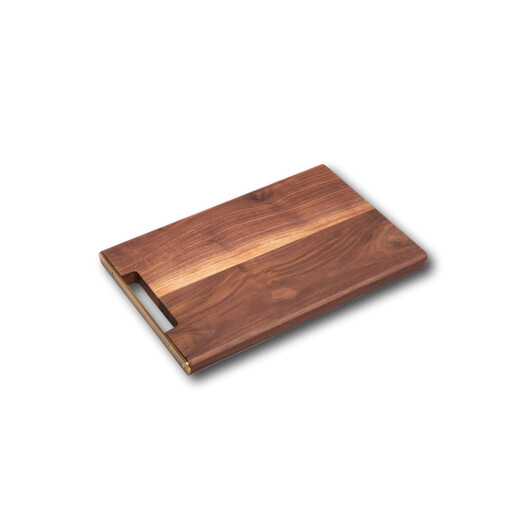
Why this product suits the profile: Walnut wood, a 20 mm thickness and a copper-coloured handle combine a functional working surface with an impressive serving option.
The product information clearly states the material, dimensions and care restrictions. Soaking and dishwasher use are not recommended.
36 × 25 cm, 20 mm thickness and integrated handle for carrying and presentation.

Why this product suits the profile: Three formats allow you to assign each board to different preparation tasks, from a small snack to a larger meal.
The set sizes, juice grooves and handles are listed in the product details. All boards are intended for hand washing.
Three sizes, each with a handle and juice groove; suitable for chopping and serving.
We have put together a complete, regularly updated list of products that fully meet these strict selection criteria and the safety regulations applicable in the EU.
After use, wash a wooden or bamboo board with warm water and a mild cleaning product. Dry it immediately and stand it upright wherever possible so that moisture can escape. Do not soak it or put it in the dishwasher unless the manufacturer expressly permits this.
Many natural wood products are recommended for occasional treatment with food-safe mineral oil. Do not use harsh abrasive cleaners or wire wool. Raw meat and fish should preferably be prepared on a clearly designated side or on a separate kitchen chopping board. If deep cuts, cracks or warping appear, replacing the board is advisable.
A smooth wood or bamboo surface is often described in product information as a knife-friendly chopping board. The actual strain placed on the blade also depends on the knife angle, pressure and care. Hard, damaged or heavily scored surfaces should be replaced.
For regular meals, formats measuring around 40 to 45 cm in length are practical, provided your worktop and storage space allow for them. A 45 × 30 cm board offers more room than a compact model, but is more difficult to store and clean.
It is not possible to give a fixed lifespan in general terms. This depends on the material, thickness, moisture, intensity of use and care. Hand washing, thorough drying and occasional oiling can help maintain its usability. If the board develops cracks, mould or significant warping, it should no longer be used for food.