
Lieferung heute & morgen

Qualitätsgarantie

Willkommens-Angebote freischalten: KOSTENLOSE Lieferung | Bis zu 80 % RABATT | Kostenlose 30-Tage-JoyPlus-Testphase
App herunterladen
A wooden chopping board can be used for everyday cooking, baking and serving. However, the range is larger than it may initially appear: bamboo, acacia, walnut and rubberwood differ in weight, surface, format and care requirements. If you focus only on an attractive grain or particularly large dimensions, it is easy to overlook important details.
Bamboo is often marketed as a sustainable material. On its own, however, this says nothing about the construction. Check whether it is made from solid bamboo, glued strips or a multi-layer design. Details about the material, dimensions and care should be clearly stated in the product description.
Natural variations in colour and grain are also normal with a wooden kitchen board. A uniform appearance should therefore not automatically be considered a sign of quality.
A small board is easy to store, but it can quickly become crowded when preparing large vegetables, loaves of bread or several ingredients. A large chopping board measuring around 40 to 50 cm in length provides more space, but it also requires a sufficiently large work surface and a suitable place to store it.
Many wooden and bamboo boards are not dishwasher-safe. Heat, prolonged contact with water and significant temperature changes can encourage warping, cracks or a rough surface. Buying a hand-wash-only chopping board is therefore not a disadvantage – what matters is whether the daily cleaning routine suits your habits.
A bamboo chopping board is often relatively lightweight and has a dense surface. Among the products considered here, whole bamboo pieces, solid bamboo and carbonised bamboo are mentioned. The specific construction affects stability, weight and appearance.
Wood types such as beech, acacia, walnut and rubberwood each offer their own grain and feel. With a wooden chopping board, it is not just the type of wood that matters, but also the workmanship: a sufficiently thick board sits more securely on the work surface than a very thin one.
For everyday use, dimensions of around 30 × 20 cm are compact and easy to store. Formats of approximately 34 × 24 cm or 40 × 28 cm are better suited to regular food preparation. Extra-large models measuring 45 × 32 cm or 50 × 35 cm offer plenty of work surface, but are heavier and require more space.
A thickness of around 17 to 30 mm can provide additional stability. Nevertheless, you should also consider the actual weight and underside, as a thick board is not automatically slip-resistant.
A juice groove can catch liquid from juicy fruit, vegetables or meat at the edge. However, it does not reduce the cleaning required and does not replace separate preparation areas for raw and ready-to-eat food.
A chopping board with a handle is easier to carry from the kitchen to the table and can be hung up to save space. A round chopping board is particularly suitable as a serving board, cheese board or charcuterie board. For precise cutting on the work surface, a rectangular format is often more practical.
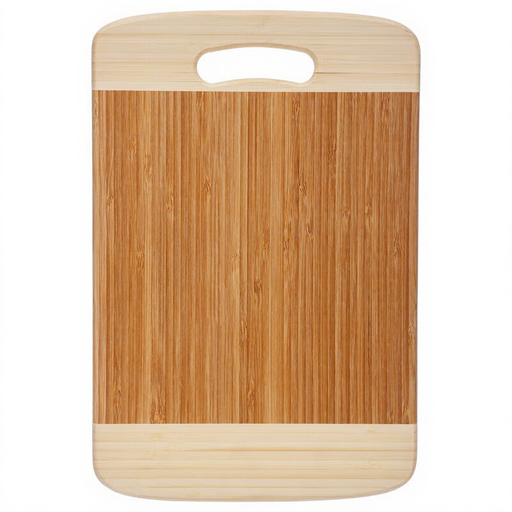
Why this product suits the profile: The compact format is ideal for smaller kitchens, simple food preparation and shoppers looking for an easy-to-store wooden kitchen board.
The dimensions are clearly stated. The recommended hand washing makes the care requirements transparent; soaking and dishwasher use should be avoided.
30 × 20 cm, integrated handle, bamboo material and hand cleaning.
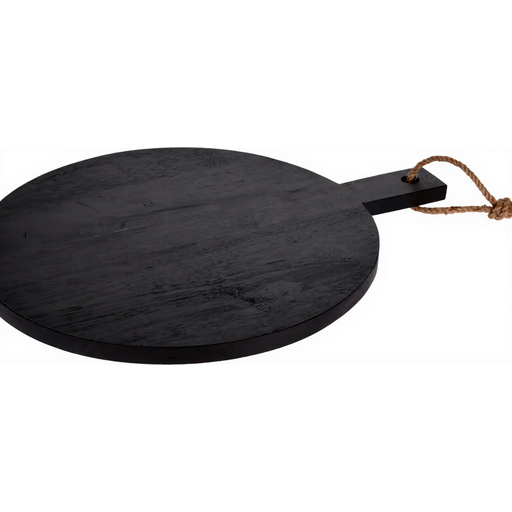
Why this product suits the profile: The round format combines kitchen preparation with use as a serving, cheese or charcuterie board.
The product details explicitly recommend hand washing with mild washing-up liquid, thorough drying and avoiding soaking and dishwasher use.
Solid rubberwood, round shape and, according to the product description, a knife-friendly surface.
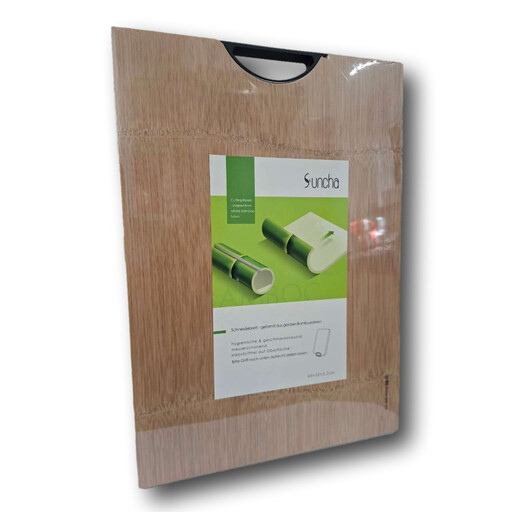
Why this product suits the profile: The extra-large format is designed for households carrying out extensive preparation, baking and hosting, allowing ingredients or food to be presented directly on the board.
The precise dimensions of 45 × 32 cm and thickness of 26 mm make it easier to assess the space required and stability before buying. Hand washing is clearly specified.
100% natural bamboo according to the product details, integrated handle, 45 × 32 cm surface and 26 mm thickness.
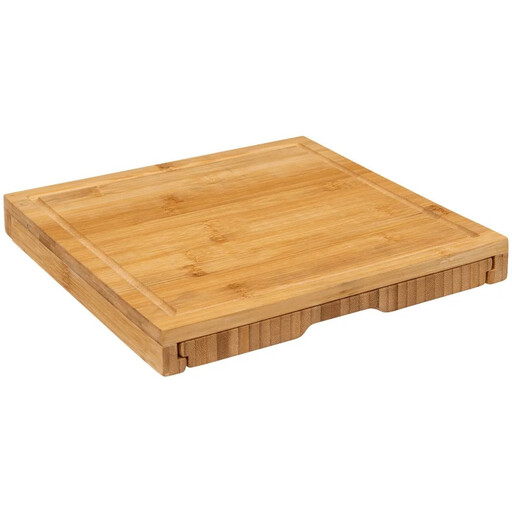
Why this product suits the profile: The set combines a bamboo serving board with four cheese knives, making it ideal for dinner parties, snacks and as a practical kitchen gift.
The contents are clearly listed. It is also explicitly stated that the board is not suitable for the dishwasher.
30 × 30 cm, bamboo, four cheese knives and integrated storage according to the product description.
We have put together a complete, regularly updated list of products that fully meet these strict selection criteria and the safety regulations applicable in the EU.
Yes, provided it is chosen and cared for according to how it will be used. A sufficient size, a stable surface and a willingness to hand wash it are important. Using several boards for different food groups can also be practical.
It is not possible to give a general fixed lifespan. It depends on the material, thickness, cutting intensity, moisture and care. Regular drying, occasional oiling where suitable for the product and avoiding the dishwasher can help extend its service life.
A wooden or bamboo board does not normally involve regular running costs. However, you may need to spend money on food-safe care oil and, if necessary, a replacement after heavy wear. The main ongoing task is gentle hand cleaning.