
Lieferung heute & morgen

Qualitätsgarantie

Willkommens-Angebote freischalten: KOSTENLOSE Lieferung | Bis zu 80 % RABATT | Kostenlose 30-Tage-JoyPlus-Testphase
App herunterladen
A wooden chopping board can take on many tasks in the kitchen: chopping vegetables, serving bread, preparing meat, or serving cheese and snacks. However, your purchase should not be based on appearance alone. The material, dimensions, construction and care instructions all determine whether a wooden chopping board suits your everyday routine.
Many disappointing purchases are caused by three typical marketing traps:
A wooden chopping board made from beech or walnut offers a natural surface and can also be used as a kitchen or serving board. The grain and colouring of natural materials vary from piece to piece. Small differences are therefore not defects, but a natural result of the material.
A bamboo chopping board is often chosen because it requires relatively little maintenance and has a firm surface. Even so, it is important to follow the manufacturer’s instructions: bamboo should generally not be soaked or cleaned in the dishwasher.
For a chopping board for vegetables and meat, it is advisable to keep work surfaces separate. If you regularly prepare raw meat or fish, you can use two boards or choose a reversible model with separate sides. A bread board, cheese board or serving board does not need to meet the same requirements as a chopping board used for daily food preparation.
The right size depends on your worktop, ingredients and storage space:
A juice groove is particularly useful when cutting foods with a high water content or carving meat. However, a chopping board with a juice groove should have grooves that are sufficiently wide and a practical cutting surface. A groove around the edge alone does not automatically make a board suitable for every use.
Wooden and bamboo boards should be cleaned after use with warm water and a mild cleaning product, then dried thoroughly. Prolonged soaking, high heat and the dishwasher can encourage warping, cracks or a rough surface.
Some types of wood require occasional treatment with food-safe mineral oil. It is therefore worth checking the specific care instructions before buying. Once a board develops deep cracks, severe warping or splinters, it should no longer be used for food.
A sustainable chopping board should not be judged by the material name alone. You should also check information about its origin, how it was made, the expected care required and its actual service life. A durable product is only genuinely useful in everyday life if it is cared for regularly and used appropriately.
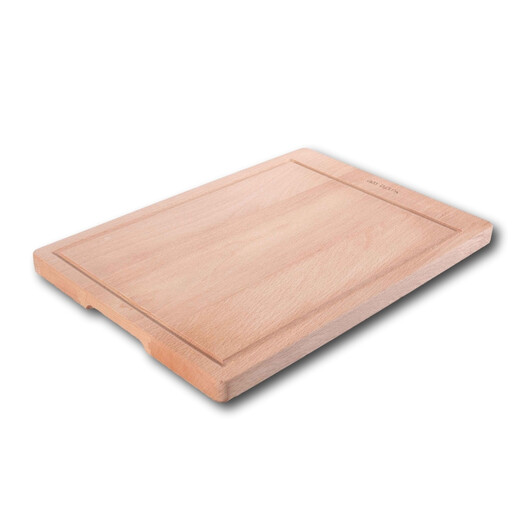
Why this product suits this profile: Measuring 34 × 24 cm, it provides a manageable work surface for everyday chopping without taking up an excessive amount of storage space.
At 2.2 cm thick, it is considerably thicker than many thin kitchen boards. This gives the construction the stability needed for regular use; according to the product information, soaking and dishwasher cleaning should be avoided.
Beech wood, a natural wood grain and clearly specified dimensions of 34 × 24 × 2.2 cm.

Why this product suits this profile: The large format combines a clearly specified juice groove with a reversible design, making it suitable for an organised kitchen routine.
The product description explicitly states the dimensions, material, juice groove and two usable sides. This makes the key purchase criteria clear before you place your order.
45 × 30 cm, a juice groove around the edge and a reversible design; according to the product information, hand wash only.
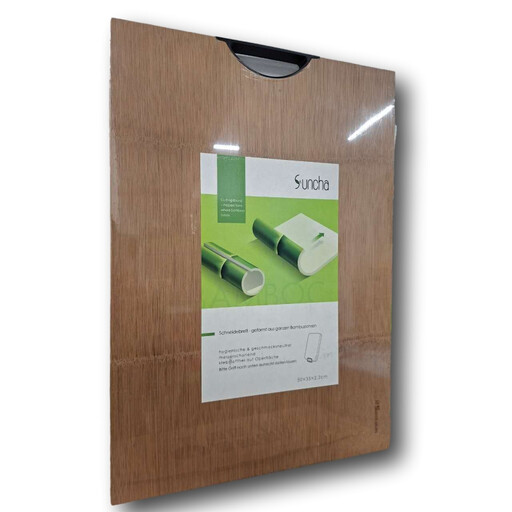
Why this product suits this profile: The large work surface and 26 mm thickness are ideal for users who frequently chop, roll out dough or prepare larger ingredients.
The specified dimensions make the available surface area clear. If you are looking for a large board, you can compare the work area with your available storage space in advance.
Bamboo construction, 50 × 35 cm, 26 mm thickness and an integrated handle; hand washing is recommended.
We have put together a complete, regularly updated list of products that fully meet these strict selection criteria and the safety regulations applicable in the EU.
Narrower boards with handles, round models or sets with accessories are ideal for serving. The Suncha Walnut Wood Cutting Board with Long Handle measures 45 × 18 × 2 cm and can be used not only for food preparation but also as a long serving board for bread and cheese. If you are looking for a decorative cheese board, you can also find bamboo and acacia models measuring around 30 cm in diameter or with a square surface.
When choosing a gift, design, weight and what is included also matter. A cheese board set with knives is more functional than a board alone, but requires more storage space. For everyday chopping, however, the cutting surface should take priority over decoration.
After each use, wipe it with warm water and a mild cleaning product, rinse it and dry it immediately. Store the board upright or in a well-ventilated position. Soaking, harsh cleaning products, high heat and the dishwasher should be avoided unless the manufacturer states otherwise.
For smaller kitchens, a length of around 30 to 35 cm is often sufficient. If you regularly prepare lots of vegetables, meat or dough, a length of 40 to 50 cm can be more practical. Before buying, check the size of your worktop, sink and storage space.
There is no universal service life. It depends on the type of wood, thickness, frequency of use and care. Regular drying, occasional oiling in accordance with the manufacturer’s instructions and avoiding the dishwasher can help extend its service life. The board should be replaced if it develops deep cracks, splinters, mould or severe warping.