
Lieferung heute & morgen

Qualitätsgarantie

Willkommens-Angebote freischalten: KOSTENLOSE Lieferung | Bis zu 80 % RABATT | Kostenlose 30-Tage-JoyPlus-Testphase
App herunterladen
A wooden chopping board can be used for all kinds of food preparation, serving and presentation. But attractive product photos and general marketing claims don’t automatically lead to the right purchase. What matters is the board’s actual dimensions, the material it’s made from, its care instructions and how you plan to use it.
A compact board is ideal for fruit, bread or small chopping jobs. But you can quickly run out of room when preparing vegetables, meat or dough. A large chopping board measuring around 45 cm or more in length gives you more space, but you’ll also need a worktop that’s deep and sturdy enough to accommodate it.
“Wood effect” doesn’t necessarily mean solid wood. Check whether the board is made from bamboo, beech, walnut or acacia, and look for details about its construction, bonding or coating. The thickness also affects its weight and stability.
Many wooden and bamboo boards aren’t dishwasher-safe. Water, heat and prolonged exposure to moisture can cause them to warp or crack. So, a hand-washable chopping board isn’t automatically easy to care for or “no effort”: wash it with warm water and mild washing-up liquid straight after use, wipe it dry and leave it to dry completely.
Also check that the surface is smooth and free from splinters. Don’t continue using a board for food if it has cracks, deep cuts or has become warped.
Boards measuring around 30 × 24 cm to 45 × 32 cm are common for everyday kitchen use. Larger options, such as the Suncha bamboo board measuring 50 × 35 cm and 26 mm thick, give you plenty of workspace, but weigh 1,99 kg according to the product details.
A thicker board may sit more securely on your worktop, but it can be heavier to store and clean. A chopping board with a handle is easier to carry and hang up. If the handle is long, check that the board will still sit securely on your worktop.
Don’t leave wooden boards soaking or put them in the dishwasher unless the manufacturer specifically says they’re dishwasher-safe. These steps are usually recommended for care:
A chopping board set with several sizes can be useful if you want to keep boards for vegetables, bread and serving separate.
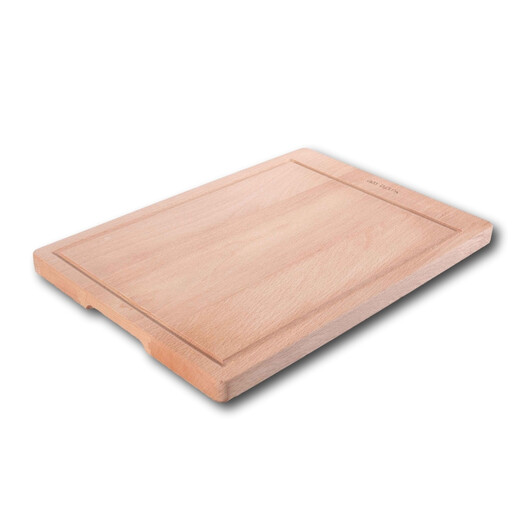
Why this product suits this profile: Its medium size is ideal for everyday chopping in small and medium-sized kitchens. The product details specify beech wood and a thickness of 2,2 cm.
The exact dimensions and type of wood are specified. The care instructions also clearly state that it should be hand-washed and not left to soak.
Beech wood, 34 × 24 × 2,2 cm, a natural look and suitable for slicing, dicing and chopping.
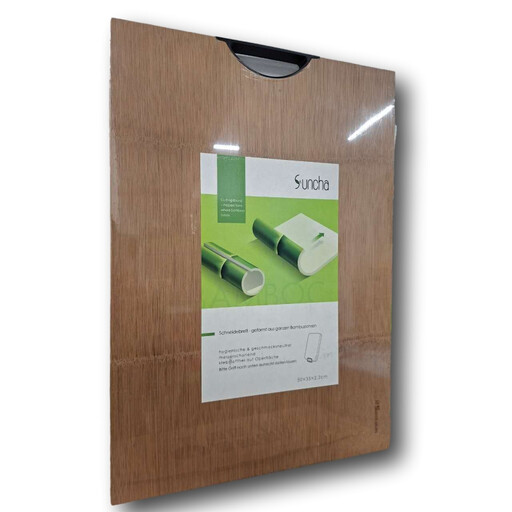
Why this product suits this profile: Its extra-large surface and 26 mm thickness make it well suited to bigger food-preparation jobs. The integrated handle makes it easier to carry and hang up.
The product details specify the material, length, width, thickness and weight. This makes it easier to work out how much space you’ll need before buying.
Bamboo, 50 × 35 cm, 26 mm thick, with an integrated handle. Suitable for chopping and preparing dough.

Why this product suits this profile: Three different sizes let you keep boards separate for food preparation, chopping and serving. The handles and juice grooves are designed to suit a range of kitchen tasks.
The three specified sizes help you avoid having to compromise between a small serving board and a large chopping board. The care instructions recommend hand-washing.
Three boards made from bamboo, with integrated juice grooves and handles. The product details state that they aren’t dishwasher-safe.
A cheese board or charcuterie board doesn’t need all the same features as a chopping board designed for kitchen use. For cheese, fruit, bread and snacks, appearance, surface area and ease of carrying matter more than having an especially large chopping surface.
The Secret de Gourmet Bamboo Cheese Board Set measures 30 × 30 cm and includes four cheese knives. For a long, narrow presentation, the Acacia Serving Board measures 70 × 25 cm. A smaller wooden breakfast board with a handle is handy for carrying bread or fruit straight from the kitchen to the table.
We’ve put together a complete, regularly updated list of products that meet these strict selection criteria and fully comply with the safety regulations in force in the EU.
Its lifespan depends on the material, thickness, how often you use it and how well you care for it. Regular soaking, dishwasher cleaning and high temperatures can damage the surface. Replace the board if it develops deep cracks, splinters, mould or significant warping.
Bamboo is a plant-based material, but that doesn’t automatically mean it’s hygienic. Thorough cleaning, prompt drying and keeping different food groups separate are all important. Always follow the care instructions provided by the manufacturer.
Bamboo, acacia and walnut are all options for a wooden serving board. Choose based on the size, weight, handle and cleaning instructions. Boards with handles or an elongated shape are practical if you serve food often; round boards provide a neat display area for cheese and snacks.