
Lieferung heute & morgen

Qualitätsgarantie

Willkommens-Angebote freischalten: KOSTENLOSE Lieferung | Bis zu 80 % RABATT | Kostenlose 30-Tage-JoyPlus-Testphase
App herunterladen
A wooden chopping board is part of the everyday kitchen essentials for many keen home cooks, families and kitchen enthusiasts. But there’s plenty of choice: wooden chopping boards, bamboo chopping boards, acacia chopping boards and models with handles can differ significantly in their material, weight, care requirements and uses.
If you focus only on appearance or a low price, you may overlook important details. These three common buying pitfalls are particularly worth bearing in mind:
The type of wood affects the board’s weight, appearance and feel. A walnut chopping board usually stands out for its darker colour. A beech chopping board is often available in a lighter, more neutral finish. Acacia often has a varied grain and is used for both chopping and serving boards.
Botanically, bamboo is not wood but a fast-growing grass. A bamboo chopping board may appeal thanks to its distinctive texture and comparatively low weight. However, the most important factors are still the workmanship, thickness and care instructions for the specific product.
Also check whether any sustainability claims are clearly identified and verifiable. For example, the 5Five Bamboo Chopping Board is described as made from FSC-certified bamboo. Any such certification should relate specifically to the product, not just the brand in general.
For everyday use, dimensions matter more than a decorative shape. Before buying, check:
A wooden chopping block should offer enough workspace and have a sturdy construction. For smaller kitchens, a more compact chopping board with a handle may be the more practical option.
A chopping board with a handle is easier to carry from the worktop to the dining table. Make sure the handle is large enough and sturdy. Long handles do, however, reduce the usable chopping surface: a board with a decorative or extended handle isn’t automatically suitable for preparing large quantities.
A chopping board with catch trays can hold ingredients, peelings or excess liquid while you prepare food. The extra components do mean more cleaning. Check whether the trays are removable and need to be cleaned separately.
A cheese serving board can be a good choice for cheese, bread and fruit. If you also regularly use the board to chop raw ingredients, it’s best to keep these uses separate or clean the board thoroughly after every use.
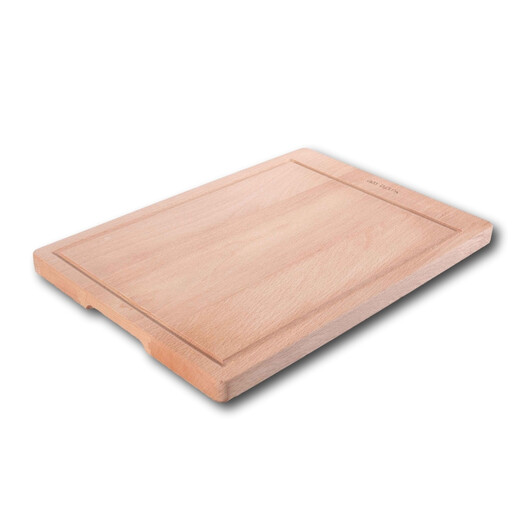
Why it suits this profile: Measuring 34 × 24 × 2.2 cm, it provides a manageable surface for everyday chopping without taking up too much storage space.
Its 2.2 cm thickness is clearly specified. The care instructions recommend hand washing and drying immediately, and advise against using the dishwasher or soaking the board for long periods.
Beech wood, a natural wood finish and a size suited to vegetables, fruit and smaller food-preparation tasks.
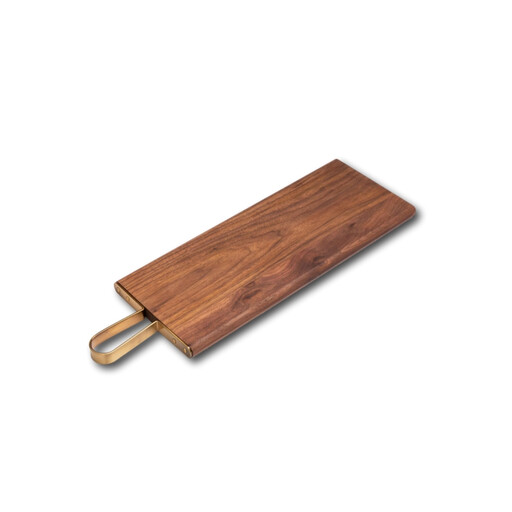
Why it suits this profile: The walnut wood and extended double handle combine a dark wood finish with a convenient way to carry the board between the kitchen and table.
The full dimensions of 45 × 18 × 2 cm make clear that the elongated shape has a limited width. This helps you judge the available workspace realistically.
Walnut wood, 20 mm thickness, a weight of 1.24 kg and an extended handle for carrying.
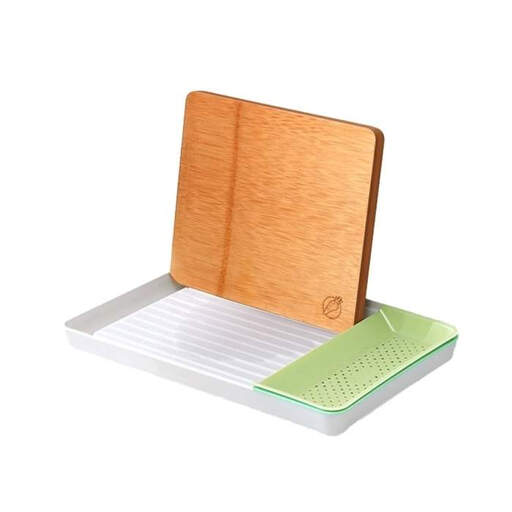
Why it suits this profile: This set combines a bamboo board with two removable storage trays and a drip tray, making it a good fit for an organised food-preparation routine.
The dimensions are clearly listed as 392 × 254 × 37 mm, along with three separate trays. This makes it easier to plan for the extra space needed before buying.
A bamboo board, two storage trays, a drip tray and a format designed for prepared ingredients.
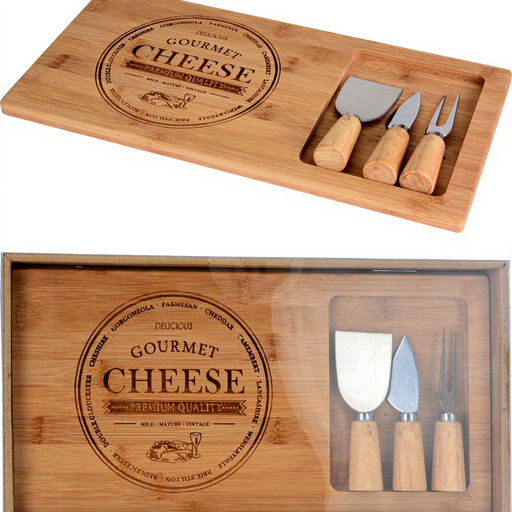
Why it suits this profile: This bamboo board is designed for serving cheese, fruit, crackers and bread, making it a useful serving board.
The product description specifies that the board is intended for both chopping and serving. You can therefore choose it specifically for serving at the table, rather than relying on it solely for heavy-duty chopping.
Bamboo construction, serving functionality and a surface for cheese, fruit, bread and crackers.
After use, wash a wooden chopping board with warm water and mild washing-up liquid. Dry it thoroughly, then store it upright so any moisture can escape. Avoid:
Some products may benefit from occasional treatment with food-safe mineral or vegetable oil. Follow the manufacturer’s instructions for the specific product. Where possible, avoid preparing raw meat and ready-to-eat foods on the same side of the board.
We’ve put together a complete, regularly updated list of products that meet these strict selection criteria and fully comply with the safety regulations in force in the EU.
For smaller kitchen tasks, a board measuring around 30 × 20 cm or more is often enough. If you regularly prepare vegetables, bread or larger ingredients, choose a larger working surface. Make sure the board still sits securely on your worktop and is easy to store.
Its lifespan depends on its thickness, construction, how intensively you use it and how well you care for it. Drying it regularly, avoiding the dishwasher and prolonged soaking, and applying a suitable oil treatment can help keep it in good condition. Don’t continue using a board with deep cracks, splinters or severe warping.
Bamboo can be suitable for everyday chopping and serving, as long as the dimensions and thickness are right for the job. As with wood, hand washing, drying it immediately and protecting it from prolonged moisture are essential. Also check whether the specific model has an FSC certification or other verifiable information about its materials.