
Lieferung heute & morgen

Qualitätsgarantie

Willkommens-Angebote freischalten: KOSTENLOSE Lieferung | Bis zu 80 % RABATT | Kostenlose 30-Tage-JoyPlus-Testphase
App herunterladen
A wooden chopping board can be used in many ways for everyday cooking, food preparation and serving. However, not every model will be the right choice. Boards are often marketed primarily through attractive wood finishes or claims such as “particularly robust”. What really matters are specific details about material, dimensions, thickness, care and features.
A large chopping board offers more room for vegetables, bread or meat. However, it also needs more space on your worktop and can be harder to clean and store. Before buying, check the board’s external dimensions and the amount of usable work surface available in your kitchen.
Many wooden and bamboo boards are hand-wash only. Prolonged soaking, high temperatures and a dishwasher cycle can cause warping, cracks or a rough surface. Unless the manufacturer expressly confirms that it is dishwasher-safe, a wooden kitchen board should be cleaned by hand.
A chopping board with a juice groove is useful when cutting juicy fruit, vegetables or roast meat. For dough, bread or dry ingredients, a smooth surface that can be used in its entirety may be more practical. The groove’s depth and position also affect how much usable work surface remains.
A classic wooden chopping board may be made from beech, walnut or acacia, for example. The type of wood affects its colour, weight and surface texture. A beechwood chopping board, such as the Suncha model measuring 34 × 24 × 2.2 cm, provides a compact work surface for everyday chopping tasks.
Bamboo is often offered as an alternative. A bamboo chopping board is available in many sizes and can be relatively stable thanks to its construction. Claims such as “antibacterial” or “particularly hygienic” should not be accepted as product features without checking them. For everyday kitchen use, a smooth surface, thorough cleaning and complete drying are what matter most.
Around 30 × 20 cm is often sufficient for one person or smaller preparation tasks. Families and keen home cooks generally benefit from a larger work surface. The WMF bamboo board measures 45 × 30 × 1.9 cm, while the Suncha bamboo board with handle, measuring 50 × 35 × 2.6 cm, provides plenty of room for larger ingredients, dough or serving tasks.
Greater thickness can increase a board’s weight and stability. However, it also makes the board heavier. If storage space is limited, you should also consider whether it can be stored upright.
Look for clear care instructions:
A hand-washable chopping board is not a disadvantage if cleaning it fits into your usual kitchen routine. If you regularly need dishwasher-safe products, look specifically for an appropriate statement from the manufacturer rather than automatically assuming that wooden models are suitable.
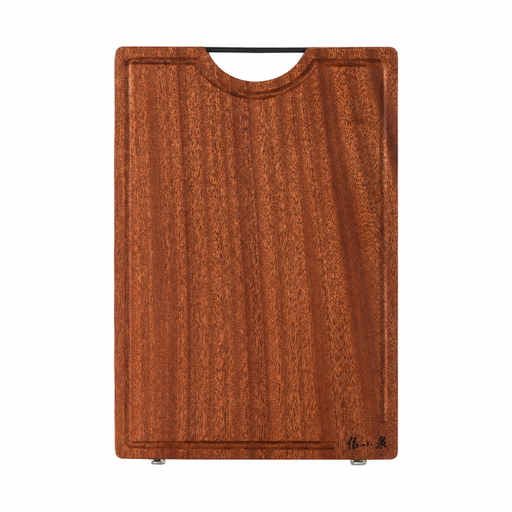
Why this product suits this profile: The rectangular format is ideal for everyday preparation without taking up as much space as an XL chopping board.
The clearly stated dimensions make it easier to check the available work surface and storage space before buying.
Rectangular shape and a 40 × 28 cm surface for everyday chopping tasks.

Why this product suits this profile: Its large format, juice groove and reversible design make it suitable for a wide range of kitchen and serving tasks.
According to the product description, the reversible design provides separate sides for different preparation tasks.
Bamboo, juice groove, reversible design and hand washing at 45 × 30 × 1.9 cm.

Why this product suits this profile: Three sizes allow separate boards to be used for different ingredients or serving tasks in one household.
The three formats reduce the need to buy a separate large board for every task; all boards should be cleaned by hand.
Three sizes, juice grooves and integrated handles; according to the specifications, the largest board measures 40.64 × 29.21 cm.
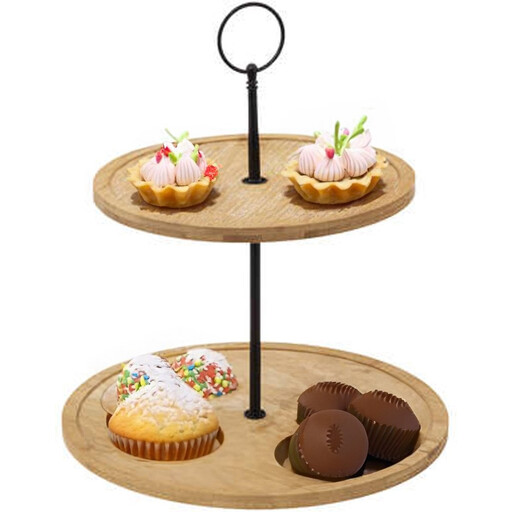
Why this product suits this profile: The round, two-tier serving board with a diameter of 25 cm is designed for snacks, pastries, cheese and small presentations.
The product description expressly states that the board is not dishwasher-safe and should be washed by hand.
Two tiers and a round 25 cm design for space-saving presentation of dry foods.
We have put together a complete, regularly updated list of products that fully meet these strict selection criteria and the safety regulations applicable in the EU.
Clean it after every use with warm water and mild washing-up liquid. Do not leave the board standing in water, and allow it to dry completely, ideally upright. Depending on the type of wood and the manufacturer’s instructions, food-safe oil can help care for the surface. The specific instructions for the individual product always take precedence.
It is not possible to give a reliable fixed lifespan. It depends on the type of wood, thickness, frequency of use, pressure from knives and care. Cracks, significant warping, splinters or mould are all reasons to replace the board.
No. A large chopping board provides more work surface, but it needs enough room to use, clean and dry it. Measure your worktop and storage space before buying. For serving, a board with a handle or a separate wooden serving board may be more suitable than a heavy chopping board.