
Lieferung heute & morgen

Qualitätsgarantie

Willkommens-Angebote freischalten: KOSTENLOSE Lieferung | Bis zu 80 % RABATT | Kostenlose 30-Tage-JoyPlus-Testphase
App herunterladen
A wooden chopping board may look simple, but it has to meet several demands in everyday kitchen use. It should sit firmly, provide enough space, be gentle on knives and be easy to clean hygienically. At the same time, suppliers often promote features such as “antibacterial”, “extra robust” or “long-lasting” without clearly explaining which properties actually matter.
As a Joybuy Product Recommendation Officer, I filter the most important selection criteria and show you which details really count before buying a wooden chopping board.
With an antibacterial chopping board, particular importance is often placed on the material’s properties. However, this is no substitute for thorough cleaning. Bamboo and wooden surfaces must also be cleaned with warm water and a mild cleaning product after preparing food, then dried completely.
A marketing claim about natural antibacterial properties should be understood as a product feature, not as a medical or therapeutic effect. Cleaning, drying and the condition of the surface remain the key factors.
A large chopping board provides more workspace, but can be impractical on smaller UK kitchen worktops. Material thickness is also important. Thin boards are easier to move around or may warp if cared for incorrectly. For larger models, sufficient thickness, an appropriate weight and a non-slip base are therefore important.
Wood and bamboo react to prolonged moisture and high temperatures. Most models in this selection are intended for hand washing. A wooden board should not be soaked or cleaned in the dishwasher. Otherwise, cracks, warping or a roughened surface may develop.
A bamboo chopping board is usually dense and dimensionally stable. According to the product description, Suncha models are made from natural bamboo and are intended for chopping as well as, in some cases, serving. However, bamboo is not automatically maintenance-free: hand washing, immediate drying and dry storage are still essential.
A walnut wood chopping board offers a darker, distinctive appearance. The Suncha walnut models are specified as having a smooth surface and a thickness of 20 mm. Walnut wood should be protected from heat, direct sunlight and prolonged exposure to moisture.
The beechwood chopping board from Suncha measures 34 × 24 × 2.2 cm. Beechwood is suitable for everyday chopping and should be treated regularly with a food-safe care oil if this is recommended in the product instructions.
A robust chopping board should not only be large but also sufficiently thick. According to the product details, the Suncha bamboo model with handle measures 45 × 32 × 2.6 cm and weighs 1.18 kg. The larger model, measuring 50 × 35 × 2.6 cm, weighs 1.99 kg. These figures provide a practical indication of how easily a board can be moved or carried.
After cleaning, the board should be allowed to dry completely, ideally standing upright. Occasional treatment with food-safe mineral oil can help keep wooden and bamboo surfaces in good condition. Cracked, badly warped or splintered boards should no longer be used.
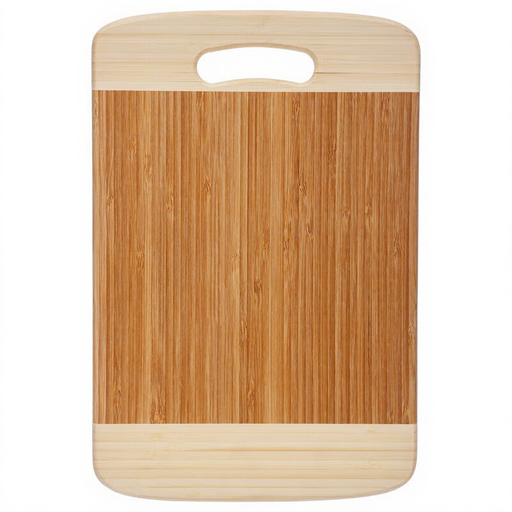
Why this product suits this profile: The compact 30 × 20 cm surface is suitable for smaller kitchens and everyday food preparation. The integrated handle makes carrying and storage easier.
The manageable size prevents you from buying a board that takes up too much worktop space. Hand washing is clearly specified.
Natural bamboo, an integrated handle and clear care instructions specifying hand washing.
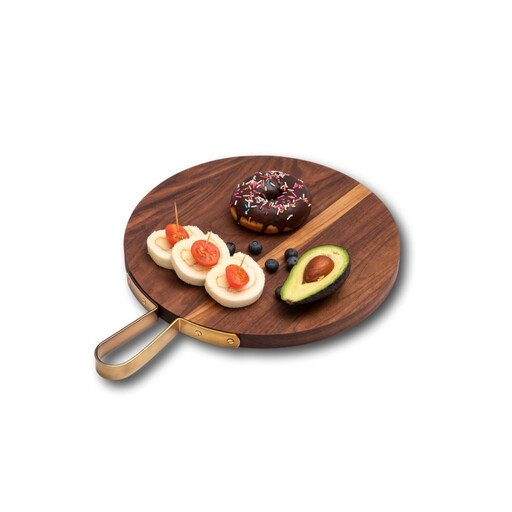
Why this product suits this profile: The round format, with a diameter of 31 cm and a thickness of 20 mm, combines a chopping surface with serving functionality. The dark wood finish complements style-conscious homes.
The specified thickness and weight of 1.18 kg provide concrete reference points instead of a blanket claim such as “extra robust”.
Walnut wood, a round design, 20 mm thickness and a long handle for serving or hanging.
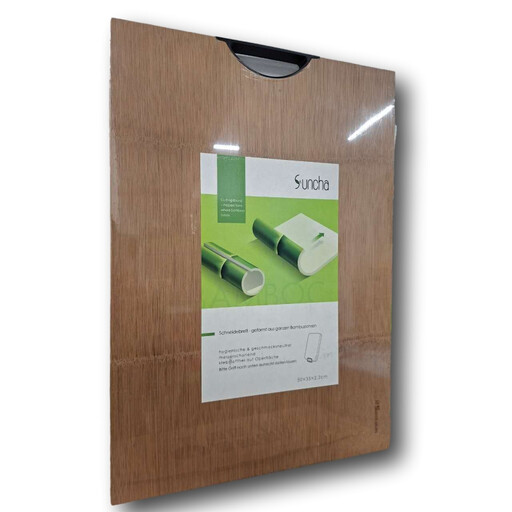
Why this product suits this profile: The 50 × 35 cm surface is suitable for families, larger quantities of ingredients, preparing dough and regular use as a serving board.
The specific thickness of 26 mm and weight of 1.99 kg make the board’s stability easier to assess than an unsubstantiated claim about durability.
A piece of Moso bamboo according to the product description, a large work surface, an integrated handle and suitability for chopping and preparing dough.
We have put together a complete, regularly updated list of products that fully meet these strict selection criteria and the safety regulations applicable in the EU.
Beechwood and walnut wood are common materials for kitchen chopping boards. Suitability depends on the construction, thickness, surface and care. A bamboo chopping board can also be a suitable option if you want a dense surface and easy maintenance.
It is not possible to give a general fixed service life. Frequency of use, moisture, cleaning and cutting intensity all affect its condition. The board should be replaced if visible cracks, splinters or warping appear.
This depends on the surface, the manufacturer’s specifications and the level of soiling. Models with a smooth surface and handle, such as round walnut or large bamboo boards, can be used as serving boards for bread, cheese or other dry foods. Thorough cleaning is required after preparing raw food.