
Lieferung heute & morgen

Qualitätsgarantie

Willkommens-Angebote freischalten: KOSTENLOSE Lieferung | Bis zu 80 % RABATT | Kostenlose 30-Tage-JoyPlus-Testphase
App herunterladen
A wooden chopping board can be used for food preparation, serving and presenting dishes. However, wooden kitchen boards vary considerably in terms of material, size, construction and care requirements. Anyone who focuses solely on appearance may end up buying a board that is too small for everyday kitchen tasks or quickly develops cracks because it has been cleaned incorrectly.
This buying guide explains what households, home cooks, catering businesses and gift shoppers should look out for. It is not about making blanket judgements about quality, but about understandable product features and choosing the right board for the intended use.
A serving board or cheese board can look particularly attractive thanks to its grain and shape. However, that does not automatically mean it is suitable as a chopping board for demanding tasks. Round boards with handles, for example, are practical for carrying and presenting food, but depending on their diameter they offer less usable surface area than a rectangular wooden kitchen board.
A large chopping board provides plenty of room for vegetables, bread or meat. At the same time, a size of around 45 × 30 cm requires a sufficiently large worktop and a suitable place for storage. The material thickness also affects the weight. Before buying, you should therefore check the length, width, height and weight.
Wood and bamboo should generally not be left standing in water or cleaned in the dishwasher unless the manufacturer states otherwise. Excessive moisture can cause warping, cracks or a rough surface. A wooden chopping board therefore requires different care from a plastic board.
The type of wood affects the colour, grain, weight and feel of the surface:
The type of wood is not the only important factor. You should also consider the construction, material thickness and the manufacturer’s stated suitability for contact with food. With glued or multi-layered boards, buyers should look for a smooth, neatly finished surface.
A simple guide can help you choose:
After use, the board should be cleaned according to the manufacturer’s instructions with a damp cloth or warm water and a mild cleaning product. It should then be dried completely. Soaking, dishwasher cleaning and intense heat are not intended for the products mentioned here.
It can be useful to use separate boards for raw meat, fish, vegetables and bread. A reversible model can support this separation, but it does not replace thorough cleaning. If the board develops deep cracks, splinters or permanently rough areas, it should no longer be used for food.
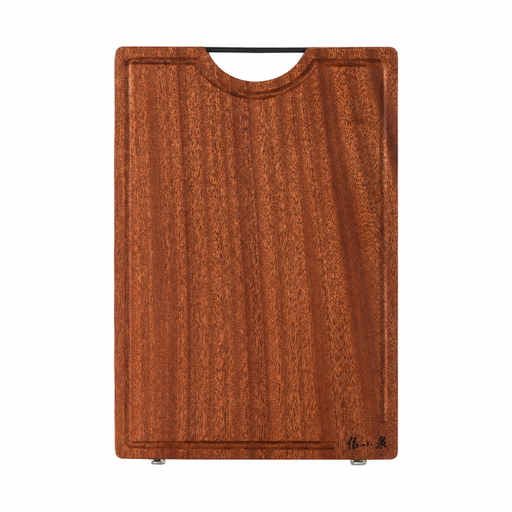
Why this product suits the profile: The rectangular 400 × 280 mm format provides a clearly defined work surface for vegetables, fruit and everyday food preparation.
The specific dimensions prevent you from buying based on appearance alone. A juice groove or handle is not listed in the stated product data.
Rectangular shape and generously sized dimensions for common chopping tasks at home.

Why this product suits the profile: This bamboo chopping board combines a 45 × 30 × 1.9 cm format with a juice groove and a reversible design.
The product description explicitly mentions the juice groove, reversible design and hand washing. This makes important usage limitations clear before purchase.
Large format, integrated juice groove and reversible use according to the manufacturer’s specifications.

Why this product suits the profile: This chopping board set contains three sizes with juice grooves and handles for a range of preparation and serving situations.
Instead of overloading a single universal board, three formats are available for different preparation and serving tasks. The boards should be washed by hand.
Three specified sizes, integrated juice grooves and carrying handles for use in the kitchen and at mealtimes.
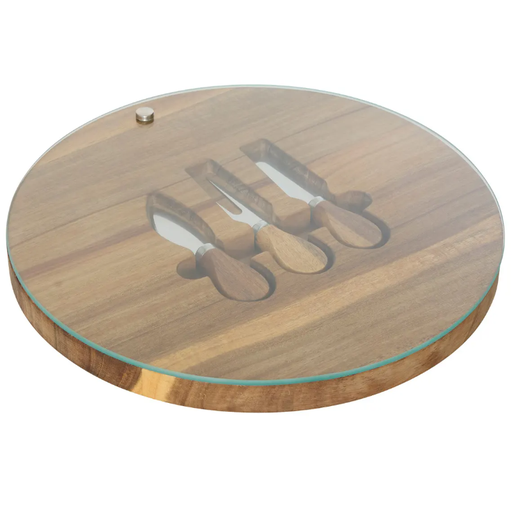
Why this product suits the profile: This round acacia wood chopping board, with a diameter of 30 cm, is designed as a cheese and serving board for cheese, cold meats, fruit and snacks.
The stated purpose makes it easier to classify: this board is mainly intended for presenting food, rather than for heavy chopping.
Round 30-cm format and natural acacia wood appearance for cheese, cold meats, fruit and snacks.
We have put together a complete, regularly updated list of products that fully meet these strict selection criteria and the safety regulations applicable in the EU.
The board should be cleaned promptly after use with warm water and a mild cleaning product, then dried completely. Soaking and cleaning in the dishwasher are not intended for the models mentioned. If required, you can use a food-safe care oil approved by the manufacturer.
Its service life depends on the material, material thickness, level of use and care. Drying the board regularly, storing it in a dry place and avoiding intense heat can help extend its usable life. The board should be replaced if it develops cracks, splinters or permanent warping.
Not necessarily. Before buying, you should measure the available worktop, sink and storage space. A large model provides more room, but it can be more difficult to clean and store. For smaller kitchens, a medium-sized format or a chopping board set with several sizes is often more practical.