
Lieferung heute & morgen

Qualitätsgarantie

Willkommens-Angebote freischalten: KOSTENLOSE Lieferung | Bis zu 80 % RABATT | Kostenlose 30-Tage-JoyPlus-Testphase
App herunterladen
A wooden chopping board is a staple in many home cooks’ and families’ daily kitchens. However, product images and marketing claims don’t always reveal what really matters when making your choice. An attractive wood grain says little about stability, and terms like “antibacterial chopping board” are only meaningful if backed up by clear material or care instructions.
Three common buying mistakes often lead to poor decisions:
A bamboo chopping board isn’t technically wood, but it’s used in much the same way. Bamboo is lightweight, dimensionally stable and has a uniform surface. For the products featured here, knife-friendliness is listed as a feature. That said, how kind a board is to your blade also depends on your knife angle, pressure and cutting technique.
A beechwood chopping board offers a traditional wood surface and is ideal for everyday cutting tasks. Walnut wood has a darker colour, which also makes it suitable as a serving board. With any natural material, variations in colour and grain are to be expected.
With composite materials, buyers should check the exact composition. The Suncha draining board combines rice husk material with a silicone edge. Other models blend bamboo with plastic trays or wheat straw fibre with PP. Such constructions can offer extra functions, but they aren’t the same as a board made entirely from wood.
For small kitchens or occasional use, a format of around 30 × 20 cm may be enough. If you regularly prepare vegetables, fruit and meat, you’ll benefit more from a large chopping board of at least 40 × 28 cm. The bigger surface reduces how often you need to shift ingredients and gives more space between what you’re cutting and the edge of your worktop.
Thickness matters too. The WMF board measures 45 × 30 × 1.9 cm, while the Suncha beechwood board is 34 × 24 × 2.2 cm. These details allow a fair comparison in terms of stability and storage space. A thicker board does need more storage room and is heavier to carry.
A chopping board with a juice groove can catch liquid when you’re cutting juicy fruit or carving meat. However, the groove doesn’t replace thorough cleaning. For raw animal products, it’s best to use a separate board at home, or at least keep sides clearly separated. After cutting, clean the board surface and your kitchen area carefully.
A chopping board with a handle is easier to carry from your worktop to the table. This detail is also handy for serving bread, cheese or small snacks. If storage space is tight, a handle can also allow you to hang the board up.
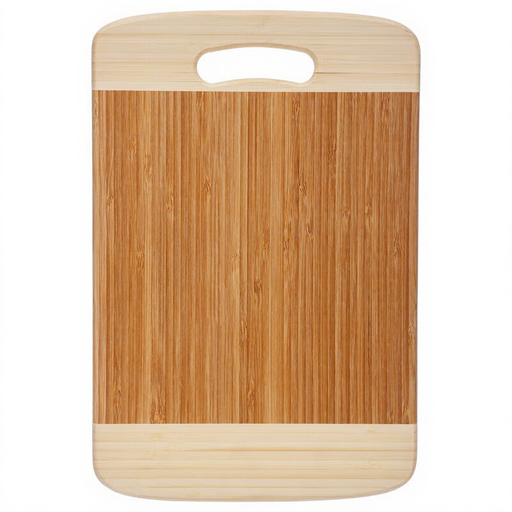
Why this product suits the profile: The compact 30 × 20 cm format is ideal for smaller kitchens and everyday preparation of fruit, vegetables or smaller ingredients. The integrated handle makes it easier to carry and store.
The dimensions and material are clearly stated. Hand washing with mild detergent and thorough drying are explicitly recommended.
Bamboo construction, integrated handle and space-saving format for daily kitchen prep.

Why this product suits the profile: The large work surface is aimed at households that cook frequently and may also want to use the board for serving bread or cheese.
The reversible design allows you to assign sides separately, for example for raw animal products and plant-based ingredients. Care is by hand washing.
45 × 30 cm surface, 1.9 cm thickness, juice groove and reversible design.
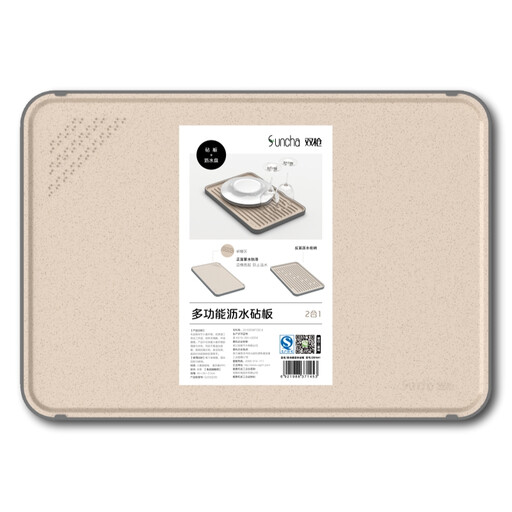
Why this product suits the profile: This multi-functional chopping board combines a cutting surface with a draining function. That’s handy when you want to prepare vegetables straight after washing them.
The function isn’t just a marketing term; it’s clearly described through the combination of cutting surface, draining area and silicone edge.
40 × 28 × 2 cm, silicone edge with non-slip function and combined cutting and draining function.
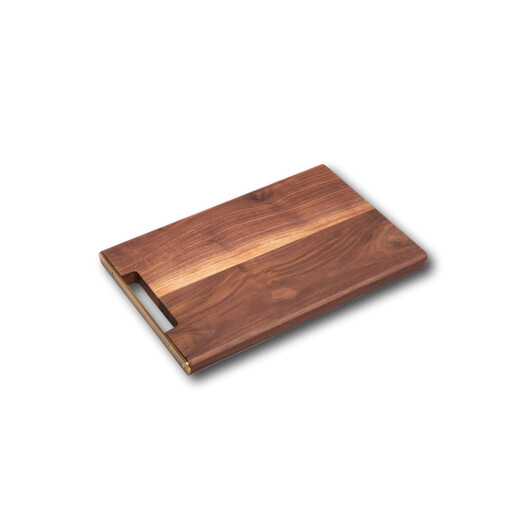
Why this product suits the profile: The 36 × 25 cm walnut wood board combines a usable cutting surface with a copper handle, making it suitable for serving too.
The product details list the material, dimensions, weight and care instructions. This lets you check before buying whether the board will fit your available storage space.
Walnut wood, 36 × 25 × 2 cm and integrated copper handle for carrying and presentation.
An easy-care chopping board will last a long time, provided you follow the manufacturer’s instructions. For wood and bamboo boards, these basic rules generally apply:
The term antibacterial chopping board shouldn’t be taken as a complete hygiene guarantee. Material properties don’t replace cleaning or the separate handling of raw and ready-to-eat foods. For meat, fish, vegetables and bread, it can make sense to use several boards or consistently separate sides.
We’ve put together a full, regularly updated list of products that fully meet these strict selection criteria and the safety regulations in force in the EU.
Yes, as long as it’s intended for food use and is cleaned thoroughly. For raw animal products and vegetables, separate boards or clearly separated sides are advisable to avoid transferring residues.
Its lifespan depends on the material thickness, how heavily it’s used and how well it’s cared for. Regular drying, avoiding the dishwasher and occasional conditioning oil can help maintain its condition. If it develops cracks, splinters or permanent warping, the board should be replaced.
The price depends on factors including the material, size, thickness and extra features. A compact bamboo board with a handle is usually priced differently from a large board with a juice groove, drip tray or multiple sizes. The key is only to pay for features you’ll actually use in your own kitchen.