
Lieferung heute & morgen

Qualitätsgarantie

Willkommens-Angebote freischalten: KOSTENLOSE Lieferung | Bis zu 80 % RABATT | Kostenlose 30-Tage-JoyPlus-Testphase
App herunterladen
A wooden chopping board can be used for everyday cooking, baking and serving. However, eye-catching product claims don’t automatically lead to the right buying decision. The key factors are the material, dimensions, care requirements and how you plan to use it.
A large chopping board gives you more room for vegetables, bread or dough. However, a 50 × 35 cm board needs plenty of space on your kitchen worktop and in your cupboard. Before buying, measure both the usable worktop area and the available storage space.
Wood and bamboo generally shouldn’t be left in water for long periods. The combination of heat, moisture and movement in a dishwasher can encourage warping, cracks or swelling. A durable chopping board will usually need to be washed by hand, dried thoroughly and occasionally treated with a suitable food-safe oil, if recommended by the manufacturer.
Descriptions such as “especially hygienic”, “indestructible” or “antibacterial” shouldn’t be the only factors influencing your choice. A chopping board needs to be cleaned thoroughly and dried after every use. Verifiable details such as material, thickness, dimensions, construction and specific care instructions are more useful.
A beech wood chopping board is a classic choice for many households. Beech has an even surface and is often used for kitchen utensils. The Suncha model measures 34 × 24 × 2,2 cm, making it suitable for everyday chopping without taking up too much storage space.
A walnut wood chopping board stands out for its darker colour and visible grain. According to the product details, the SUNCHA models are made from walnut wood and are designed for general food preparation. However, appearance shouldn’t take priority over care and use instructions.
A bamboo chopping board is made from a fast-growing material. Its properties vary depending on how it’s made: single-piece bamboo, laminated versions and carbonised varieties can differ in weight, surface and care requirements. Claims such as “100% bamboo” should be considered alongside the manufacturer’s specific information about thickness and construction.
A board measuring around 28 × 20 cm may be enough for a small household or occasional food preparation. If you regularly prepare several ingredients, you’ll benefit from a larger work surface. Models with a 26 mm thickness sit more firmly on the worktop than very thin boards, but they’re also heavier.
As a guide:
Weight matters too. According to the product details, a bamboo board measuring 50 × 35 × 2,6 cm may weigh around 1,99 kg. This makes it more stable, but less convenient to move around.
A chopping board with a handle is easier to carry from your worktop to the dining table and can also be used as a serving board. However, the handle takes up some of the available chopping space. If you’re considering a board with a juice groove, check that it’s wide and deep enough, and whether it reduces the usable surface area.
A round chopping board works well for serving bread, cheese or small snacks. Rectangular models tend to make more efficient use of worktop space. So when choosing, consider not just the shape but also the combination of work surface, storage space and intended use.
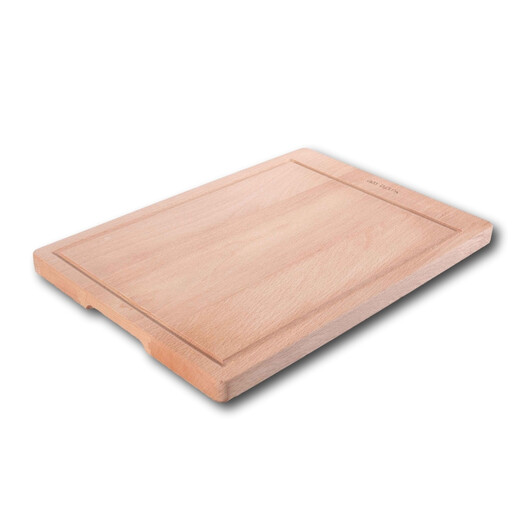
Why this product suits this profile: Its medium size is ideal for everyday chopping and takes up relatively little storage space.
The dimensions are clearly stated, helping you avoid choosing an unnecessarily large board for a small kitchen. The care instructions rule out soaking and dishwasher use.
Beech wood, 34 × 24 × 2,2 cm, with a surface for slicing, dicing and chopping.
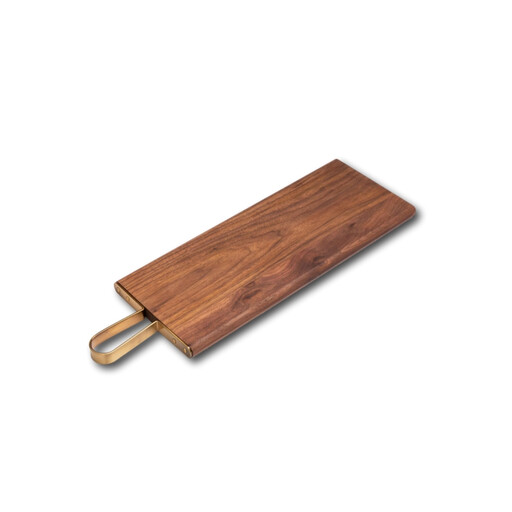
Why this product suits this profile: Walnut wood, a length of 45 cm and an extended handle combine food preparation with serving.
The product details specify the material, a weight of 1,24 kg and dimensions of 45 × 18 × 2 cm. This helps you assess how much space you’ll need before buying.
Walnut wood, 20 mm thick, with a long double handle for carrying and serving.
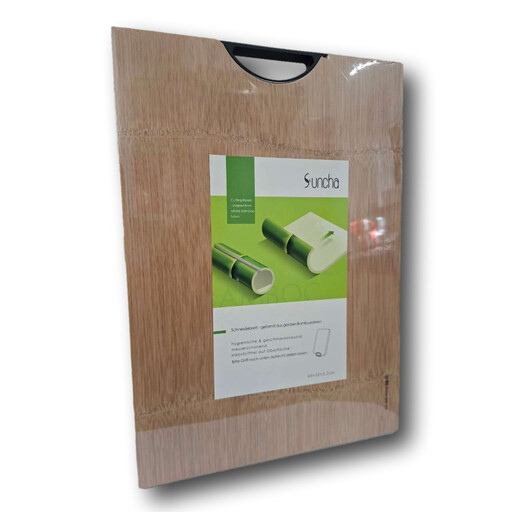
Why this product suits this profile: Its large surface is designed for extensive food preparation, working with dough and serving bread or cheese.
The specific thickness of 26 mm and weight of 1,99 kg make its storage and handling requirements clear. The board isn’t designed for dishwasher use.
45 × 32 cm work surface, 26 mm thick, with an integrated handle for carrying and serving.

Why this product suits this profile: Three sizes and integrated juice grooves suit households that want to prepare ingredients separately or use their boards for serving too.
The set details clearly specify three sizes, juice grooves and handles. This makes it easy to understand the extra features before buying.
Three bamboo boards with juice grooves and carrying handles; hand-wash according to the manufacturer’s instructions.
We’ve put together a complete, regularly updated list of products that meet these strict selection criteria and fully comply with the safety regulations in force in the EU.
There’s no set lifespan that applies to every board. It depends on the material, how often it’s used, contact with knives and how well it’s cared for. Drying it thoroughly, oiling it occasionally according to the manufacturer’s instructions and avoiding the dishwasher can help extend its useful life. Cracks and significant warping are reasons to replace it.
Yes, provided it’s specifically intended for food preparation and cleaned thoroughly after use. A separate chopping board is recommended for raw meat and fish, or make sure these foods are kept separate from others. Good hygiene matters just as much as the material.
Both can be suitable for the kitchen. Wood comes in a range of surface finishes and grain patterns, while bamboo is often promoted for its low weight or dimensional stability. The specific construction, thickness, size and care instructions are more important than making a blanket choice based on material alone.