
Lieferung heute & morgen

Qualitätsgarantie

Willkommens-Angebote freischalten: KOSTENLOSE Lieferung | Bis zu 80 % RABATT | Kostenlose 30-Tage-JoyPlus-Testphase
App herunterladen
A wooden chopping board can last for many years in a busy kitchen, depending on its material, thickness and care. But some buying decisions can quickly lead to unnecessary expense. Boards are often chosen for their appearance, even though size, moisture resistance and ease of use matter more for everyday cooking.
A compact board may seem like a space-saving choice, but it can quickly become impractical when you’re chopping vegetables, bread or meat. If ingredients fall over the edge, your work surface can become cluttered. Check that the board is large enough for the portions you usually prepare. For smaller kitchen tasks, around 30 × 20 cm is often sufficient. If you regularly prepare several ingredients at once, consider a large chopping board measuring at least 40 cm in length.
Terms such as ‘extra durable’, ‘sustainable’ or ‘antibacterial’ don’t tell you much without clear information about the material and how to care for it. Look for details you can check:
A product claim is no substitute for a clear description. With natural materials, the colour and grain may also differ from the product images.
Wooden and bamboo boards generally shouldn’t go in the dishwasher or be left in water for long periods. Heat, moisture and strong cleaning products can cause warping or cracks. For everyday care, use warm water and mild washing-up liquid, then dry the board thoroughly. Don’t continue using a damaged board with deep cracks or splinters.
A bamboo chopping board isn’t made from conventional wood, but it’s used in much the same way in the kitchen. Bamboo is usually lightweight and stable, with a distinctive, even surface. Check whether the board is made from glued layers or, as with some models, from a single piece.
Beech is a popular wood for kitchen boards. One example is the Suncha Beech Wood Cutting Board, measuring 34 × 24 × 2.2 cm. Its medium size is suitable for vegetables, fruit, herbs and smaller preparation tasks.
A walnut chopping board stands out for its darker grain. Walnut is also often used for serving boards. However, appearance alone isn’t a reliable indicator of sturdiness. Thickness, construction and the manufacturer’s care instructions are what matter.
The right size depends on the space you have and how you work:
A thicker board may be heavier and more stable. For example, the Suncha Solid Bamboo Cutting Board measures 50 × 35 × 2.6 cm and weighs around 1.99 kg. Before buying, consider whether you’ll need to take the board out of a cupboard and carry it regularly.
A wooden chopping board with a handle is easier to carry from your worktop to the table. Depending on its design, it can also double as a wooden serving board. However, a handle takes up extra storage space.
A round chopping board is particularly useful for bread, cheese and smaller preparation tasks. For meat and ingredients that release a lot of juice, a chopping board with a juice groove can help catch liquid around the edge. A juice groove doesn’t replace hygienic cleaning, though. It’s best to use separate boards for raw meat and other food groups, or to clean the board thoroughly between tasks.
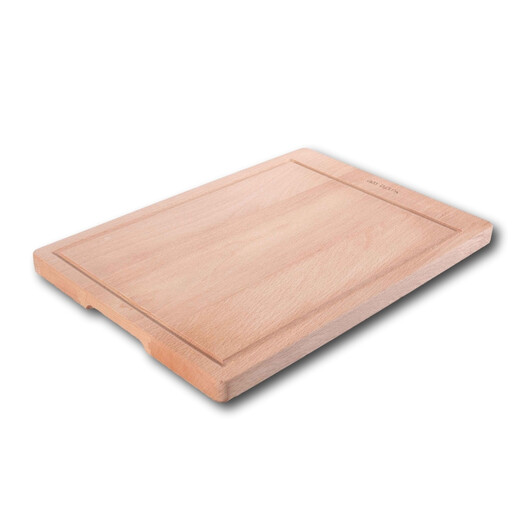
Why this product suits this profile: Its dimensions provide a practical work surface for everyday chopping without taking up too much storage space.
The precise dimensions help you avoid choosing a board that’s too small or too large based on its appearance alone.
Beech wood, 34 × 24 × 2.2 cm and a natural wood grain; hand washing is expressly recommended.
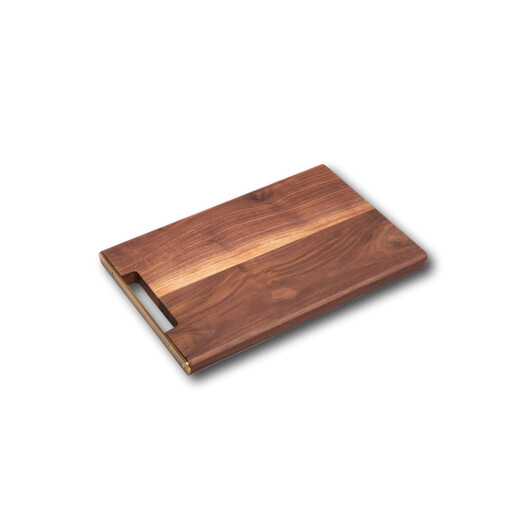
Why this product suits this profile: Walnut wood and a copper handle combine a clearly specified material with a design that’s also suitable for serving.
Details about the material, weight and dimensions make it easier to choose with confidence, without relying on design claims alone.
Walnut wood, 25 × 36 × 2 cm, around 1.3 kg and an integrated I-shaped copper handle.

Why this product suits this profile: Three sizes let you use separate boards for vegetables, meat, bread or serving cheese.
The combination of three sizes and juice grooves is more specific than a general promise of versatility.
Set of three chopping boards with integrated handles and juice grooves; hand washing is recommended.
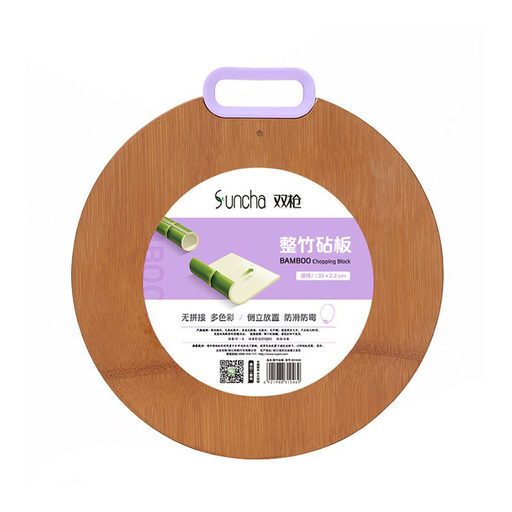
Why this product suits this profile: Its round shape works well for bread, fruit and cheese, as well as for serving at the table and everyday chopping.
A diameter of 33 cm shows exactly how much usable surface area you get.
Round bamboo construction, 33 cm in diameter and 18 mm thick; suitable for chopping and serving.
We’ve put together a complete, regularly updated list of products that meet these strict selection criteria and fully comply with the safety regulations in force in the EU.
To help your wooden or bamboo board keep its shape, follow these steps:
Beech and walnut are popular options, each with its own colour and grain. Bamboo is another material to consider. Rather than relying on a general ranking, pay closer attention to the board’s thickness, construction, size and care instructions.
Around 30 × 20 cm is often enough for smaller quantities. For everyday cooking, most households will benefit from a board measuring 34 × 24 cm or more. Boards from around 45 × 32 cm are more practical for larger portions, dough and preparing several ingredients at once.
There’s no reliable way to give a fixed lifespan. It depends on the material, how intensively you use the board, how you clean and store it, and how regularly you care for it. Storing it dry and keeping it out of the dishwasher can help reduce common moisture and heat damage.