
Lieferung heute & morgen

Qualitätsgarantie

Willkommens-Angebote freischalten: KOSTENLOSE Lieferung | Bis zu 80 % RABATT | Kostenlose 30-Tage-JoyPlus-Testphase
App herunterladen
A wooden chopping board with a handle combines a work surface, easy portability and often a serving function too. For keen cooks and households, however, choosing one is not just about looks. Dimensions that are too small, a delicate surface or unsuitable care can quickly make the board impractical for everyday use.
Before buying, you should therefore watch out for three common pitfalls:
A bamboo chopping board is an appealing option for many kitchens because bamboo is described as a dense material and several models are available in solid construction. The specific design is what matters most: details such as “100% natural bamboo”, “made from a single piece” or “26 mm thick” are more informative than general marketing claims.
With a walnut chopping board, the dark colour and natural grain are often the main attractions. For your purchasing decision, however, you should focus primarily on the dimensions, weight, surface finish and care instructions. A beechwood board can also be a suitable choice for everyday food preparation, provided its size and thickness are right for your kitchen area.
Whatever the material, a smooth, splinter-free surface is important for practical use. If the board has visible deep cracks, mould or severe warping, it should no longer be used for food.
A large chopping board gives you more room for several ingredients and larger foods. Models measuring 45 × 32 cm or 50 × 35 cm are better suited to extensive food preparation, but they also require enough space on your worktop and in your cupboard.
More compact sizes such as 30 × 20 cm are a better fit for smaller kitchens or households that mainly chop individual ingredients. A thickness of around 18 to 26 mm can provide greater stability, but does not replace a non-slip mat. Also check the weight: a heavier board is less convenient to carry, but will often sit more securely in place.
The handle should be more than just decorative. A chopping board with a handle is practical if you regularly carry it from the kitchen worktop to the dining table or want to hang it up to save space. With longer handles, make sure it can be handled safely with both hands, especially when carrying heavier boards.
A juice groove can catch liquid when chopping juicy fruit, vegetables or meat. It helps prevent liquid from running over onto the worktop, but requires additional cleaning. A round chopping board can often also be used as a serving board for bread, cheese or small snacks. Even with a chopping board for serving, you should make sure the surface is sufficiently smooth and the handle is secure.
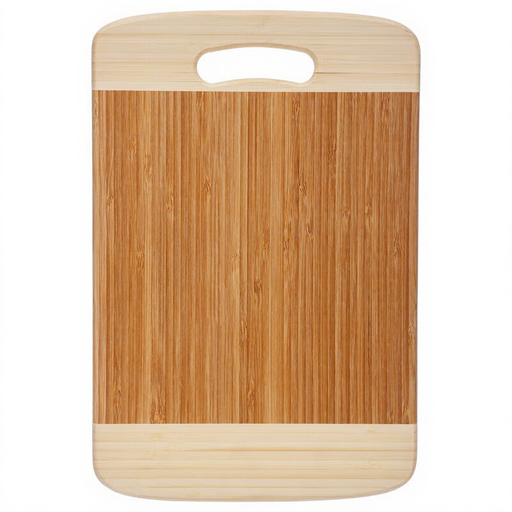
Why this product suits this profile: The 30 × 20 cm format is suitable for smaller kitchens, individual preparation tasks and households with limited storage space. The integrated handle makes it easier to carry and hang up.
The dimensions are clearly stated. This allows you to check before buying whether the surface is large enough for the intended use.
Bamboo construction, handle, compact 30 × 20 cm surface and hand washing as stated in the product description.

Why this product suits this profile: The 45 × 30 cm work surface is designed for extensive food preparation and serving bread or cheese. A juice groove and reversible design broaden its intended uses.
The product details specify the size, material, juice groove and care instructions. This keeps the key features verifiable, rather than relying solely on appearance.
Reversible bamboo board, 45 × 30 cm, all-round juice groove and use as a serving surface according to the product description.

Why this product suits this profile: Three sizes cater to different tasks, from chopping to serving. The integrated handles and juice grooves are designed for frequent movement between the worktop and table.
The set avoids the limitations of a one-size-fits-all board. The dimensions of all three boards are stated, and they should be cleaned by hand.
Three sizes, juice grooves, integrated handles and bamboo construction according to the product details.
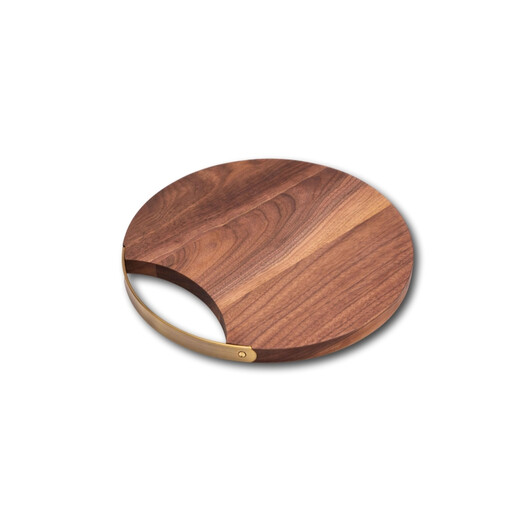
Why this product suits this profile: The round shape is ideal for bread, cheese and small serving arrangements. With a diameter of 31 cm, the board is easier to handle than an XL format.
The diameter and thickness are clearly specified. This makes it easier to assess whether you have enough workspace and storage room.
Walnut wood, 20 mm thickness, round surface with a 31 cm diameter and integrated handle according to the product details.
Care has a significant impact on how long a sturdy chopping board retains its shape and surface. Follow this routine:
A wooden board is often described as a knife-friendly chopping board. This classification depends on the material, surface hardness and how the board is used. Hard surfaces can put greater strain on knife blades; regardless, knives should not be used with excessive pressure or sideways twisting movements.
We have put together a complete, regularly updated list of products that fully meet these strict selection criteria and the safety regulations applicable in the EU.
For individual ingredients and small kitchens, around 30 × 20 cm is often sufficient. If you regularly prepare bread, larger portions of vegetables or several ingredients, a length of 40 to 45 cm will give you more room to work. Before buying, measure the available worktop and storage space.
There is no fixed lifespan that applies in every case. It depends on the material, thickness, cutting frequency and care. Avoid soaking, the dishwasher and excessive heat. If the board develops deep cracks, splinters, mould or noticeable warping, it should be replaced.
A juice groove can collect liquids, but it must be dried thoroughly after cleaning. A soft brush or cloth can be used to remove residue from the groove. If you mainly chop dry foods, you may not need this feature.