
Lieferung heute & morgen

Qualitätsgarantie

Willkommens-Angebote freischalten: KOSTENLOSE Lieferung | Bis zu 80 % RABATT | Kostenlose 30-Tage-JoyPlus-Testphase
App herunterladen
A wooden chopping board with a handle can be handy for food preparation, carrying and serving. However, boards vary considerably in their materials, dimensions, construction and care requirements. If you focus only on attractive wood grain or bold marketing claims, you could end up with a model that’s too small, too heavy or too demanding to care for in your kitchen.
This buying guide from the Joybuy Product Recommendation Officer explains which details to check before you buy and which chopping boards suit different needs.
A 45 cm board may offer less usable space than a shorter, wider model. That’s why length, width and thickness all matter. A medium-sized kitchen chopping board is often enough for vegetables and herbs. Families, or anyone preparing dough, bread and several ingredients at once, may prefer a large chopping board.
Wood and bamboo aren’t suitable for the dishwasher. Prolonged soaking, high heat and incomplete drying can lead to warping, cracks or a rough surface. Even a sturdy chopping board needs the right cleaning routine, whatever claims are made about its quality.
An integrated handle makes a board easier to carry and hang up, but takes up some of the available cutting space. A chopping board with a juice groove is useful for juicy foods, although the groove can also reduce the flat working area. If you’ll mainly use the board for chopping, consider these features differently than if you also plan to use it as a wooden serving board.
A bamboo chopping board is made from a fast-growing material and is often designed as a compact, relatively hard work surface. Check whether it has a single-piece construction or is made from glued or cross-bonded sections. The product description should also include guidance on cleaning and how much moisture the board can tolerate.
A beechwood chopping board has a classic wooden surface and is suitable for everyday chopping. Visible grain and slight variations in colour are normal in natural wood. A walnut chopping board usually stands out for its darker colour and can also be used as a serving surface.
Whatever the material, terms such as “antibacterial” or “kind to knives” shouldn’t be taken as medical or hygiene claims. For everyday use, the key factors are the stated material, thickness, construction and care instructions.
As a practical guide:
A heavier board often sits more firmly on the worktop, but is less convenient to carry with one hand. If you’re choosing a board with a long handle, check that its balance suits the way you plan to use it.
The basic care requirements are similar for the wooden and bamboo models described here:
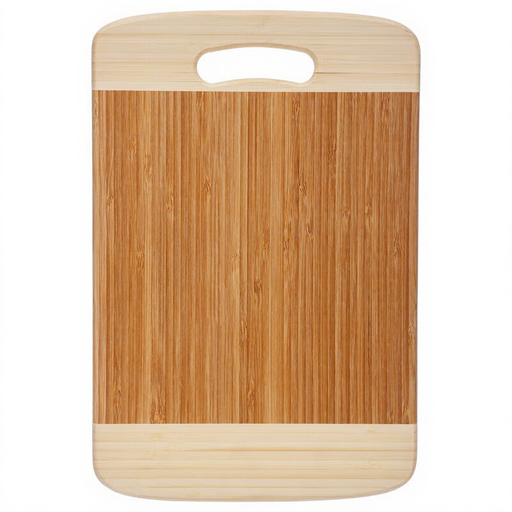
Why this product suits this profile: At 30 × 20 cm, it’s a good fit for smaller worktops and everyday food preparation. The integrated handle makes it easier to carry and store neatly.
The clearly stated dimensions make it easy to see that this compact board doesn’t offer a large cutting area. The care instructions rule out soaking and dishwasher cleaning.
Bamboo construction, an integrated handle and a size suited to smaller kitchens. The product description says the board should be washed by hand.
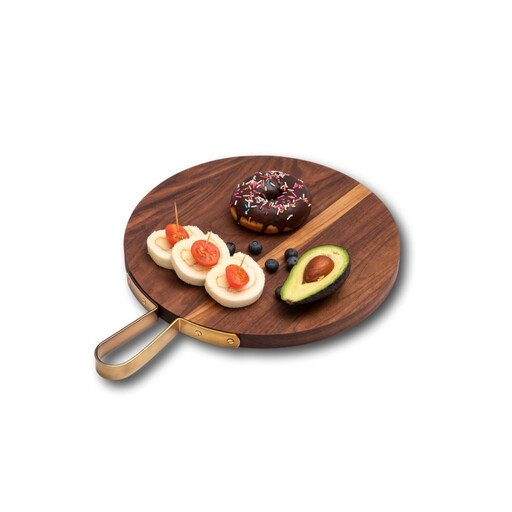
Why this product suits this profile: Its round shape, 31 cm diameter and 20 mm thickness give you a clearly defined work surface, with the added option of using it for serving.
The diameter and thickness help you gauge how much space it will take up before buying. The care instructions specifically recommend hand-washing and thorough drying.
Walnut wood, a round design, a 31 cm diameter and a long handle. The product details list its weight as 1,18 kg.
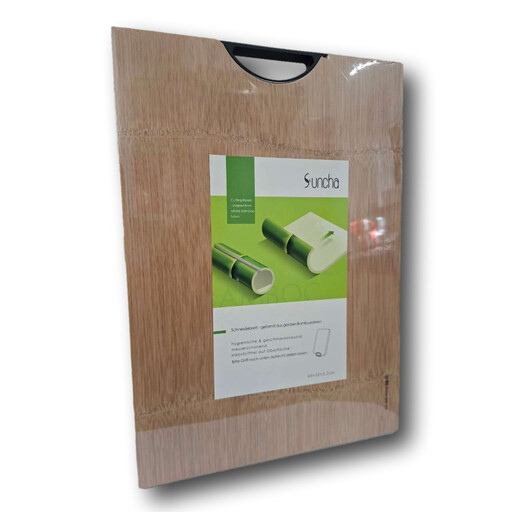
Why this product suits this profile: The 45 × 32 cm surface and 26 mm thickness give you plenty of room for larger food-preparation tasks, bread, dough or serving several ingredients.
The dimensions and thickness are clearly stated, so you can see how much space it will need. The handle is useful both for carrying and for using the board as a wooden or bamboo serving board.
The product description specifies 100% natural bamboo, a thickness of 26 mm and an integrated handle. It should be washed by hand, dried thoroughly and kept out of the dishwasher.
We’ve put together a complete, regularly updated list of products that meet these strict selection criteria and fully comply with the safety regulations in force in the EU.
Clean the board after each use with warm water and mild washing-up liquid. Then dry it with a cloth and store it upright until it’s completely dry. Soaking and dishwasher cleaning can damage wood and bamboo.
Around 30 × 20 cm is often enough for smaller kitchens and preparing individual ingredients. Families and frequent users may prefer a model at least around 40 cm long. Before you buy, check whether the whole surface, including any handle or juice groove, is actually available for chopping.
There’s no set lifespan that applies to every board. It depends on the material, thickness, how heavily it’s used and how well it’s cared for. Store the board somewhere dry, keep it away from high heat and check the surface regularly for cracks, splinters or warping.