
Lieferung heute & morgen

Qualitätsgarantie

Willkommens-Angebote freischalten: KOSTENLOSE Lieferung | Bis zu 80 % RABATT | Kostenlose 30-Tage-JoyPlus-Testphase
App herunterladen
A wooden chopping board with a handle can be useful for preparing, carrying and serving food. However, the wide choice available does not automatically make it easy to find the right kitchen chopping board. The key factors are the material, dimensions, handle design and care requirements. If you focus only on a natural look or particularly low prices, it’s easy to overlook important features.
Wood, bamboo and wheat straw fibre are often marketed as sustainable and durable. However, these terms don’t automatically tell you how a product is made. Look out for:
A bamboo chopping board may feel and perform differently from a beechwood board. There are also differences between solid bamboo and boards made from layers bonded together.
A large chopping board gives you plenty of room for vegetables, bread or dough. But in a small kitchen, a 45 or 50 cm board can be difficult to store. Before buying, check how much worktop space you have, the size of your sink and where you plan to keep the board.
A handle makes a board easier to carry, but takes up some of the space available for storage or chopping. If you’re looking for a chopping board to hang up, make sure the opening is sturdy and large enough for the hook you plan to use.
Wooden and bamboo boards are generally not designed to be soaked or put in the dishwasher. Excessive moisture can cause warping, cracks or a rough surface. An item without clear care instructions is therefore less transparent.
For everyday use, you should plan to:
A walnut chopping board stands out for its dark, natural colour. Depending on its size, it can be used to prepare food or as a wooden serving board. Its exact durability depends on its thickness, construction and care.
Beechwood is a popular choice for a classic kitchen chopping board. A model measuring 34 × 24 × 2.2 cm gives you a medium-sized surface for everyday tasks such as slicing, dicing and chopping.
Bamboo is often sold as a dense, relatively lightweight material. Even so, check exactly how the board is made. A board described as being made from a single piece of bamboo may differ in weight and moisture absorption from a multi-layer board.
Wheat straw fibre can be an alternative to traditional wood materials. If you choose this type of board, pay particular attention to its care instructions and whether it’s suitable for hot food.
Around 30 × 20 cm is often enough for one person or smaller food-preparation tasks. Families and keen cooks may prefer a larger chopping surface. A large chopping board measuring 45 × 32 cm or 50 × 35 cm gives you more room, but also needs more storage space.
Thickness affects a board’s weight and stability:
A thicker board isn’t automatically better for every kitchen. Consider whether you’ll be comfortable carrying its weight regularly between the worktop and dining table.
A chopping board with a juice groove can catch some of the liquid from juicy fruit and certain foods. However, the groove is no substitute for using separate boards hygienically for different types of food. It may be sensible to use separate boards for raw animal products and ready-to-eat ingredients.
An integrated handle makes a board easier to carry. A longer handle changes the shape of the board, making it suitable for serving bread, cheese or small snacks too. A chopping board set with several sizes can be handy if you want to prepare ingredients separately or tackle different tasks at the same time.
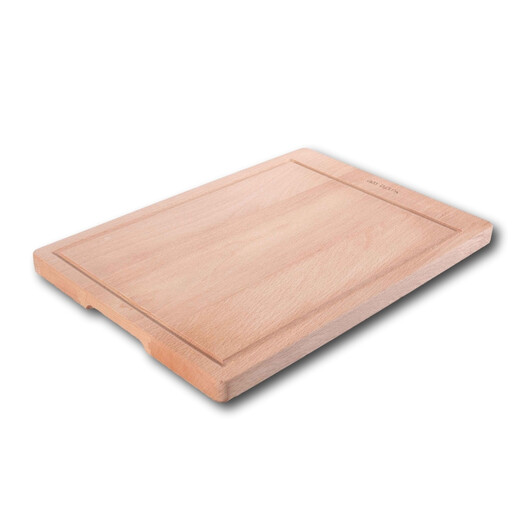
Why this product suits this profile: Measuring 34 × 24 × 2.2 cm, it offers a practical surface for everyday slicing, dicing and food preparation, without taking up too much storage space.
The clearly stated size and material make it easier to compare with other boards. The care instructions explicitly say not to soak it or put it in the dishwasher.
Beechwood, a thickness of 2.2 cm and a medium-sized surface for everyday kitchen tasks.
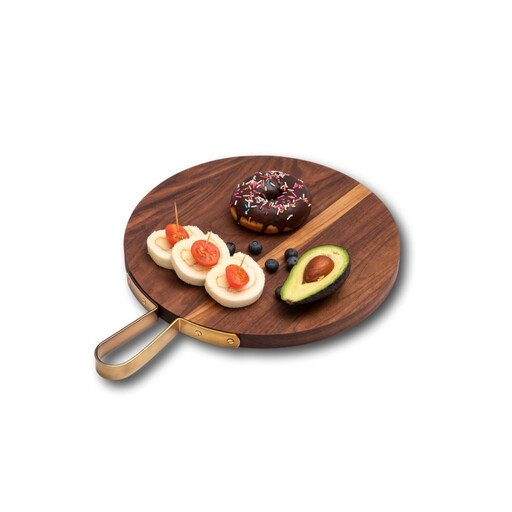
Why this product suits this profile: This round walnut board measures 31 cm in diameter and 20 mm thick. It combines a clearly defined chopping surface with a long handle for carrying or hanging it up.
The product details specify its diameter, thickness, material and weight of 1.18 kg. This makes it easier to judge how much space you’ll need before buying.
Walnut, a round shape, 20 mm thickness and an integrated long handle.

Why this product suits this profile: Three sizes make it easier to prepare ingredients separately and give you more options for chopping or serving. The integrated juice grooves and handles are designed for versatile use.
The set specifies three sizes, juice grooves, handles and hand-washing instructions. This gives you concrete product information rather than a vague claim about durability.
Three boards with integrated juice grooves and handles, made from bamboo according to the product details.
We’ve put together a complete, regularly updated list of products that meet these strict selection criteria and fully comply with the safety regulations in force in the EU.
A wooden board will stay in use for longer if you clean it in a way that suits its material. Use warm water, a mild cleaning product and a soft sponge. Then leave the board to dry completely. Storing it upright helps air circulate around its surfaces.
Avoid:
A sustainable chopping board isn’t sustainable simply because of the material it’s made from. To get long-term use from it, make sure its size, care requirements and intended use are a good match.
According to the product details, the wooden and bamboo models described here are designed to be washed by hand. Avoid soaking them or putting them in the dishwasher, as moisture and heat can warp or damage the material.
For regular food preparation in a household with several people, a large chopping board measuring around 45 × 32 cm or 50 × 35 cm can give you more working space. Before buying, check that it will fit in your kitchen, your sink and the storage space you have in mind.
There’s no single answer. Its lifespan depends on the material, thickness, how often you use it and how well you care for it. For product safety, replace the board if deep cracks, mould, severe warping or splinters appear.