
Lieferung heute & morgen

Qualitätsgarantie

Willkommens-Angebote freischalten: KOSTENLOSE Lieferung | Bis zu 80 % RABATT | Kostenlose 30-Tage-JoyPlus-Testphase
App herunterladen
A wooden chopping board is part of the everyday kitchen equipment in many households. It can be used to chop vegetables, bread and meat, as well as a serving board or cheese board. However, there are important differences between a simple wooden chopping board, a bamboo chopping board and decorative designs.
Anyone who focuses only on the wood effect or a low price can easily overlook important details. Three typical buying and usage pitfalls are particularly relevant:
The type of wood affects the appearance, weight, surface texture and care requirements. A walnut chopping board usually stands out thanks to its dark colour. An acacia wood chopping board often features a varied grain and can be used both as a work surface and as a serving board. Beech offers a light, understated appearance for everyday kitchen tasks.
Botanically, bamboo is not classified as wood but as a woody grass. A bamboo chopping board is often comparatively light and has an even surface. Nevertheless, buyers should not assess claims such as ‘sustainable’ or ‘antibacterial’ in isolation. The specific care instructions, quality of workmanship and suitability for the intended contact with food are what matter. No general hygienic or health benefit can be inferred from the material alone.
For everyday use in a smaller kitchen, dimensions of around 30 × 24 cm may be sufficient. Anyone who regularly prepares larger quantities will benefit from more surface area. Models measuring 38 to 45 cm in length are suitable for more extensive preparation, but require a dedicated storage space.
Thickness is also relevant:
A board with a handle is easier to carry from the worktop to the sink or table. With long handles, check whether they reduce the usable chopping area.
A wooden chopping board should be cleaned after every use with warm water and a mild cleaning product, then dried immediately. Soaking, prolonged contact with water and the dishwasher can cause warping or cracks.
For maintenance, food-grade mineral oil can occasionally be used if this is recommended in the product instructions. The board should be dried upright or in a well-ventilated position. Avoid naked flames, intense sources of heat and prolonged exposure to direct sunlight.
If the board develops deep cracks, splinters, mould or noticeable warping, stop using it and replace it. Harsh abrasive cleaners, wire wool and aggressive cleaning products can also cause unnecessary damage to the surface.
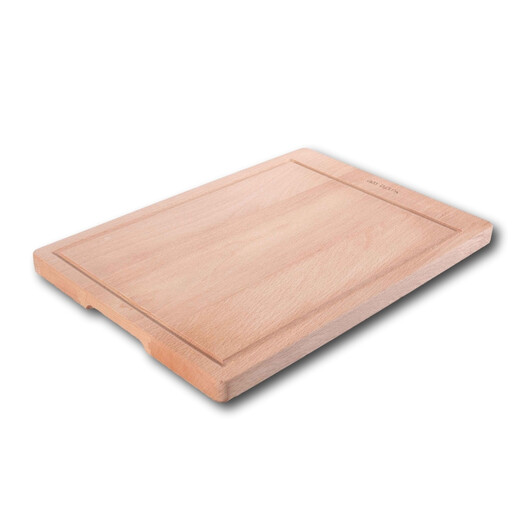
Why this product suits this profile: Measuring 34 × 24 × 2.2 cm, it offers a well-balanced working surface for everyday chopping without taking up too much storage space.
Its stated thickness is greater than that of many very thin boards. At the same time, this model remains easier to handle than an extra-large chopping block.
Beech wood, a natural wood grain and a stated suitability for chopping, dicing and mincing.
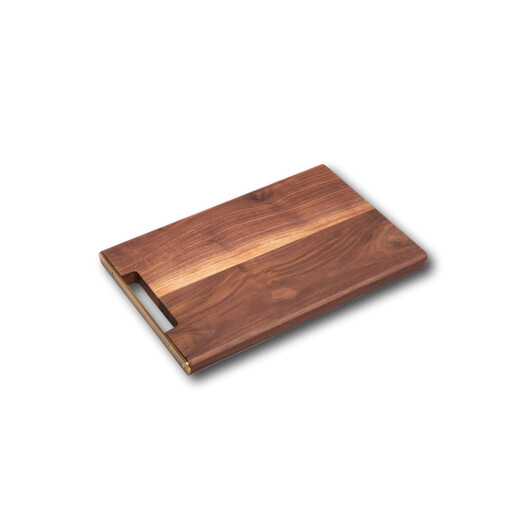
Why this product suits this profile: The walnut wood, 20 mm thickness and copper handle combine a functional work surface with a decorative design.
The specific dimensions and 1.3 kg weight provide more guidance than vague claims about stability. The handle makes it easier to move.
Walnut wood, 36 cm length and integrated I-shaped handle; according to the product details, it is suitable for general chopping and food preparation.
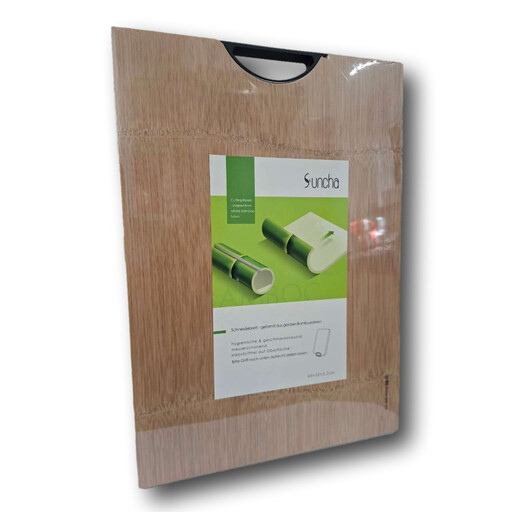
Why this product suits this profile: The 45 × 32 cm surface and 26 mm thickness are designed for extensive preparation, working with dough and serving.
The substantial thickness and stated weight of 1.99 kg provide clear indications of a stable base. Check the available storage space before buying.
Bamboo construction, integrated handle, 45 cm length and, according to the product description, suitability for preparing dough and pasta.
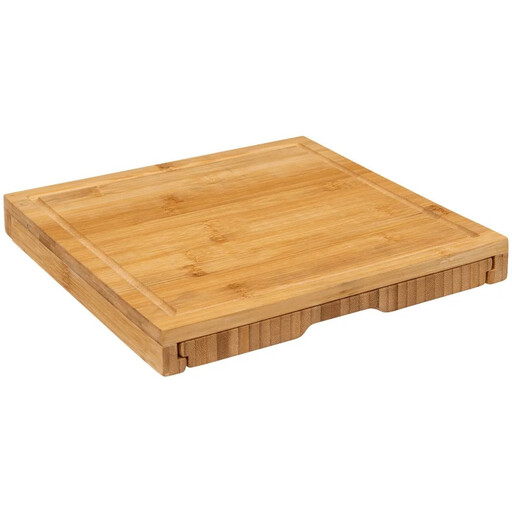
Why this product suits this profile: This square cheese board combines a decorative presentation surface with four cheese knives, making it suitable for entertaining and gifting.
The contents are clearly specified, making it easier to assess whether the set meets your serving requirements.
Bamboo, 30 × 30 cm, four cheese knives and a storage solution according to the product description; not suitable for the dishwasher.
A board used for raw meat or fish should be cleaned particularly thoroughly and dried completely after use. For households that prepare different foods separately, using two boards may be more practical than a single model for every task.
A serving board or cheese board does not need to meet the same requirements as a chopping block. For bread, fruit, cheese and snacks, the shape, handle and appearance are often more important than an especially thick construction. For heavy chopping, however, choose a stable, sufficiently thick design with a non-slip work surface.
We have put together a complete, regularly updated list of products that fully meet these strict selection criteria and the safety regulations applicable in the EU.
Wash it with warm water and a mild cleaning product after every use, dry it immediately and leave it upright to dry completely. Do not soak the board or put it in the dishwasher. Depending on the manufacturer’s instructions, food-grade mineral oil can help maintain the surface.
Its service life depends on the type of wood, quality of workmanship, level of use and care. Cracks, splinters, mould or severe warping are reasons to replace it. Regular drying and avoiding heat and harsh cleaning products can help extend its useful life.
Not necessarily. A large chopping board offers more working space, but is heavier and needs more room on the worktop and in storage. Before buying, compare the dimensions of your work area, sink and intended storage space.