
Lieferung heute & morgen

Qualitätsgarantie

Willkommens-Angebote freischalten: KOSTENLOSE Lieferung | Bis zu 80 % RABATT | Kostenlose 30-Tage-JoyPlus-Testphase
App herunterladen
A wooden chopping board for the kitchen can be used in many ways when preparing and serving food. However, not every model delivers the right results in everyday use. The key considerations are less about decorative promises and more about the material, dimensions, care instructions and construction details.
A kitchen board often looks larger in product photos than it really is. A compact surface is enough for chopping a single onion. However, if you prepare vegetables, bread or meat for several people, you will need more space. A wooden chopping board that is too small allows ingredients to slide over the edge and makes organised mise en place more difficult.
Always check the stated external dimensions rather than relying solely on the product description “large chopping board”. Thickness is also important: it affects the weight, stability and usable height on the worktop.
Wood and bamboo are not suitable for the dishwasher. Prolonged soaking, high heat and permanently damp storage can contribute to warping, cracks or a rough surface. After use, a wooden chopping board should be cleaned with mild washing-up liquid, dried thoroughly and stored upright where possible.
Some models also require suitable wood care with regular use. The relevant manufacturer’s instructions always take priority.
A serving board may be suitable for cheese, bread or small dishes, but it is not automatically designed for heavy chopping. Conversely, a chopping block is often heavier because of its construction and less convenient for serving food directly. Draining trays are also practical, but they require additional cleaning.
Before buying, consider whether the board will mainly be used for chopping, sorting, draining or serving.
A bamboo chopping board is technically not made from traditional solid wood, but from compressed bamboo material. Bamboo is lightweight and hard-wearing, and is often used for functional kitchen boards. The precise construction, surface quality and bonding are still important points to check.
A walnut chopping board stands out for its darker wood appearance. The Suncha models measuring 250 × 360 × 20 mm are also available with different handle designs. Natural wood may show variations in colour. Direct heat, naked flames and prolonged exposure to sunlight should be avoided.
An acacia wood chopping board can be used both for chopping and serving. The Premier Housewares model is specified as being made from acacia wood and measures 30 × 28 × 2 cm. Its heart shape with a white rim is a design feature, not a technical function.
Three measurements are particularly important for everyday food preparation:
The Suncha Creative Combination Chopping Board measures 410 × 310 × 19 mm. According to the product details, this surface provides room for several ingredients and is intended for vegetables, fruit, meat and bread. Before ordering, check whether the dimensions will fit on your existing worktop and inside your kitchen cupboard.
After each use, remove any larger residues and clean the surface with warm water and mild washing-up liquid. It is important to dry the board completely afterwards. Do not leave it in water for extended periods or put it in the dishwasher if the product details advise against this.
A wooden board should no longer be used if it develops significant cracks, mould or severe warping. Metal brushes and abrasive cleaning products can damage the surface.
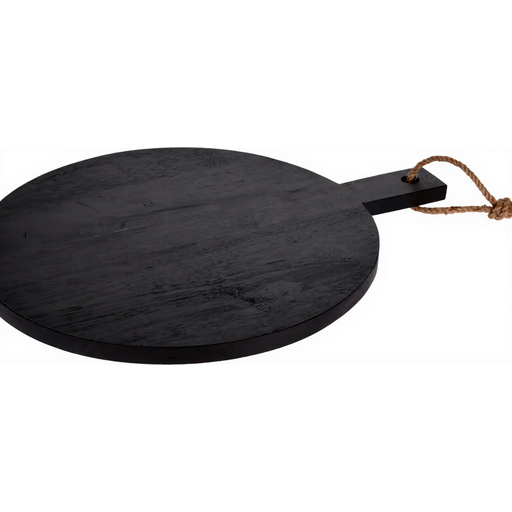
Why this product suits this profile: The round chopping board made from rubberwood combines a compact shape with the added option of using it as a serving board for cheese, bread or starters.
The product details explicitly state that it should be washed by hand, avoiding the incorrect expectation that it is dishwasher-safe.
Round design, smooth surface and, according to the product description, suitable for both chopping and serving.
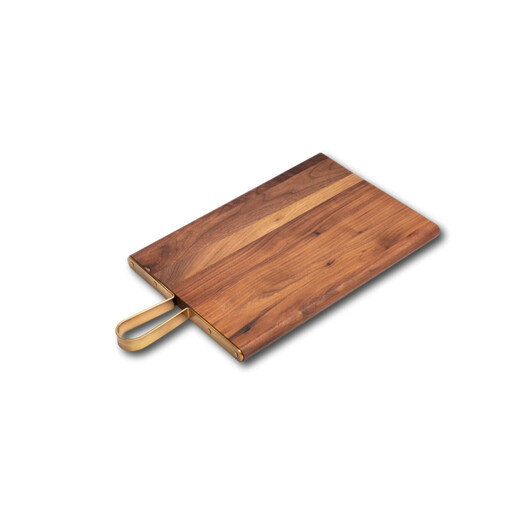
Why this product suits this profile: The walnut chopping board has clearly stated dimensions and a long handle for comfortable handling when preparing or serving food.
The safety instructions specifically advise protecting the board from heat, direct sunlight, heavy scratching and damaged surfaces.
Natural wood, 20 mm thickness and a long handle; a version with a small corner handle is also available.
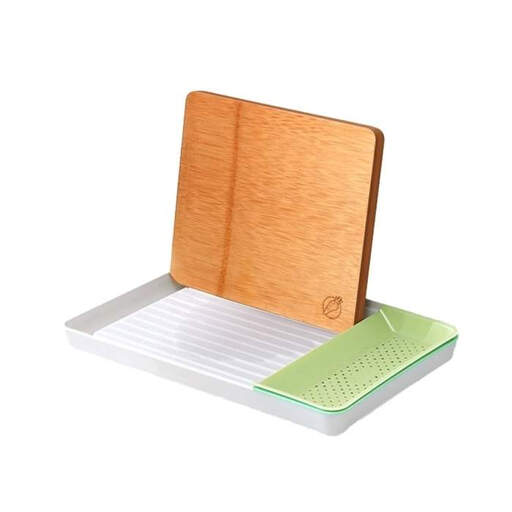
Why this product suits this profile: This set is designed for users who want to keep ingredients, waste and washed food organised separately during preparation.
The functions are clearly stated: two removable storage trays and a draining tray. This makes it easier to assess the added convenience before buying.
Bamboo board, two trays and a draining tray measuring 392 × 254 × 37 mm; the trays are removable.
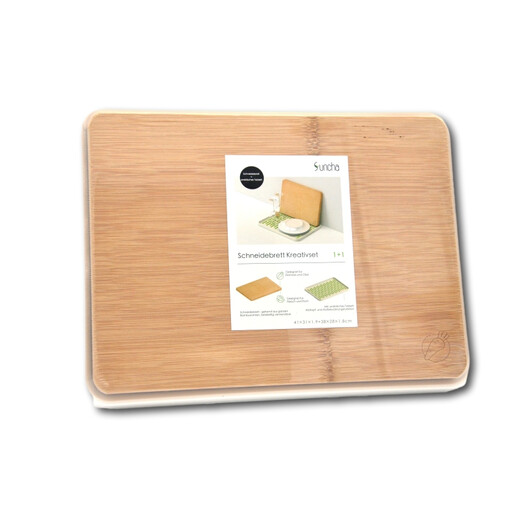
Why this product suits this profile: The generous rectangular surface is suitable for several ingredients and a range of preparation tasks in the kitchen or outdoors.
The precise dimensions of 410 × 310 × 19 mm make it clear how much worktop and storage space is needed before buying.
Rectangular work surface, 19 mm thickness and, according to the product description, suitable for vegetables, fruit, meat and bread.
If you need to cover several tasks, you can combine two different boards: a larger model for preparation and a smaller serving board.
We have put together a complete, regularly updated list of products that fully meet these strict selection criteria and the safety regulations applicable in the EU.
Its lifespan depends on the type of wood, construction, cutting intensity and care. Regular drying, proper cleaning and protection from heat can help maintain its usability. A board should be replaced if it develops deep cracks, mould or severe warping.
There is no simple answer. What matters is a smooth, undamaged surface, cleaning after every use and thorough drying. A separate kitchen board may be advisable for raw animal products, helping to keep different food groups separate in practice.
Remove residues immediately after use, clean the board with mild washing-up liquid and dry it completely. Avoid prolonged soaking, the dishwasher, direct heat and abrasive brushes. The care instructions for the specific product should always be followed.