
Lieferung heute & morgen

Qualitätsgarantie

Willkommens-Angebote freischalten: KOSTENLOSE Lieferung | Bis zu 80 % RABATT | Kostenlose 30-Tage-JoyPlus-Testphase
App herunterladen
A wooden chopping board should sit securely during everyday use, be gentle on knives and be easy to clean. At the same time, choosing the right one can be made more difficult by terms such as “antibacterial”, “sustainable” or “extra robust”. These claims do not automatically prove that a product is the right quality for your needs. The key factors are the material, dimensions, care instructions and intended use.
Bamboo and wood are often marketed as hygienic or antibacterial. However, natural material properties do not replace proper cleaning. After cutting meat, fish or vegetables, the board must be thoroughly washed by hand and dried completely. A description such as antibacterial chopping board should therefore not be understood as a medical or permanent hygiene guarantee.
A thin board can warp when exposed to moisture or move more easily while you are chopping. For regular kitchen use, 17 to 30 mm material thickness, depending on the size, is a practical guideline. Greater weight can also improve stability, although it makes the board more difficult to store and clean.
Wooden and bamboo boards generally do not belong in the dishwasher. Prolonged soaking can cause the fibres to swell and encourage cracks. If you buy a wooden chopping board for the kitchen, you should therefore be prepared to wash it by hand and dry it immediately. For applications where easy care is a priority, a glass board may be an option, although glass is considerably harder on knife edges.
A bamboo chopping board is made from a fast-growing material and often provides a smooth, knife-friendly surface. The specific construction is nevertheless important: glued joints, edges and thickness all affect how the board performs.
Acacia wood has a distinctive grain and is used for both chopping boards and wooden serving boards. Products such as an acacia wood cheese board are often designed primarily for arranging and serving cheese, fruit, bread or snacks. Before buying, make sure you know whether the board will be used regularly for chopping or mainly for serving.
Glass is resistant to moisture and easy to wipe clean. Decorative glass boards can also be used as serving platters. However, the hard surface can put more strain on kitchen knife edges than wood or bamboo.
For smaller kitchens or occasional preparation, around 30 × 24 cm is usually sufficient. If you prepare several ingredients at the same time, you may benefit from a large chopping board measuring approximately 40 × 28 cm or more. Make sure that enough space remains on the worktop so that the board does not overhang.
Round boards are particularly suitable for arranging and serving food. Rectangular models generally make more efficient use of the space beside the hob and sink. A chopping board with a handle is easier to carry from the worktop to the table. However, the handle can reduce the usable cutting area.
Please observe the following points:
The manufacturer’s information takes priority. Details about food contact, care and materials should be clearly and verifiably stated in the product description.
The following recommendations categorise specific products according to everyday situations and verifiable product data.
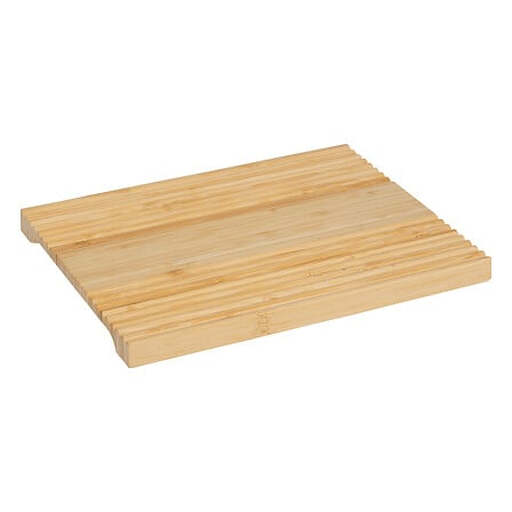
Why this product suits this profile: Measuring 30 × 24 cm, this rectangular bamboo board offers a practical work surface for smaller kitchens and straightforward food preparation.
The stated thickness of 2 cm reduces the risk of an excessively unstable work surface. Hand washing is expressly recommended.
Bamboo, 30 × 24 × 2 cm, approximately 1.01 kg; according to the product description, the smooth surface is suitable for knives.
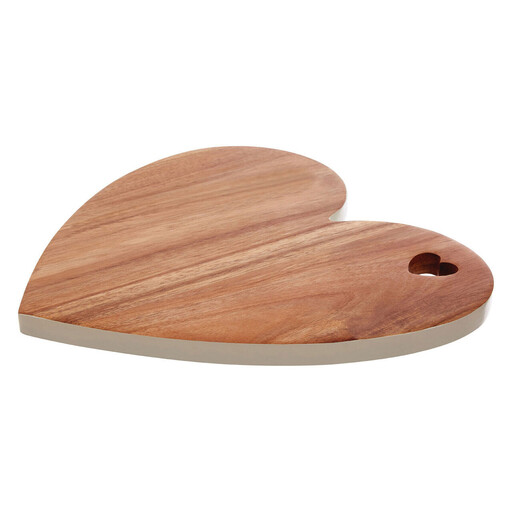
Why this product suits this profile: Combining a 30 × 28 cm surface with a decorative heart design, this acacia wood board can also be used for serving.
The stated thickness of 2 cm gives it more substance than very flat boards. The care instructions expressly rule out dishwasher use.
100% acacia wood according to the product information; suitable as a kitchen board and as a serving surface for cheese, bread and snacks.
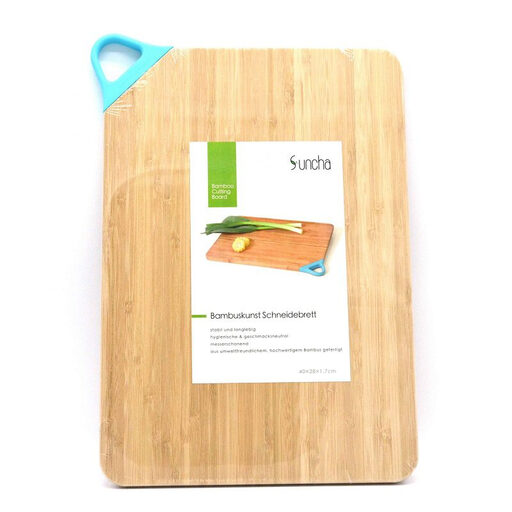
Why this product suits this profile: Measuring 40 × 28 cm, this board is suitable for larger quantities, while the integrated handle makes it easier to carry between the worktop and sink.
The 17 mm thickness and generous format help avoid an excessively small cutting area. The handle is functional but does not take up any of the central work surface.
Bamboo, 400 × 280 × 17 mm, integrated handle; the manufacturer’s information recommends hand washing.
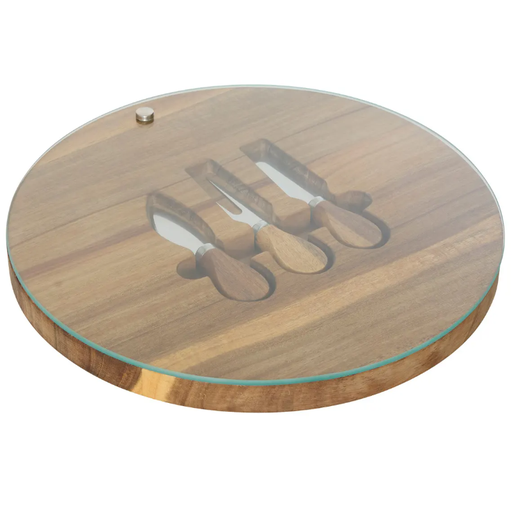
Why this product suits this profile: With a diameter of 30 cm, this round board is designed for cheese, cold meats, fruit and snacks, making it suitable as a gift or table decoration.
Its stated purpose makes it clear that this is primarily a serving and cheese board, rather than a large preparation board.
Natural acacia wood and a round surface with a diameter of 30 cm; clean with a damp cloth and dry completely.
A recipe book holder for the kitchen can be useful for cookbooks, recipe cards or tablets. The foldable MyGift Rustic Torched Wood Cookbook Holder has a metal page holder and can be stored flat. It is designed as a stand and is not a substitute for a chopping board. Decorative wooden trays with cut-out handles are also available for light serving tasks. According to the product information, these are intended for dry or lightweight serving items and are not suitable for hot pans, ovens or microwaves.
We have put together a complete, regularly updated list of products that fully meet these strict selection criteria and the safety regulations applicable in the EU.
Wash it after every use with warm water and mild washing-up liquid. It should then be dried immediately and stored upright. Depending on the type of wood and the manufacturer, applying a food-safe conditioning oil at regular intervals may be advisable. Dishwashers and prolonged soaking should be avoided.
For families and frequent food preparation, formats of around 40 × 28 cm provide enough space for several ingredients. Check the available worktop space and the weight before buying. An overly large board can be difficult to store and clean.
A blanket statement is not helpful. Both materials require thorough cleaning and complete drying. Glass is easy to wipe clean but can put more strain on knife edges. Wood and bamboo are often kinder to knives, but they require more careful maintenance and should be replaced if deep grooves or cracks develop.