
Lieferung heute & morgen

Qualitätsgarantie

Willkommens-Angebote freischalten: KOSTENLOSE Lieferung | Bis zu 80 % RABATT | Kostenlose 30-Tage-JoyPlus-Testphase
App herunterladen
A wooden climbing frame for children can bring movement into the playroom and combine a variety of play options. At the same time, unclear age recommendations, insufficient space planning and misjudged weight limits can quickly lead to unsuitable purchases. If you only focus on appearance before buying, you may overlook important details such as the footprint, assembly, type of rope or necessary safety clearances.
This buying guide explains which details you should pay particular attention to when choosing a climbing triangle for children, a wooden Pikler triangle or an indoor climbing tower for children. It also covers natural jute or hemp rope for the garden, packaging and craft projects.
The stated maximum load is a technical limit, not a general safety guarantee. Swinging, jumping and dynamic climbing create additional forces. Children should therefore only use a freestanding climbing frame in accordance with the manufacturer’s instructions and under direct supervision. For a model with a swing, it is also important to check whether wall anchoring is recommended and whether there is sufficient clearance from furniture, windows and radiators.
Some products state a recommended age of 24 months and, at the same time, include warnings for children under 36 months. For families in Germany, the stricter information applies: the product should only be used from 3 years of age and under direct supervision if this is stated in the safety information.
A 50 m jute rope or 2 mm hemp rope may be suitable for plants, packaging and decoration. However, a thin craft rope is not automatically designed to support a child’s body weight. Only components specifically intended for this purpose should be used for a children’s climbing rope. This is particularly important for homemade constructions, hanging seats and swings.
Before ordering, measure the room height, footprint and movement area. A climbing triangle may be more compact than an indoor climbing tower for children, but it still needs a clear zone around it. The surface should be level and stable. A suitable play mat or carpet is recommended for climbing towers; hard, uneven floors increase the risk of injury in the event of a fall.
For a wooden climbing frame, solid wood, rounded edges and securely fitted joints are important details. Untreated wood can offer a natural appearance, but requires regular visual checks. Check the screws, rungs, ropes, rings and moving parts before every use. The product description should also clearly state whether accessories such as a slide board, mat or swing are included or need to be purchased separately.
The maximum load must be suitable for the intended use. A model with a 50 kg or 70 kg limit must not be used above that weight. This does not automatically apply to several children at the same time or to particularly dynamic movements. Each of the products presented here is intended for use by one child at a time only.
For children aged 3 and over, a Montessori climbing frame can provide an opportunity for independent, age-appropriate physical play. Terms such as Montessori or Pikler describe an educationally inspired concept, but they do not replace supervision or checking the technical specifications.
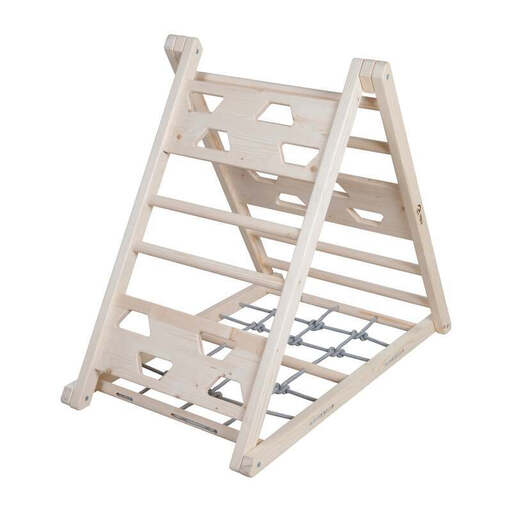
Why this product suits this profile: This compact climbing triangle made from solid, untreated wood features three sides with rungs, a climbing rope and differently shaped grip areas. Measuring 85 × 63.5 × 97.5 cm, it can fit into many children’s bedrooms.
The three functional sides make it clear what is included. The maximum load of 50 kg and the required assembly are clearly stated. The slide board and play mat are available separately.
Solid wood, three play sides, a product weight of 8.4 kg and space-saving storage after use.
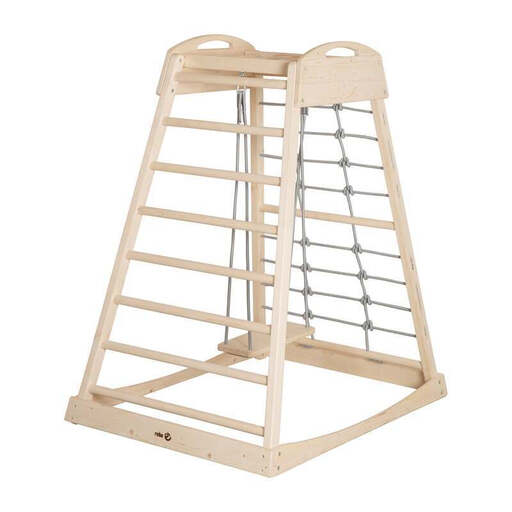
Why this product suits this profile: Measuring 127.5 × 83 × 110.5 cm, this indoor climbing tower combines a ladder, climbing-rope sides, gymnastic rings and a removable wooden swing for children. It is ideal for families looking for several movement options in one piece of furniture.
The design explicitly states the 70 kg weight limit, assembly requirements and recommended wall anchoring. A soft surface and clearance from windows and furniture are still required.
Solid natural wood, replaceable wooden swing, climbing ropes and rings; product weight 13.7 kg.
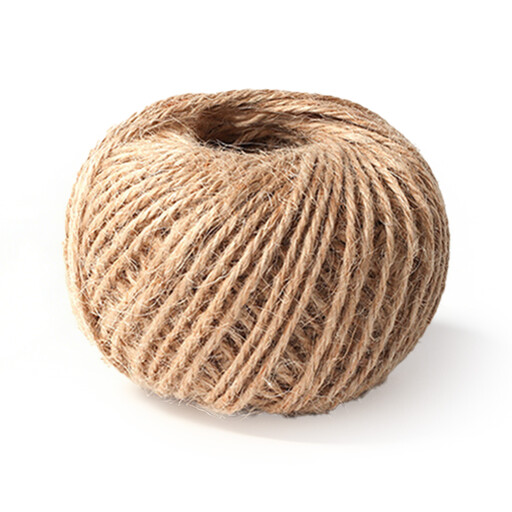
Why this product suits this profile: This natural-fibre rope is aimed at hobby gardeners, crafters and DIY enthusiasts. It can be used for tying plants, packaging, floral decorations, gift wrapping and creative braiding projects.
The length and diameter are clearly stated. Important: this 2 mm rope is not specified as a children’s climbing rope or swing suspension rope and must not be used for these purposes.
50-metre roll, 2 mm diameter and versatile use for gardening, decoration, packaging and craft projects.
We have put together a complete, regularly updated list of products that fully meet these strict selection criteria and the safety regulations applicable in the EU.
The climbing frame should stand on a level, non-slip surface. A suitable play mat or sturdy carpet is advisable for a freestanding climbing tower. The area should be free from sharp edges, stairs, windows and radiators. Wall anchoring may be recommended depending on the model and how it is used.
The service life depends on the materials, load, room conditions and care. It is not possible to give a reliable fixed number of years. Visual checks before every use and regularly retightening the screws can help identify wear at an early stage. The product should no longer be used if there are cracks, loose joints or damaged ropes.
No. A 2 mm hemp rope intended for gardening, packaging or craft purposes is not automatically designed to withstand a child’s weight and the dynamic forces involved in climbing. Only components intended for this purpose by the manufacturer and correctly secured should be used as a children’s climbing rope.