
Lieferung heute & morgen

Qualitätsgarantie

Willkommens-Angebote freischalten: KOSTENLOSE Lieferung | Bis zu 80 % RABATT | Kostenlose 30-Tage-JoyPlus-Testphase
App herunterladen
A good wooden cutting board is a cornerstone of any kitchen. It's not just a work surface, but also a tool that preserves the sharpness of your knives and, if chosen correctly, can last for decades. However, the market is flooded with products whose quality only becomes apparent after a few weeks or months—often in the form of warping, cracks, or damaged knife blades.
Many buyers invest in a visually appealing board, only to find that it warps or develops deep, unhygienic grooves after a short time. This guide will show you the crucial features to look for, helping you find a durable and functional wooden cutting board that serves its purpose without any hidden drawbacks.
Before we dive into the key parameters, let's look at the typical pitfalls that often lead to disappointment.
To avoid the problems mentioned above, focus on the following three aspects. They are the key to a functional and long-lasting product.
Each type of wood has specific properties regarding hardness, density, maintenance, and appearance.
The way the wood is constructed significantly influences its durability and knife-friendly properties.
These two features determine how practical a board is in daily use.
Here are some recommendations tailored to different needs and usage scenarios.
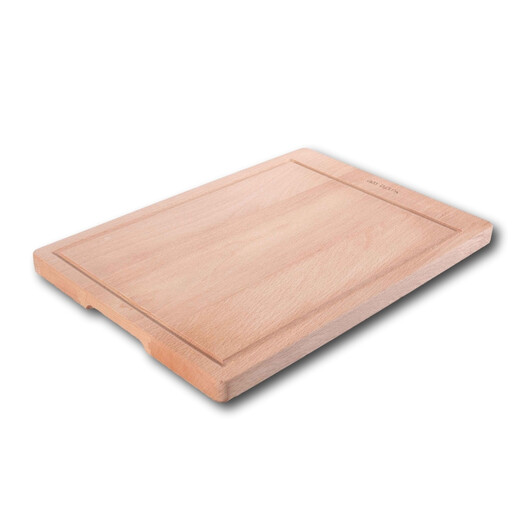
Why it's a good fit: Ideal for daily use. Beechwood is a proven classic in European kitchens—robust, durable, and hygienic. The size is perfect for preparing vegetables, herbs, or a quick snack.
Made from solid beechwood with a thickness of 2.2 cm, it minimises the risk of warping that is common with thin or poorly laminated boards.
A classic, reliable solid wood cutting board made from a proven material, ensuring a long lifespan with simple care.
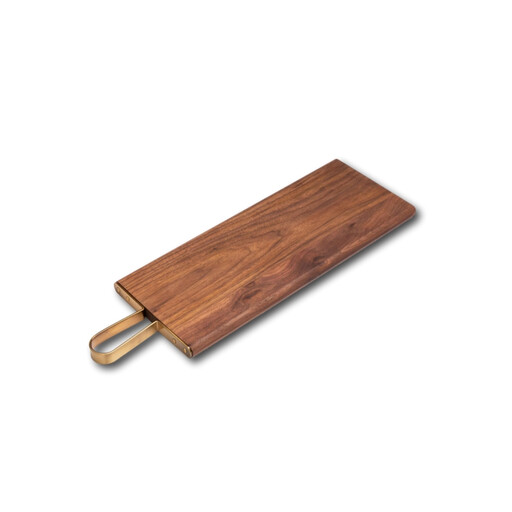
Why it's a good fit: This board combines functionality with aesthetics. The dark walnut wood and long handle make it the ideal wooden serving board for cheese, charcuterie, or antipasti, while also serving as a fully functional cutting board.
Walnut wood offers a good balance of hardness and give, making it knife-friendly. The long handle ensures secure handling and prevents awkward balancing when serving.
An elegant walnut cutting board design with high utility as both a cutting and serving board, thanks to its practical handle.
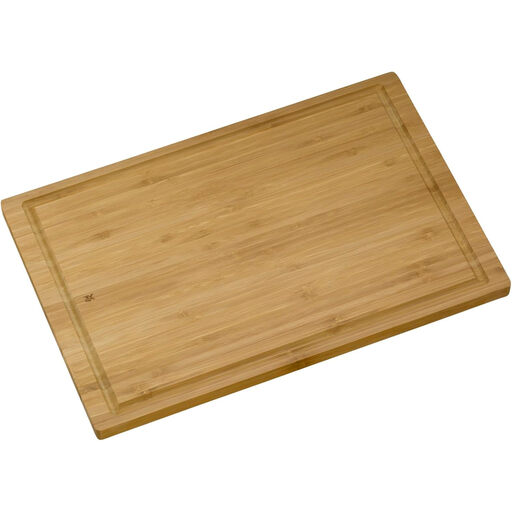
Why it's a good fit: Anyone who chops large quantities or carves a roast needs space and a juice groove. This large bamboo cutting board offers both. It's robust enough for intensive use, and the groove keeps the kitchen clean.
The integrated juice groove solves the problem of overflowing liquids. Bamboo is naturally very dimensionally stable and resistant to moisture, which reduces the risk of warping.
A generous work surface and a practical juice groove make it the ideal carving board for meat and large vegetables.
We have compiled a complete, up-to-date list of products that fully meet these strict selection criteria and safety standards.
1. How do you properly care for a wooden cutting board? Proper care is simple but crucial for longevity. Clean the board by hand with warm water and mild dish soap after each use. Dry it thoroughly immediately and store it upright to allow air to circulate. Never submerge it in water or put it in the dishwasher. Oil the board regularly (about every 4-6 weeks) with a food-grade mineral oil or beeswax to nourish the wood and protect it from drying out.
2. Which wood is best for kitchen knives? Woods with a medium hardness, such as walnut, cherry, or maple, are considered particularly knife-friendly. They are hard enough to withstand cutting but soft enough not to dull a knife's fine edge. Very hard materials like bamboo or acacia, while extremely durable, can cause faster blade wear on delicate knives, especially Japanese ones.
3. Can you cut raw meat on a wooden board? Yes, it is safe to do so with proper handling. Wood has natural antibacterial properties. The key is to thoroughly clean the board with hot water and dish soap after contact with raw meat or fish. Many users dedicate one side of the board for raw meat and the other for vegetables and bread, or they use a separate board entirely to prevent cross-contamination.