
Lieferung heute & morgen

Qualitätsgarantie

Willkommens-Angebote freischalten: KOSTENLOSE Lieferung | Bis zu 80 % RABATT | Kostenlose 30-Tage-JoyPlus-Testphase
App herunterladen
A wooden cutting board for the kitchen should handle vegetable preparation, bread slicing and, when needed, serving. In practice, however, the differences go beyond appearance. The material, thickness, dimensions and care instructions determine whether the board fits seamlessly into your everyday kitchen routine.
Many purchasing decisions come down to three common pitfalls:
A bamboo cutting board is a popular choice for everyday food preparation. Bamboo is lightweight, dimensionally stable and available in a range of constructions. Solid-piece models differ from glued or multi-layer variants.
A walnut cutting board offers a dark, distinctive grain and, depending on its format, can be used for both cutting and serving. Walnut should be protected from heat, open flames and prolonged exposure to direct sunlight. An acacia wood cutting board is often used as a serving board because of its contrasting grain and decorative surface.
Beech is another classic wood species. For example, the Suncha Beech Wood Cutting Board measures 34 × 24 × 2.2 cm. According to the product information, it is intended for cutting and should be regularly treated with food-safe mineral oil. Regardless of the type of wood, the manufacturer’s specific care instructions always take precedence.
A compact board is sufficient for individual ingredients. However, anyone preparing bread, vegetables or several ingredients at once should consider a large cutting board. As a practical guide:
Thickness affects both weight and stability. Boards measuring around 17 to 20 mm are relatively easy to handle. A model that is 26 or 30 mm thick will generally sit more securely, but it will also be more difficult to store. Before buying, consider your worktop, cupboard space and sink dimensions.
A cutting board with a juice groove can collect liquid when cutting juicy fruit, vegetables or meat. However, a juice groove does not replace hygienic separation: separate boards or thorough cleaning are advisable for raw animal products and ready-to-eat ingredients.
A cutting board with a handle is easier to carry from the kitchen island to the table. This is particularly useful for serving boards intended for bread, cheese or snacks. Check whether the handle forms part of the usable surface and whether the board is designed to be carried with one or both hands.
A cutting board set with several sizes can be useful for households that want to prepare different types of food separately. The number of boards is not the only consideration; check the actual dimensions and how easily the set can be stored.
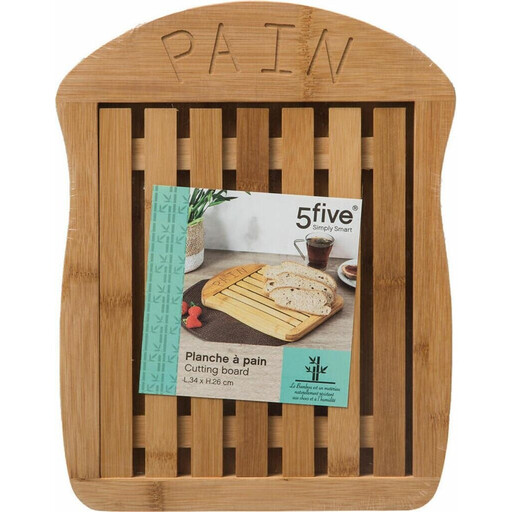
Why does it suit this profile? The rectangular format is well suited to bread, fruit and simple preparation tasks in smaller households, or as an additional board.
The dimensions are clearly stated, making it easy to check before purchase whether the work surface is large enough for the intended use.
Bamboo construction and a versatile rectangular format for bread and everyday kitchen preparation.
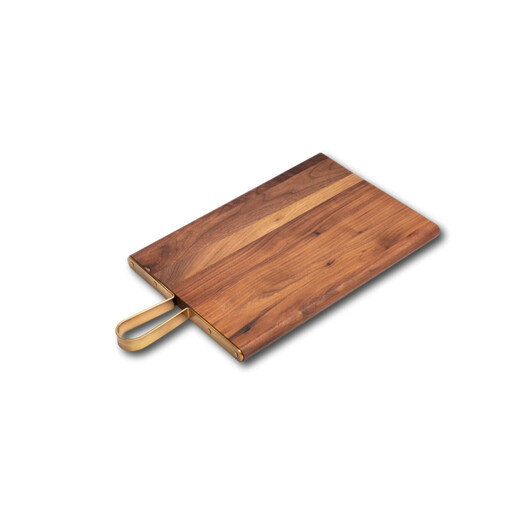
Why does it suit this profile? The walnut surface and long handle make this board an appealing choice for hosts, cheese enthusiasts and decorative presentation.
The product details specify the material, dimensions and intended use. The board should not be soaked or cleaned in the dishwasher.
A 20 mm thickness, 36 cm length and integrated long handle support both cutting and serving.
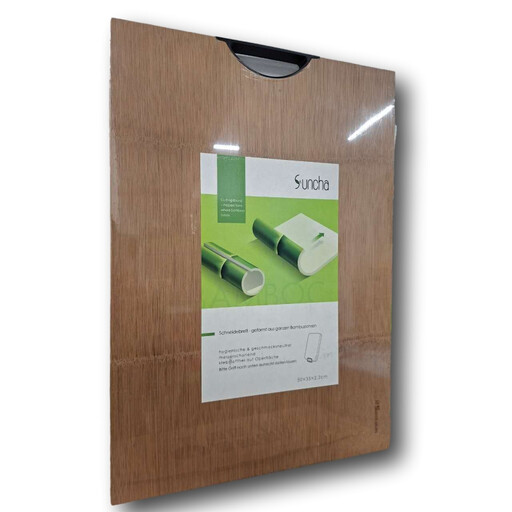
Why does it suit this profile? The generous surface is ideal for extensive mise en place, working with dough, bread and preparing several ingredients at once.
The dimensions and weight of 1.99 kg make the storage and transport requirements clear. The board should be dried completely in an upright position.
50 cm length, 35 cm width, 26 mm thickness and a handle for convenient transport.

Why does it suit this profile? This large bamboo board is designed for households that want to combine cutting and serving on a single surface.
The juice groove is explicitly listed as a feature. According to the product information, the board should be washed by hand rather than in the dishwasher.
A 45 × 30 cm surface, integrated juice groove and reversible design according to the product description.
The complete overview includes additional formats and designs for a range of kitchen and serving purposes.
Service life depends largely on how the board is used and cleaned. The following basic rules apply to most wooden and bamboo boards:
A sustainable cutting board cannot be identified by its material label alone. Also consider its service life, ease of maintenance, solid construction and suitability of size. A board that remains too small for its intended use or has to be replaced because of improper cleaning is ultimately less fit for purpose.
For everyday use, formats between approximately 34 × 24 cm and 45 × 30 cm are often practical. Bamboo, beech and walnut are all suitable options; the decisive factors are the surface, thickness, stability and care instructions for the individual product.
A juice groove can collect liquid while cutting and help keep the work surface cleaner. It is not necessary for dry ingredients. When choosing a board, check whether the groove is wide enough and easy to clean.
It is not possible to give a reliable fixed service life. Longevity depends on the material, intensity of use, knife pressure, cleaning and drying. Properly maintained boards can be used for many years; cracks, splinters, mould or significant warping indicate that the board should be replaced.