
Lieferung heute & morgen

Qualitätsgarantie

Willkommens-Angebote freischalten: KOSTENLOSE Lieferung | Bis zu 80 % RABATT | Kostenlose 30-Tage-JoyPlus-Testphase
App herunterladen
A good wooden cutting board is the foundation of any kitchen. It's more than just a surface—it protects your knives, provides a stable workspace, and can even double as a stylish serving board. However, the market is flooded with products of widely varying quality. Many buyers invest in a seemingly high-end wooden board, only to find that it warps, cracks, or dulls their knife blades after just a few months.
As your Joybuy Product Recommendation Officer, I'm here to help you recognise the common pitfalls and make an informed decision. We will focus on the objective features that define a durable and functional cutting board.
Before we dive into the key features, let's highlight the three most common issues that lead to a poor purchase:
To avoid these problems, you should pay attention to three key parameters before buying. These determine the longevity, functionality, and safety of your cutting board.
The choice of wood and its construction are crucial for quality.
The dimensions and additional features should match your cooking habits.
A good wooden board can be more than just a cutting surface. Models with an attractive grain and shape are also excellent as a wooden serving board or cheese board. Make sure the board is designed for hand washing—wooden cutting boards should never be placed in the dishwasher. A cutting board set can be a practical solution for using different boards for raw meat, vegetables, and bread, thereby improving kitchen hygiene.
Here are some recommendations tailored to different user profiles and requirements.
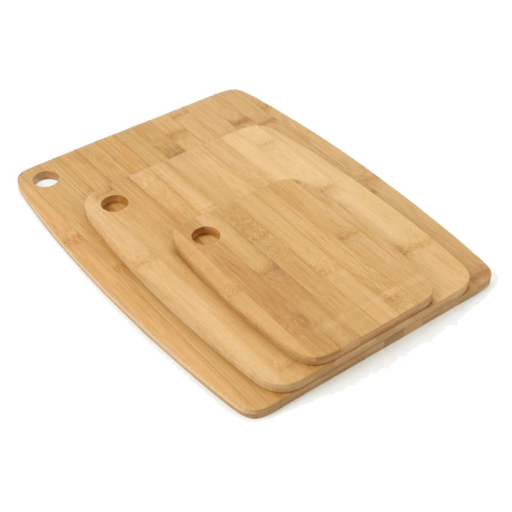
Why this set is a great fit: Ideal for anyone looking for a flexible and cost-effective starter kit. With three different sizes, you're equipped for any task—from chopping onions to preparing larger meals.
The set allows for hygienic separation of foods (e.g., one board for meat, one for vegetables), thus avoiding the "hygiene illusion" of a single all-purpose board. Bamboo is also a hard material that remains stable with proper care.
High flexibility with three different sizes for various tasks. Excellent value for a complete starter set.

Why this board is a great fit: Those who cook frequently and with passion need a large, stable work surface. With its dimensions of 45 x 30 cm, this board offers plenty of space and is very robust thanks to its thickness and material.
The solid 1.9 cm thickness and high-quality bamboo material minimise the "warping dilemma." The integrated juice groove solves the problem of messy work surfaces when carving.
Generous work surface and a practical juice groove, ideal as a carving board. The reversible design allows for separate use for different food groups.
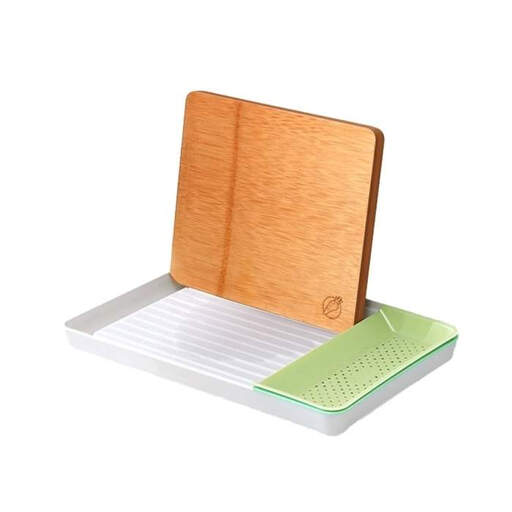
Why this board is a great fit: For chefs who value a tidy and efficient workflow. This system integrates the storage of chopped vegetables and waste directly into the cutting process.
It solves the problem of disorganised work surfaces, which indirectly improves hygiene. By directly separating ingredients and waste, the work surface is kept cleaner, reducing the risk of cross-contamination.
Innovative, multifunctional design with removable trays that significantly simplifies kitchen organisation.
We have compiled a complete, up-to-date list of products that fully meet these strict selection criteria and German safety regulations.
Proper care is crucial for longevity. Clean the board by hand after each use with warm water and a mild dish soap. Dry it thoroughly with a cloth immediately and store it upright to allow air to circulate. Never put it in the dishwasher, as the heat and moisture will lead to cracks and warping. About once a month, rub the board with a food-grade mineral oil to nourish the wood and protect it from drying out.
Woods with a medium hardness are ideal for preserving the sharpness of your knives. These include walnut, beech, maple, and oak. They are robust enough to not get deep grooves immediately but forgiving enough not to damage the fine edge of the blade. End grain boards are particularly advantageous in this respect, as the blade glides between the wood fibres. While bamboo is harder, high-quality versions are a good and durable alternative.
For hygiene reasons, it is strongly recommended to use separate boards for raw meat/fish and for ready-to-eat foods like vegetables or bread. This prevents the transfer of germs (cross-contamination). A cutting board set is the easiest solution for this. If you only have one board, clean it extremely thoroughly with hot water and soap after contact with raw meat before cutting other foods on it. Reversible boards, where one side is reserved for meat and the other for vegetables, are also a good option.