
Lieferung heute & morgen

Qualitätsgarantie

Willkommens-Angebote freischalten: KOSTENLOSE Lieferung | Bis zu 80 % RABATT | Kostenlose 30-Tage-JoyPlus-Testphase
App herunterladen
A wooden cutting board with handle can serve several purposes in the kitchen: chopping ingredients, carrying food, and serving bread, cheese or antipasti. However, the choice is greater than it may initially appear. Bamboo, walnut wood, different board thicknesses and varying handle designs all have practical differences that affect how the board performs in everyday use.
A large cutting board or XXL cutting board offers plenty of working space. However, the material thickness is also important. A 50 × 35 cm board with a thickness of 26 mm sits differently on the worktop from a thin board with a similar length and width. Always check the length, width and thickness together.
Wood and bamboo require appropriate cleaning. An easy-care cutting board is not necessarily dishwasher-safe. Prolonged soaking, high temperatures and permanently damp storage can contribute to warping or cracking. Terms such as “natural” or “sustainable” are therefore no substitute for specific care instructions.
An integrated handle makes a board easier to carry and hang up. For a heavy board, it should be sufficiently large and robust. With longer models, it may be advisable to carry the board with both hands. The position of the handle also affects whether the product is better suited as a kitchen board or a serving board.
A bamboo cutting board is often made from glued layers of bamboo or from a single piece. The product details should state as clearly as possible whether it is made from solid bamboo, a laminated construction or a composite fibre material. Bamboo models are available in many sizes and are often supplied with a handle.
A walnut wood cutting board has a dark, distinctive wood appearance. With natural wood, the grain and colour tone vary from product to product. Look for information about cracking, heat, direct sunlight and permitted cleaning methods. Regardless of the material, a board should no longer be used if it develops deep cracks, splinters or visible warping.
For smaller kitchens or occasional preparation, a compact board measuring around 30 × 20 cm is sufficient. If you prepare vegetables, bread or several ingredients at the same time, you may prefer a model measuring between 38 and 45 cm in length. An XXL cutting board measuring 50 × 35 cm requires enough space on the worktop and in the cupboard.
The thickness affects both weight and stability. Models measuring 17 to 20 mm thick are comparatively easy to move. Boards with a thickness of 26 mm contain more material and are correspondingly heavier. You should therefore also check the stated weight before buying.
A cutting board with juice groove can catch liquid around the edge and is particularly practical for juicy fruit or meat. However, not every wooden board has a juice groove and, depending on its design, it may reduce the usable flat surface.
A round cutting board is often also suitable for serving. Rectangular boards generally use worktop space more efficiently. A long handle can make hanging the board easier, but it increases the space required for storage. With a cutting board set, you receive several sizes and shapes; however, more boards need to be cleaned and stored.
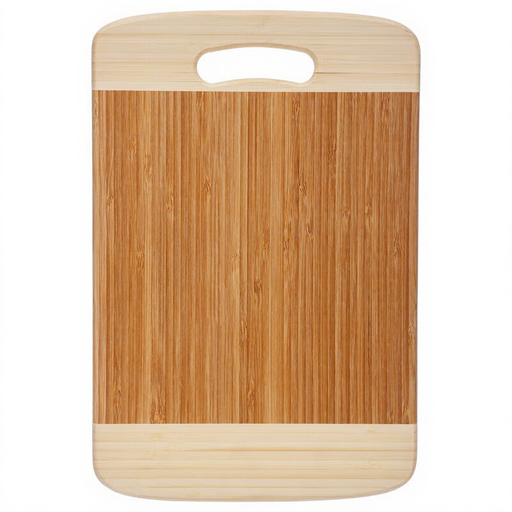
Why this product suits this profile: The compact 30 × 20 cm surface is ideal for smaller kitchens, individual ingredients and space-saving storage. The integrated handle makes the board easier to carry and hang up.
The dimensions make the space required clear. Hand washing is expressly recommended; soaking and using the dishwasher should be avoided.
Bamboo construction, a 30 × 20 cm working surface and an integrated handle for carrying or hanging.
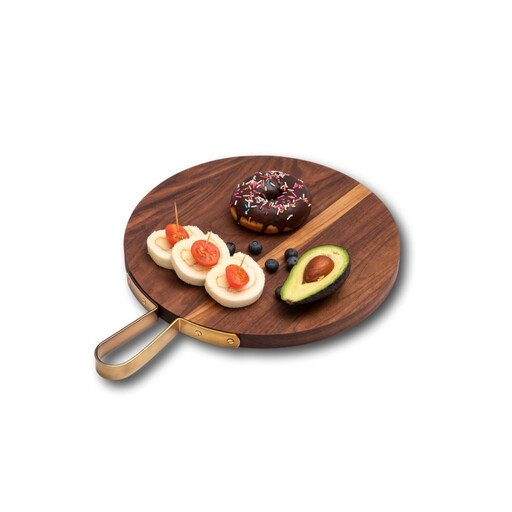
Why this product suits this profile: The round design, with a diameter of 31 cm, combines a clearly defined working surface with the look of a serving board. The walnut wood will appeal to buyers who value a dark natural wood surface.
The diameter and 20 mm thickness are clearly specified. The care instructions rule out soaking and dishwasher use, and highlight thorough drying as an important step.
Round shape, 20 mm thickness, walnut wood and a long handle; according to the product details, it weighs 1.18 kg.

Why this product suits this profile: Three sizes between 13 × 9.5 and 16 × 11.5 inches allow separate use for different ingredients or serving tasks. Handles and juice grooves are listed as product features on all the boards.
The juice groove helps contain liquids. As this is a set, you do not have to prepare every food on the same surface.
Three boards, integrated handles and juice grooves; according to the product details, hand washing is the only recommended cleaning method.
We have put together a complete, regularly updated list of products that fully meet these strict selection criteria and the safety regulations applicable in the EU.
A cutting board for preparation and serving should also be checked for cracks, splinters and warping before use. If there is obvious damage, replacement is advisable. For households with limited storage space, the handle can provide a practical hanging option; with a large model, check the dimensions of the storage area beforehand.
The usual method is to wash it by hand with warm water, mild cleaning product and a soft sponge or cloth. The board should then be allowed to dry completely. Prolonged soaking and the dishwasher can put stress on wood and bamboo.
Its service life depends on the material, construction, level of use and care. Regular drying, suitable storage and avoiding abrasive cleaning products can help protect the surface. The board should be replaced if it develops deep cracks, mould, splinters or warping.
This depends on the surface, shape and product description. Round walnut wood boards and models with a smooth surface may be suitable for bread, cheese or other foods. A juice groove is practical when serving particularly moist foods, but it may reduce the flat usable surface.