
Lieferung heute & morgen

Qualitätsgarantie

Willkommens-Angebote freischalten: KOSTENLOSE Lieferung | Bis zu 80 % RABATT | Kostenlose 30-Tage-JoyPlus-Testphase
App herunterladen
A wooden cutting board is a staple in many kitchens. It can be used to cut vegetables, fruit, bread or meat and, depending on the design, may also serve as a wooden serving board, cheese board or breakfast board. However, the range of options is broader than it may initially appear. Terms such as “extra-sturdy,” “antibacterial” or “knife-friendly” are not always sufficiently explained.
The Joybuy Product Recommendation Officer therefore highlights the most important purchasing criteria and explains what home cooks, families and hosts should look for when choosing a cutting board.
A compact kitchen board is easy to store, but it can quickly feel cramped when preparing larger ingredients. A surface of around 30 × 24 cm is suitable for smaller tasks. Anyone who regularly cuts bread, large vegetables or several ingredients at once should consider a large cutting board measuring at least 40 × 30 cm.
“Wood” is a broad category. A walnut cutting board, an acacia cutting board and a beech cutting board can differ in colour, weight, surface texture and care requirements. A bamboo cutting board is not automatically identical to a traditional wooden kitchen board either: botanically speaking, bamboo is not wood, although it is used in a similar way.
More important than marketing claims are specific details about material, thickness, dimensions and workmanship. For multi-part or laminated constructions, you should also check whether the manufacturer provides care instructions and confirms that the product is suitable for food contact.
Wood and bamboo react to moisture and heat. A board that is regularly left in water or cleaned in the dishwasher may warp, develop cracks or become rough on the surface. The manufacturers of the products featured here generally recommend hand washing, thorough drying and dry storage.
A structured yet smooth wooden surface is more comfortable for many kitchen knives than very hard materials. However, intensive use can leave visible knife marks. This is not automatically a defect in a wooden kitchen board. What matters is that no deep cracks, splinters or unstable areas develop.
Claims such as “antibacterial” or “hygienic” should not be interpreted as having a medical effect. For everyday food hygiene, suitable cleaning, thorough drying and keeping preparation surfaces for raw and ready-to-eat foods separate are the decisive factors.
The right size depends on your available work surface and intended use:
Greater thickness can increase a board’s weight and stability. Examples from the selection include bamboo boards with a thickness of 18 mm or 26 mm, as well as a walnut board with a thickness of 20 mm. The weight should still suit the intended use, particularly if the board will often be carried to the sink or dining table.
A cutting board with a handle is easier to transport and can be hung up for storage. However, a long handle increases the overall footprint without enlarging the actual cutting area to the same extent. A round cutting board is particularly well suited as a cheese or serving board, while rectangular models generally make more efficient use of the available space.
A juice groove can catch liquid when cutting juicy fruit, vegetables or roast meat. It does not, however, eliminate the need to clean both the work surface and the board after use. With a reversible board, the two sides can be designated for different food categories, provided the manufacturer specifically describes this type of use.
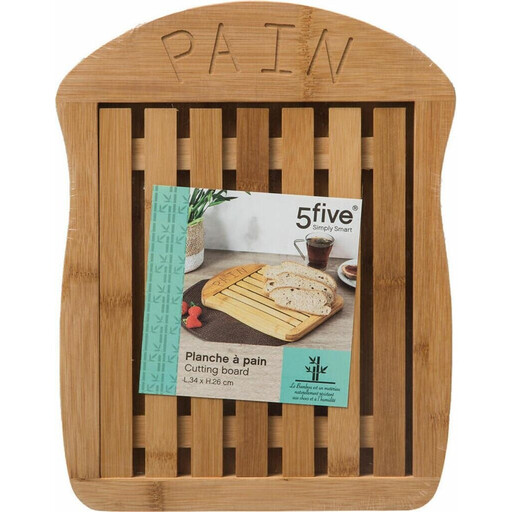
Why it suits this profile: Its compact dimensions make it a practical choice for smaller kitchens, bread-based meals and simple everyday preparation.
The dimensions are clearly stated, preventing a model marketed as a bread board from being mistakenly planned as a large preparation surface.
Bamboo construction, 34 × 26 cm format and versatile use for bread and light kitchen tasks.
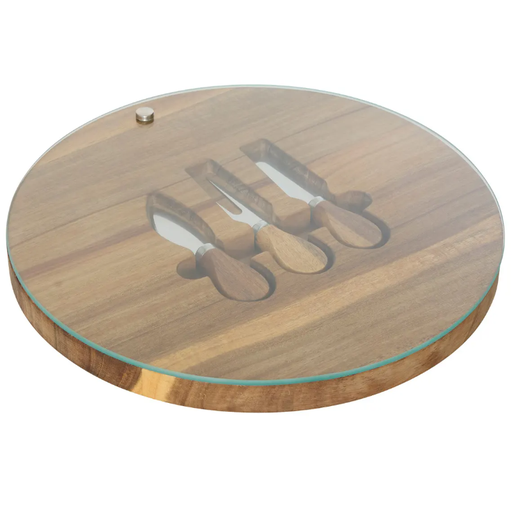
Why it suits this profile: The round shape and natural acacia grain are designed for serving cheese, cold cuts, fruit and snacks.
The stated diameter makes it clear that this round cutting board is primarily intended for presentation and smaller cutting tasks.
30 cm diameter, acacia wood and use as a cheese or wooden serving board.
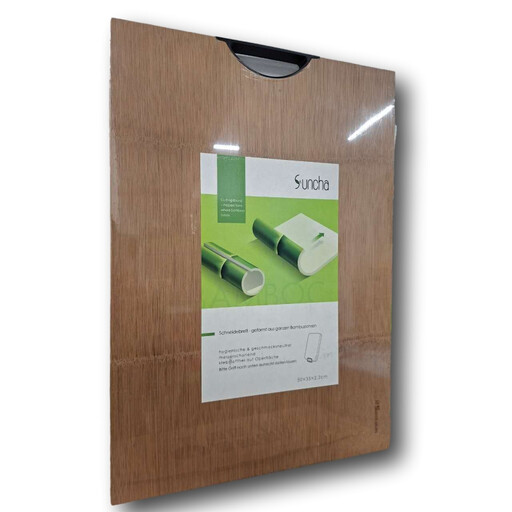
Why it suits this profile: The XXXL format provides ample work surface for larger meals, dough preparation and cutting multiple ingredients.
The combination of 50 cm length, 35 cm width and 26 mm thickness is clearly specified, making it easier to assess the required space and weight.
Solid bamboo construction, integrated handle, weight of 1.99 kg and additional suitability for dough or pasta preparation.
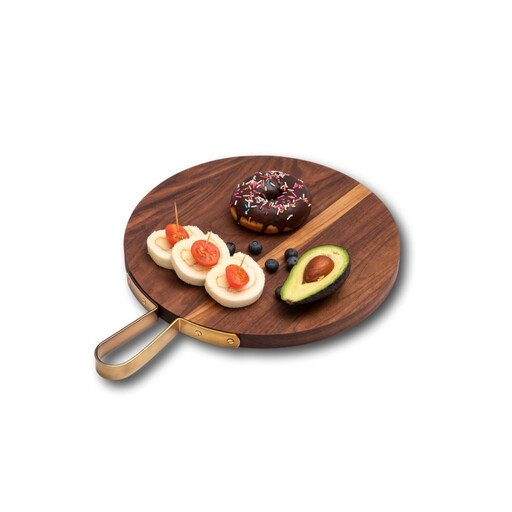
Why it suits this profile: The walnut construction and long handle combine a clearly defined cutting area with a shape that is well suited to serving.
The diameter and thickness are specified, allowing you to assess the actual usable surface more accurately instead of judging solely by the overall design.
Walnut wood, brown finish, 31 cm diameter, 20 mm thickness and long handle.
A wooden cutting board should be cleaned after every use with warm water and a mild detergent. It should then be dried with a cloth and left upright to air-dry completely. Prolonged soaking, dishwasher cleaning, intense heat and direct sunlight should be avoided.
For some types of wood and bamboo, occasional application of a food-safe conditioning oil, such as mineral oil intended for kitchen utensils, may be beneficial. Always follow the manufacturer’s instructions. Abrasive sponges and harsh cleaning products can damage the surface.
The board should be replaced if it develops severe cracks, splinters, warping or deep grooves that remain difficult to clean. Actual service life depends on the material, frequency of use, care and storage conditions; a general lifespan stated in years would therefore be misleading.
We have put together a current selection of products that take these important criteria for choosing kitchen and household equipment into account.
That depends on the desired format, appearance and willingness to maintain the board. Beech wood offers a light, classic look, walnut a darker finish and acacia a high-contrast grain. Bamboo is a separate material category with a dense surface and relatively low maintenance requirements, but it should not be stored permanently in damp conditions either.
After use, wash it with warm water and a mild detergent, dry it immediately and leave it upright until completely dry. Dishwashers and prolonged soaking can damage both wood and bamboo. For raw animal products, a separate preparation surface or dedicated board is recommended.
For occasional tasks, around 30 to 36 cm is often sufficient. Families and regular home cooks will generally benefit from a length of 40 to 45 cm. A 50 × 35 cm format provides plenty of space but requires adequate room for both use and storage. The key is to choose a board that sits securely and can be cleaned comfortably.