
Lieferung heute & morgen

Qualitätsgarantie

Willkommens-Angebote freischalten: KOSTENLOSE Lieferung | Bis zu 80 % RABATT | Kostenlose 30-Tage-JoyPlus-Testphase
App herunterladen
A wooden cutting board is part of the everyday kitchen equipment for many home cooks, families and hosts. It is used not only for chopping vegetables, fruit, meat or bread, but also, depending on its design, as a serving board for cheese and charcuterie. However, attractive product images and broad marketing claims do not automatically lead to the right choice.
Anyone looking to buy a wooden cutting board should pay particular attention to material, dimensions, thickness and care instructions. A large cutting board can be highly practical for extensive food preparation, but it also requires sufficient storage space. A cutting board with a handle is easier to carry, while a cutting board with a juice groove can catch liquids when carving.
Wood and bamboo are natural materials that can swell, warp or develop cracks if handled incorrectly. A wooden cutting board should therefore be allowed to dry completely after cleaning. With the wood and bamboo models featured here, prolonged soaking, intense heat and dishwasher use are generally not recommended.
Look for specific care instructions such as hand washing, upright drying and occasional treatment with food-grade mineral oil. If this information is missing, it is more difficult to assess how suitable the board will be for long-term use.
An XXL kitchen board may look generous on the countertop, but it can be cumbersome in a small kitchen. Before buying, measure the available workspace and storage area. A model measuring 45 × 32 cm requires considerably more room than a compact beechwood cutting board measuring 34 × 24 cm.
Thickness also affects weight. A 26 mm-thick bamboo board sits more securely on the work surface, but is less convenient to store or carry to the sink.
A juice groove is useful when cutting juicy meat or fruit. For dough, bread or dry ingredients, however, it is not essential. A handle improves portability and makes serving easier, but in some designs it reduces the available working surface.
Do not compare boards solely by the number of features they offer. Consider how useful those features will actually be in your everyday kitchen routine.
A bamboo cutting board is typically lightweight, dimensionally stable and characterised by an even surface. Bamboo is not technically wood in botanical terms, but it is used in a similar way for cutting boards. Its specific hardness, construction and finish vary from one product to another.
With a walnut cutting board, the dark colour and natural grain are often the main attractions. Walnut can be particularly well suited to use as a serving board. It should be protected from heat, direct sunlight and excessive moisture.
A beechwood cutting board offers a light, neutral appearance and is well suited to everyday food preparation. The wood species is only one consideration: board thickness, surface finish and care instructions are equally important.
For everyday preparation in a multi-person household, dimensions of around 38 × 26 cm or larger are practical. Anyone who prepares several ingredients at once or cuts large loaves of bread may prefer a large cutting board measuring at least 45 × 32 cm.
Thickness should match the intended use:
Always compare the stated dimensions with the available space beside the sink, hob and food processor.
Wooden and bamboo boards should be cleaned after every use with warm water and mild washing-up liquid, then dried immediately. Store the board upright so that air can circulate around both sides.
For raw meat and fish, using a separate board or a clearly designated side is recommended. A board with deep grooves, extensive cracks, mould or visible warping should no longer be used for food preparation. Harsh scouring agents, steel wool and prolonged soaking can damage the surface.
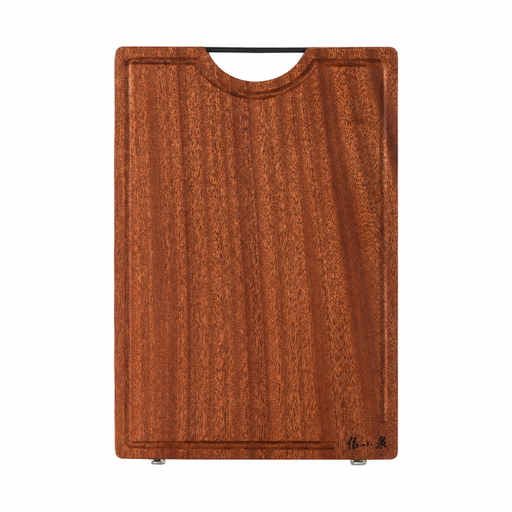
Why it is a good fit: The rectangular format is suitable for vegetables, fruit, bread and general preparation in a standard household kitchen.
The clearly stated dimensions make it easier to check whether your work surface is large enough. For care requirements, follow the information provided on the product page.
Rectangular design, 40 × 28 cm and versatile enough for everyday cutting tasks.
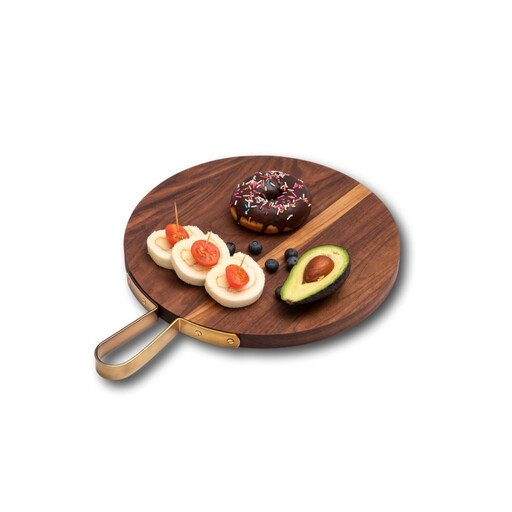
Why it is a good fit: The round shape and walnut construction make it well suited to kitchens where the board is also intended for serving.
The handle is clearly listed as a specific feature. At the same time, the board should not be soaked, cleaned in the dishwasher or exposed to intense heat.
Walnut construction, a 31 cm round surface and a practical long handle.
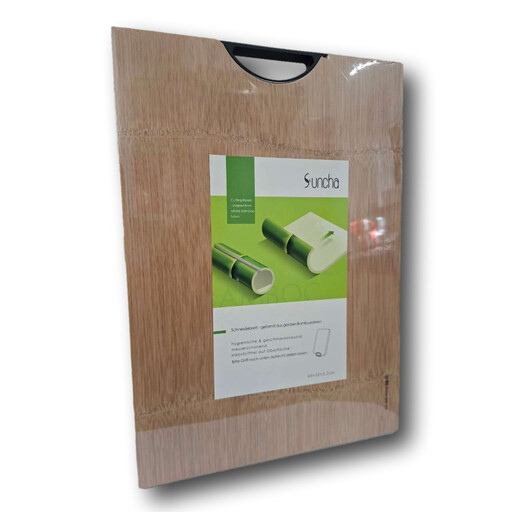
Why it is a good fit: The generous surface and 26 mm thickness are designed for extensive preparation as well as serving bread, cheese and charcuterie.
Instead of an undefined XXL label, the surface area and thickness are stated precisely. Plan for the board’s weight and storage requirements before buying.
100% bamboo according to the product description, 45 × 32 cm, 26 mm thick and fitted with an integrated handle.

Why it is a good fit: Three sizes make it possible to prepare and serve different ingredients separately in family kitchens or when entertaining guests.
The juice grooves and handles are listed as specific features. The stated care requirement is hand washing; dishwasher use is not recommended.
Three formats, integrated juice grooves and handles; suitable for both cutting and serving.
The full category features a current selection of large wooden cutting boards and bamboo models in a range of sizes, shapes and configurations.
A rectangular board measuring approximately 34 to 45 cm in length and at least 17 to 20 mm thick is a suitable starting point for many households. Beechwood and bamboo are both suitable for everyday cutting tasks. What matters most is a smooth surface, sufficient stability and a care routine that can realistically be followed.
A juice groove can catch liquid when cutting meat, fish or particularly juicy fruit. It is less important for bread, vegetables or rolling out dough. If you also intend to use the board as a serving platter, check whether the groove suits the intended use both visually and practically.
There is no universal service life. It depends on the material, thickness, frequency of use and care. If the wooden board is cleaned after every use, dried thoroughly and never soaked, it can remain usable for an extended period. Deep cuts, cracks or warping indicate that it is time for a replacement.