
Lieferung heute & morgen

Qualitätsgarantie

Willkommens-Angebote freischalten: KOSTENLOSE Lieferung | Bis zu 80 % RABATT | Kostenlose 30-Tage-JoyPlus-Testphase
App herunterladen
A wooden cutting board should provide a safe surface for ingredients, protect knives from unnecessary wear and be easy to clean after cooking. In practice, however, unclear material specifications, unsuitable sizes and improper care can often lead to warping, cracks or unpleasant odours.
This buying guide from the Joybuy Product Recommendation Officer explains what households, home cooks and professional users should consider when making a purchase. Alongside classic wooden kitchen boards, it also covers bamboo, walnut, acacia and beech models for a range of applications.
“Wooden board” does not automatically describe the same construction. A walnut cutting board differs from a beech kitchen board in colour, weight and surface hardness. Bamboo is botanically not wood, but it is used in much the same way for cutting boards and is widely available as a bamboo cutting board.
Important details include:
Without this information, it is difficult to assess how well a board will perform in everyday use.
A small board is suitable for fruit, herbs or individual snacks. When cutting vegetables, bread or meat, however, the available workspace can quickly become insufficient. A large cutting board measuring around 40 to 50 cm in length offers more room, but requires a sufficiently large and stable worktop.
Weight is also a consideration: a thick board may sit more securely, but it can be less convenient to clean in the sink or put away.
The product specifications for most of the selected boards recommend hand washing. Prolonged soaking, high heat and dishwashers can cause wood and bamboo to swell or encourage warping. A cutting board with a handle should therefore not only be easy to carry but also able to dry completely after cleaning.
A bamboo cutting board is often lightweight, dimensionally stable and well suited to everyday food preparation. With bamboo products, it is important to check the construction, as not every model is made from a single continuous piece.
Walnut wood stands out for its darker brown colouring. A walnut cutting board can also be used as a serving board. The Suncha models featured here require hand washing and should be protected from heat, open flames and prolonged exposure to direct sunlight.
Acacia wood is often used for cheese and serving boards because of its distinctive grain. The Mina cheese board from Secret de Gourmet has a diameter of 30 cm and, according to the product specifications, is intended for cheese, cold cuts, fruit and snacks.
A beech wood cutting board is a classic choice for everyday chopping tasks. The Suncha model measures 34 × 24 × 2.2 cm. Here too, hand washing, immediate drying and occasional treatment with food-safe mineral oil are recommended.
For everyday use, a length of around 30 to 40 cm and a thickness of at least approximately 2 cm provide useful points of reference. Anyone preparing bread, vegetables or several ingredients at once should consider a large cutting board measuring at least around 45 cm.
A juice groove can collect liquid when cutting juicy fruit or carving roasts. It does not, however, eliminate the need to clean the board immediately after use. A model with a smooth reverse side or reversible construction may allow separate use for different food groups.
A cutting board with a handle is easier to carry from the worktop to the dining table and can also serve as a presentation board. For bread and cheese, elongated shapes, round boards or models with additional accessories can be especially practical.
For direct food contact, consumers should follow the manufacturer’s information on materials, cleaning and intended use. Boards that are cracked, severely warped or splintering should no longer be used.
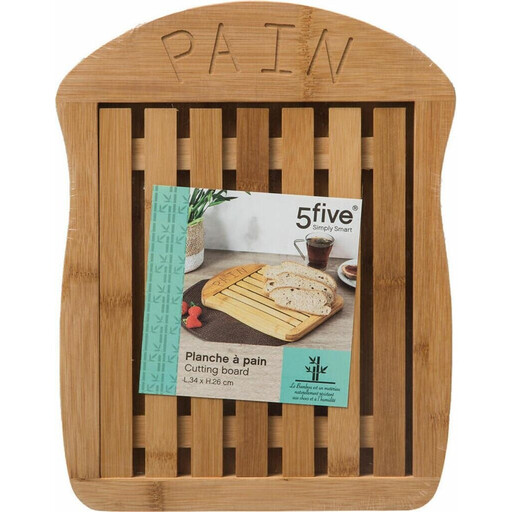
Why it fits: The compact surface is well suited to smaller kitchens, bread, fruit and straightforward preparation tasks.
The dimensions are clearly specified, preventing a supposedly large board from providing too little workspace.
Bamboo construction and a 34 × 26 cm format; intended for hand washing.

Why it fits: The generous format and reversible design support extensive food preparation as well as serving.
The juice groove is specified as a clear feature, while hand washing is explicitly recommended.
45 × 30 cm, reversible, with a juice groove and, according to the product specifications, suitable for both chopping and serving.
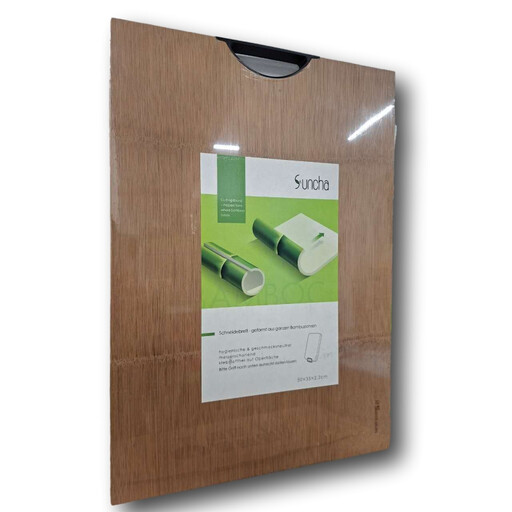
Why it fits: The large, 26 mm-thick surface provides ample room for dough, vegetables, bread and multiple ingredients.
The product description clearly specifies the material, thickness, handle and cleaning method instead of relying on vague durability claims.
50 × 35 cm, 26 mm thick, integrated handle and intended for both chopping and serving.
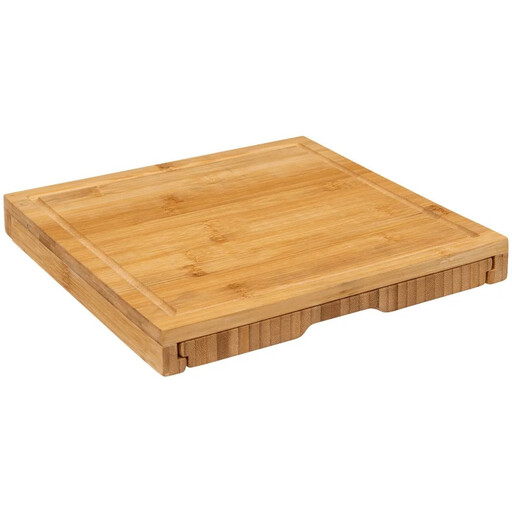
Why it fits: The square cheese board combines a serving surface with four cheese knives and a storage drawer.
Its intended use is clearly described as a serving and cheese board, while the lack of dishwasher suitability is explicitly stated.
Bamboo, 30 × 30 × 3.6 cm, four cheese utensils and an integrated drawer.
For raw meat and fish, a separate work surface or a consistently designated side of the board is recommended. This reduces the risk of residues coming into contact with bread, fruit or ready-to-eat foods.
We have put together a current selection of products that meet these selection criteria and the relevant requirements for the German market.
That depends on how you intend to use it. Bamboo is suitable for many everyday tasks and is available in a range of sizes. Walnut, acacia and beech differ primarily in grain, colour, weight and construction. In addition to the type of wood, thickness, workmanship and care instructions are key considerations.
It is not possible to give a reliable fixed service life. Longevity depends on frequency of use, moisture, cleaning, storage and the level of surface care provided. Hand washing, thorough drying and avoiding prolonged soaking can help extend the board’s useful life.
Only if the manufacturer specifies both purposes. A dedicated serving or cheese board may be designed for presentation, whereas a designated cutting board has a suitable working surface for chopping. For sets that include knives and a drawer, serving should be regarded as the primary function.