
Lieferung heute & morgen

Qualitätsgarantie

Willkommens-Angebote freischalten: KOSTENLOSE Lieferung | Bis zu 80 % RABATT | Kostenlose 30-Tage-JoyPlus-Testphase
App herunterladen
A garden bench is more than just a place to sit. It's a peaceful retreat, a gathering spot for family and friends, and a stylish accent piece that enhances your garden, patio, or balcony. However, choosing the right wooden garden bench can be a challenge given the variety of materials, sizes, and designs. This article serves as a practical guide, presenting objective information and a selection of models to help you with your decision.
Before you decide on a model, a few basic considerations are helpful. The following points summarise the most important criteria for making an informed choice.
The durability and maintenance requirements of a wooden garden bench depend heavily on the type of wood used. Hardwoods like acacia, teak, or eucalyptus are particularly weather-resistant due to their natural density and high oil content.
The available space and intended use are crucial for choosing the right size and features.
Here we present a selection of different garden benches that stand out for their materials, design, and functionality.

Why it stands out: This model is a prime example of multifunctionality. It converts from a generous 3-person garden bench into a two-person seat with a practical, integrated table. The acacia wood used is from FSC-certified forestry.
Advantages:
Who is it for? Ideal for users seeking maximum flexibility in a limited space, such as on a patio or a larger balcony. Anyone who appreciates a garden bench with a table but doesn't want to permanently sacrifice the space will find this a well-thought-out solution.

Why it stands out: This set is more than just a bench—it's a complete outdoor dining set. It consists of a large table and two matching benches, seating up to six people. The combination of powder-coated aluminium and easy-care faux wood in a light wood finish creates a modern ambiance.
Advantages:
Who is it for? Perfect for homeowners looking for a complete and stylish seating and dining solution for their patio or garden. Those who regularly host guests and value a cohesive look will get a well-coordinated ensemble here.
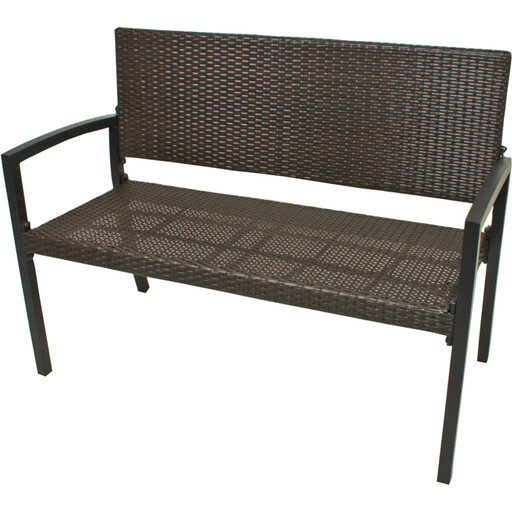
Why it stands out: The Sanremo park bench reinterprets the classic design. Instead of wood or cast iron, it features a modern material combination of a black aluminium frame and a seat and backrest made of coffee-coloured synthetic weave.
Advantages:
Who is it for? This garden bench is an excellent choice for anyone who appreciates the timeless charm of a park bench but wants to avoid the maintenance of wood or the heavy weight of cast iron. It fits well in both classic gardens and modern outdoor spaces.
Wood is a wonderful material, but it's not the only option for everyone. If you're looking for an even lower-maintenance and lighter alternative, a garden bench made from a different material might better suit your needs.
Discover our selection of aluminium garden benches, known for their light weight, modern aesthetic, and absolute weather resistance.
Hardwoods like acacia, teak, and eucalyptus are an excellent choice for a wooden garden bench due to their natural density and weather resistance. They are durable and require less intensive protection from moisture and pests compared to softwoods like pine or spruce.
To keep a wooden garden bench permanently weather-resistant, it should be cleaned at least once a year and treated with a suitable care oil or glaze. This protects the wood from drying out, cracking, and UV radiation. Untreated hardwood develops a natural silvery-grey patina that many appreciate; in this case, the protective treatment mainly serves to preserve the original colour and extend its lifespan.
The term park bench often refers to a design characterized by curved armrests and a combination of a metal frame (traditionally cast iron, now often aluminium) and wooden slats for the seat and back. A general garden bench, on the other hand, can take many forms, from all-wood models and modern polyrattan designs to minimalist benches made of concrete or metal. However, the lines are often blurred.