
Lieferung heute & morgen

Qualitätsgarantie

Willkommens-Angebote freischalten: KOSTENLOSE Lieferung | Bis zu 80 % RABATT | Kostenlose 30-Tage-JoyPlus-Testphase
App herunterladen
A wooden Montessori play arch is often one of the first purchases made to support a child's development. It is designed to awaken curiosity and train motor skills. However, the market is saturated, and not every product advertised as "Montessori" meets the required educational and quality standards. Many parents invest in models that quickly prove to be impractical or even unsafe.
As your Joybuy Product Recommendation Officer, I will help you identify the essential features and avoid common purchasing traps. This guide focuses on objective criteria so you can make an informed decision for your child.
Before we dive into quality features, it's important to be aware of the most common problems that arise during the selection process. These three points often lead to disappointment and unnecessary expense:
To avoid these pitfalls, you should focus on three objective criteria. These will help you assess the quality of a wooden play arch for babies.
Your child's safety is the top priority. A stable wooden play arch for babies must stand firmly on the floor, even when the child actively pulls or pushes against it.
A high-quality baby activity center is made from non-toxic materials. Here are the crucial points:
A good play arch grows with your child's abilities, making it a sustainable motor skills toy for ages 3 months and up.
Based on the criteria mentioned, we have selected a few products from our range that meet different requirements.
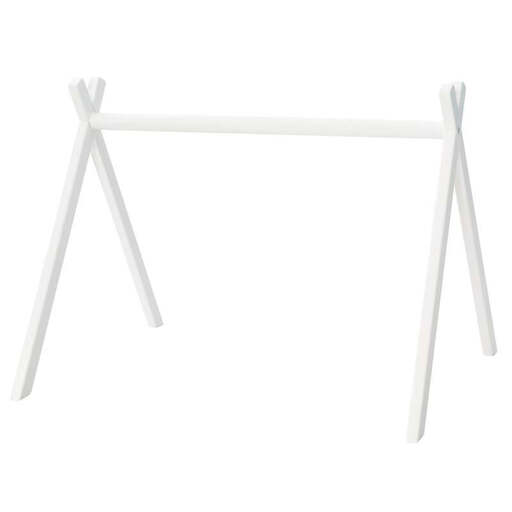
Why This Fits Their Persona: Ideal for parents seeking a clean, minimalist design that aligns with Montessori principles. It provides a solid foundation for a baby's first attempts at grasping and exploring.
The sturdy wooden construction prevents tipping. Its simple design avoids overstimulation and leaves room for individually chosen toys. According to the manufacturer, roba, the materials used are easy to care for and safe.
The universal bar allows you to attach your own grasping toys and accessories, making the arch customizable and long-lasting. Assembly is straightforward.
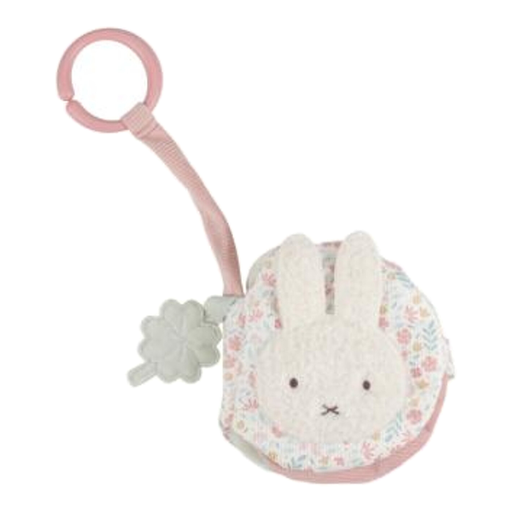
Why This Fits Their Persona: Perfect for parents who want to supplement an existing play arch with high-quality, sensory toys. It specifically stimulates the senses of touch and hearing.
Instead of an overwhelming all-in-one set, this soft book offers targeted stimuli like crinkling sounds and different textures. It can be easily attached to a simple play arch to enable focused activity.
The soft material (polyester) is safe for babies. Thanks to its attachment ring, it's versatile and can be used on a play arch, stroller, or car seat.
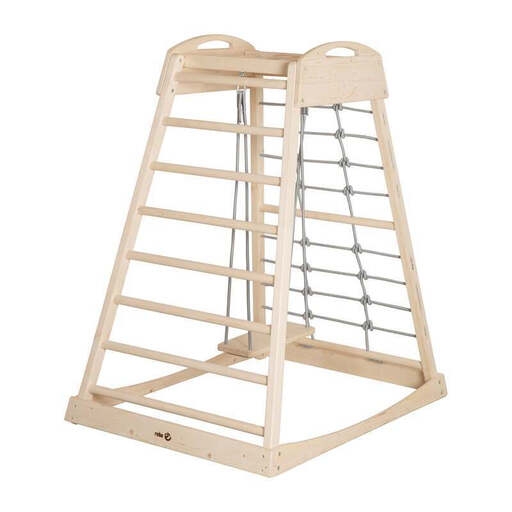
Why This Fits Their Persona: For families whose child is outgrowing the play arch stage and needs a new motor skills challenge. This climbing frame promotes strength, coordination, and balance in toddlers (from 24 months).
Instead of an unstructured toy, this climbing tower provides a safe and purposeful environment for gross motor skill exercises. The solid natural wood construction is designed to support a load of up to 70 kg.
The multifunctional design with climbing ropes, gymnastic rings, and a swing offers long-lasting and varied play value. It's a logical next step in motor skill development after the baby stage.
We have compiled a complete, up-to-date list of products that fully meet these strict selection criteria and rigorous safety standards.
1. From what age is a Montessori play arch useful? A play arch is typically useful from around three months of age. During this phase, babies begin to move their hands purposefully, reach for objects, and develop their hand-eye coordination. The arch provides the initial stimuli for these important developmental steps.
2. How can I identify a safe wooden play arch? Look for a stable, tip-proof construction (e.g., an A-frame), rounded edges, and a smooth surface. The key feature is compliance with the European toy safety standard EN 71. This ensures that the material and finish are non-toxic and safe for children.
3. Can I add my own toys to a play arch? Yes, and it's actually recommended. Models with a simple crossbar and no pre-installed toys are ideal as they offer maximum flexibility. You can attach grasping toys, cloths, or other sensory objects and swap them out according to your child's interests and developmental stage.