
Lieferung heute & morgen

Qualitätsgarantie

Willkommens-Angebote freischalten: KOSTENLOSE Lieferung | Bis zu 80 % RABATT | Kostenlose 30-Tage-JoyPlus-Testphase
App herunterladen
Supporting a child's motor development is a key task for parents and grandparents. Choosing the right toy can play a crucial role in this process. Wooden motor skills toys are incredibly popular due to their durability, tactile feel, and sustainability. They help children discover and expand their abilities in a natural way.
This article serves as a guide. It outlines objective criteria for selection and presents a range of products designed to promote various motor skills. Our goal is to provide you with a solid basis for making an informed decision, based on product features and safety standards.
The decision to buy a toy should be based on clear facts. Three key aspects should be considered: material quality, age-appropriateness, and the educational approach.
A child's safety is the top priority. For wooden toys, a few points are particularly relevant:
A toy can only reach its full potential if it matches the child's developmental stage. Over- or under-stimulation can lead to frustration.
Good toys stimulate the imagination without dictating the play. Educationally valuable toys, often inspired by Montessori pedagogy, are characterized by simple designs and versatile uses. Sustainable toys made from robust wood are not only more environmentally friendly but also often last for years and can be passed down to younger siblings.
Based on the criteria mentioned, we have compiled a selection of products that address different aspects of motor development.
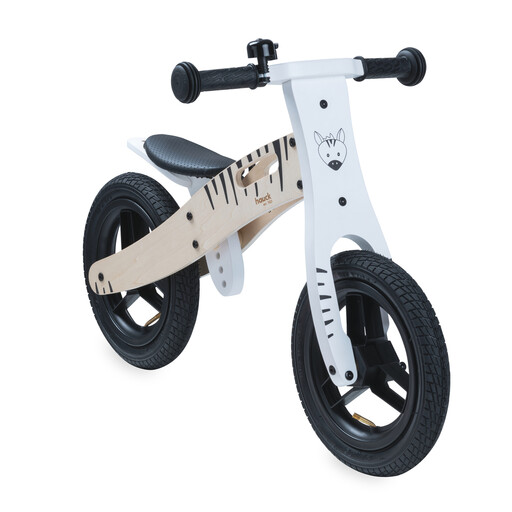
What makes it stand out This wooden balance bike combines a sustainable material concept with functional features. The frame is made from FSC-certified wood, making it an eco-conscious choice. The 12-inch pneumatic tyres offer greater riding comfort on uneven surfaces compared to solid rubber tyres.
Advantages
Who is it for? The balance bike is designed for children from 18 months to approximately 4 years old. It's an excellent choice for parents who want to introduce their child to balancing early on and prepare them for riding a bicycle.
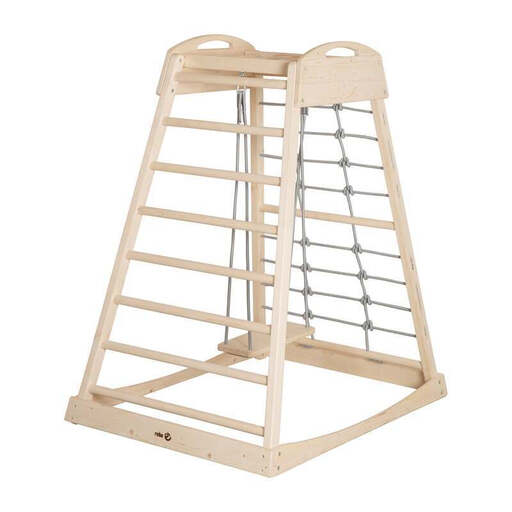
What makes it stand out This indoor climbing frame is based on the Montessori toy approach, offering children diverse and self-directed opportunities for movement. The solid natural wood construction is robust and designed to support a load of up to 70 kg.
Advantages
Who is it for? The play tower is suitable for children aged 24 months and older who have a strong urge to be active. It provides a safe and stimulating environment for active indoor play, especially on days with bad weather.
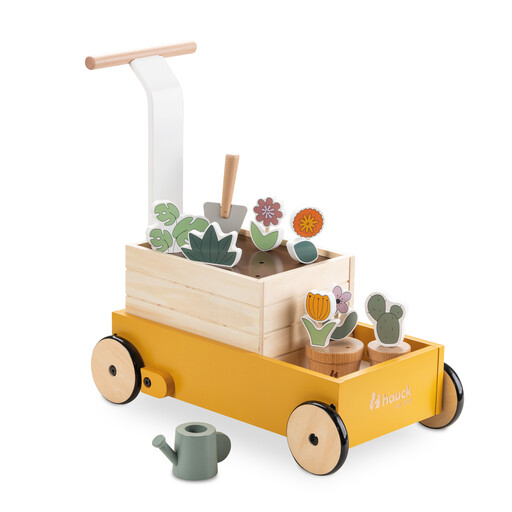
What makes it stand out This wooden baby walker is more than just a walking aid. It integrates accessories for a gardener role-play, promoting not only motor skills but also imagination. A key safety feature is the adjustable braking system, which allows the wheel speed to be adapted to the child's abilities.
Advantages
Who is it for? The baby walker is designed for children from 12 months old who are taking their first steps. It helps them gain confidence and stability while offering long-lasting play value.
Motor development is an ongoing process that changes with age. If your child is already walking and climbing confidently, other toys might be better suited to target their creativity and fine motor skills.
Discover a wider range of creative toys for 4-year-olds to find new inspiration for the next stage of development.
1. What do wooden motor skills toys promote? Depending on the type, wooden motor skills toys promote different abilities. Gross motor toys like balance bikes or climbing frames train balance, coordination, and strength. Fine motor toys such as puzzles or lacing games develop hand-eye coordination, finger dexterity, and concentration. The natural wood material also appeals to the sense of touch.
2. From what age is a wooden baby walker useful? A baby walker is useful as soon as a child starts to pull themselves up on furniture and attempts their first standing efforts. This usually happens between 10 and 12 months of age. The walker should be stable and have an adjustable brake to prevent it from rolling away from the child.
3. How can I identify safe and sustainable toys? Look for recognised seals. The CE mark is mandatory in the EU and confirms compliance with basic safety requirements. For wooden products, the FSC seal is an indicator of sustainable forestry. Also, check the toy for clean workmanship with no sharp edges and ensure that the paints used are declared non-toxic and saliva-resistant (e.g., according to the EN 71 standard).