
Lieferung heute & morgen

Qualitätsgarantie

Willkommens-Angebote freischalten: KOSTENLOSE Lieferung | Bis zu 80 % RABATT | Kostenlose 30-Tage-JoyPlus-Testphase
App herunterladen
A wooden mud kitchen promises creative outdoor fun and is a popular choice for parents and grandparents seeking an educationally valuable gift for toddlers. However, the market is flooded with models of widely varying quality. Some products quickly prove to be a bad buy, becoming unusable after just one season outdoors. This guide highlights the three most common pitfalls and explains which objective criteria you should look for to find a durable and safe garden kitchen for children.
At first glance, many models look sturdy and appealing, but they only reveal their weaknesses during daily use. Pay special attention to these three points to avoid disappointment.
To make an informed decision, you should focus on verifiable product characteristics. The following three parameters are crucial for the quality and play value of a wooden mud kitchen.
The cornerstone of a durable garden kitchen for kids is the material. Look for models made from solid, robust wood. The treatment to protect against weathering is critical:
The child's safety is the top priority. Check if the product complies with the EN 71-3 standard (Safety of toys, Migration of certain elements). This ensures that paints and stains are saliva- and sweat-proof and free of harmful substances. Other important safety aspects include:
A good outdoor play kitchen stimulates the imagination. A mud kitchen with a water connection (usually in the form of a fillable container with a tap) significantly increases the play value. Look for the following features:
Based on these objective criteria, we have curated products for different profiles and play preferences.

Why This Fits Their Persona: Ideal for families looking for a fully equipped play station that encourages complex role-playing and provides a structured play space thanks to its house design.
Counteracts the 'limited play value' pitfall. With an oven, printed hobs, a water container, and a full set of accessories, this roba play kitchen offers long-lasting engagement.
Extensive features including a pot, ladle, and cups. The FSC-certified solid wood is treated with a grey, weather-resistant stain.
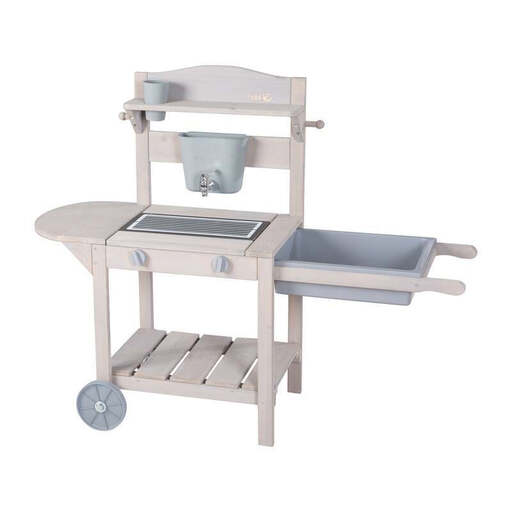
Why This Fits Their Persona: Perfect for families who value flexibility. Thanks to its wheels, the kitchen can be moved effortlessly between the patio, lawn, or even indoors.
Addresses the 'unsuitable wood treatment' and 'unstable construction' pitfalls. The robust solid wood is finished with a weather-resistant stain, and the construction is designed for durability and mobility.
Mobile design with two wheels for easy relocation. The printed grill surface offers an additional play option besides classic mud play.

Why This Fits Their Persona: An alternative or supplement for children who prefer active play over stationary, creative play. Promotes balance and coordination in preparation for riding a bicycle.
Offers an alternative to stationary play, thus avoiding the risk of quickly waning interest by supporting the natural urge for movement in toddlers.
Adjustable seat and handlebar height allow for extended use. The puncture-proof tyres are low-maintenance and suitable for various surfaces.
We have compiled a complete, up-to-date list of products that fully meet these strict selection criteria and rigorous safety standards.
Proper care is crucial for longevity. Clean the kitchen regularly with a damp cloth and remove coarse dirt. It's important to empty the water basin after each play session to avoid standing water. For stained models, it is advisable to refresh the protective layer annually, ideally before the start of the garden season, with a wood protection stain suitable for children's toys. In winter, the kitchen should be stored in a dry place or covered with a protective cover.
Most manufacturers recommend their models for ages 18 months or 2 years and up. At this age, children begin to develop role-playing games and refine their motor skills by grasping, pouring, and making messes. A good wooden mud kitchen can be a perfect gift for toddlers and accompany them into primary school age, as the nature of play changes with the child's development.
No, a fixed water connection is not necessary and, for safety reasons, not recommended. The most practical solution, offered by many high-quality models, is a removable water container with an integrated tap. This can be easily filled, allows children to "dispense" water in a controlled manner, and can be easily emptied and cleaned after play to prevent bacteria growth.