
Lieferung heute & morgen

Qualitätsgarantie

Willkommens-Angebote freischalten: KOSTENLOSE Lieferung | Bis zu 80 % RABATT | Kostenlose 30-Tage-JoyPlus-Testphase
App herunterladen
A high-quality wooden mud kitchen gives children the chance to get creative outdoors, experience nature with all their senses, and dive into imaginative role-play. However, the wide variety of models can make choosing the right children's garden kitchen a challenge. This guide is designed to help you by highlighting key selection criteria and showcasing models that stand out for their functionality and material quality.
To make an informed decision, there are a few fundamental aspects to consider. These will help you find a model that is not only safe and durable but also perfectly suited to your child's play style.
An outdoor play kitchen is constantly exposed to the elements. Therefore, the choice of material is crucial. Solid wood treated with a weatherproof finish provides an excellent foundation for durability. Pay attention to the type of wood and its treatment. Models made from FSC-certified wood come from sustainable forestry, an important criterion for many families. A sturdy construction ensures that the wooden garden kitchen remains stable even during vigorous play.
Modern mud kitchens are often more than just a simple table. Consider which features could enhance the play value for your child:
Safety is paramount. Rounded corners and edges minimise the risk of injury. The construction should be sturdy and have no visible screws on the main work surfaces. Check the manufacturer's recommended age and maximum weight capacity to ensure the outdoor play kitchen is suitable for your child. A comfortable worktop height is also important so that the child can play comfortably while standing.
Based on the criteria above, we have curated a selection of top models. Each of these roba mud kitchens has unique features that make it appealing for different needs and play preferences.
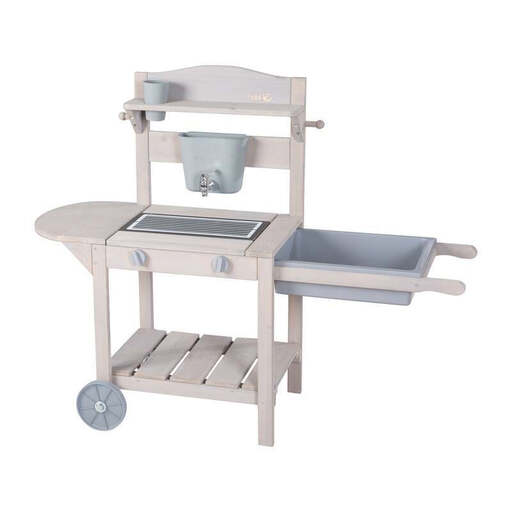
What makes it special: This model combines the features of a classic mud kitchen with the design of a BBQ trolley. Thanks to its wheels, the kitchen is mobile and can be used flexibly in the garden, on the patio, or even indoors. The printed grill top and a working tap with a water dispenser enable realistic role-playing.
Advantages:
Best for: Families looking for a flexible play kitchen that can be used both indoors and out and encourages realistic BBQ role-play.

What makes it special: With its detailed house design and extensive accessories, this outdoor play kitchen offers a particularly immersive play experience. It features two removable, printed hobs, an oven with a door, and a water dispenser with a tap. The included accessory set, consisting of a pot, ladle, and cups, makes the kitchen ready for play right out of the box.
Advantages:
Best for: Children who love detailed role-play and prefer a fully equipped play kitchen with lots of features and accessories.
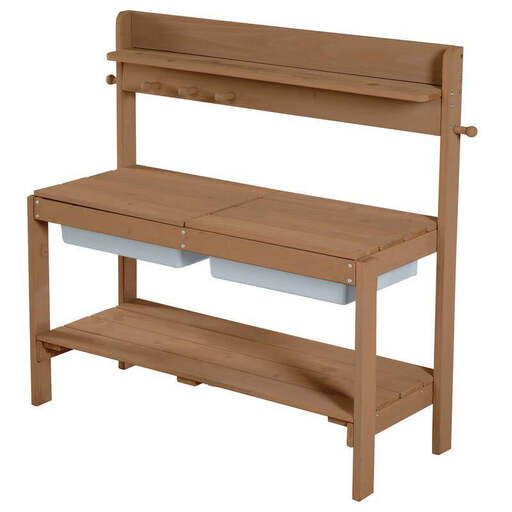
What makes it special: This model is a true all-rounder. It can be used as a classic mud kitchen, a play table, or, thanks to its removable lids, a simple work table. In winter, it can be brought indoors and repurposed as a handy craft table. Two large plastic tubs and generous storage shelves offer plenty of space for sand, water, and craft supplies.
Advantages:
Best for: Parents looking for an especially versatile and durable solution that grows with their child and can be used all year round.
Haven't found the perfect model for your needs yet, or want to browse a wider selection? You can find more designs and styles in our wooden toys category.
Explore our entire range of Wooden Toys.
Most manufacturers recommend their models for children aged 18 months and older. At this age, children are beginning to stand confidently and are developing an interest in role-playing and sensory experiences. Under adult supervision, they can safely explore the many play possibilities a mud kitchen offers.
To ensure the longevity of a wooden garden kitchen, regular maintenance is advisable. The surfaces can be cleaned with a damp cloth. After playtime, water dispensers and tubs should be emptied to prevent bacteria growth. It is recommended to cover the kitchen when not in use or, if possible, store it in a sheltered spot like under an awning to protect it from extreme weather.
The terms are often used interchangeably, but there are functional differences. A sand kitchen is primarily designed for playing with dry or damp sand. A mud kitchen, on the other hand, is specifically designed for combining sand, soil, and water. It therefore often includes an integrated water source, like a dispenser with a tap, and sturdy, easy-to-clean plastic tubs that make mixing mud simple. Many modern models are designed as combination units.