
Lieferung heute & morgen

Qualitätsgarantie

Willkommens-Angebote freischalten: KOSTENLOSE Lieferung | Bis zu 80 % RABATT | Kostenlose 30-Tage-JoyPlus-Testphase
App herunterladen
A wooden mud kitchen promises hours of creative outdoor fun, allowing children to experiment to their heart's content with sand, water, leaves, and soil. But the market is vast, and not every model lives up to its promise. Before you decide, it's crucial to understand the common pitfalls that can quickly turn a promising toy into a disappointment.
This guide reveals the three most common flaws in outdoor play kitchens and highlights the key features you should look for to make a durable and safe choice for your garden or patio.
To avoid these problems, you should check three core parameters before buying. These are crucial in determining the longevity, safety, and play value of a children's garden kitchen.
The cornerstone of a durable outdoor play kitchen is the material. Solid wood is a great foundation, but the treatment to protect it from the elements is what truly counts.
A safe play environment is the top priority. Check the construction for the following features:
A good mud kitchen is more than just a table. It's a multifunctional play station.
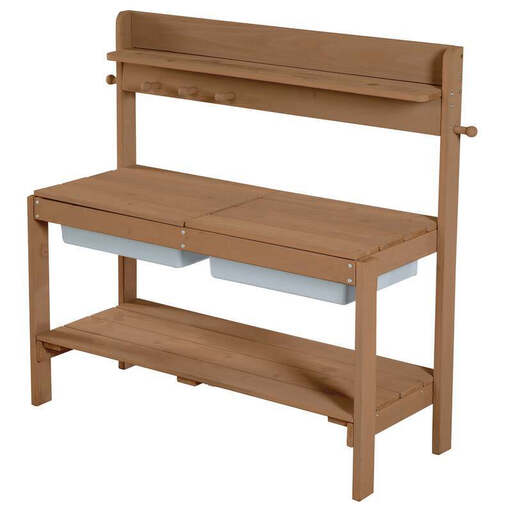
Why This Fits Their Persona: Ideal for parents seeking a multifunctional and durable solution. It serves as a mud kitchen, a sand and water table, and a regular play table, and can even be used indoors as a craft table in winter.
The weather-resistant glazed solid wood prevents damage from the elements. Its sturdy construction with rounded corners is safe, while the removable tubs and lids ensure maximum practicality.
3-in-1 functionality (mud, play, and craft table). Includes two large plastic tubs, lids, shelves, and hooks.
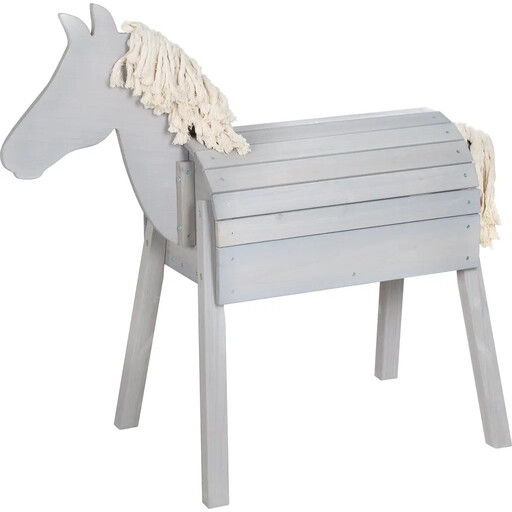
Why This Fits Their Persona: An addition or alternative to a mud kitchen for families who want to encourage active role-playing. It inspires climbing, riding, and gymnastics, promoting physical activity.
Made from weather-resistant glazed solid wood from sustainable forestry. The construction is designed with internal bracing for absolute stability during active play, preventing wobbling and breakage risks.
Promotes motor skills and balance. The sturdy mane and tail can be groomed for a realistic play experience.
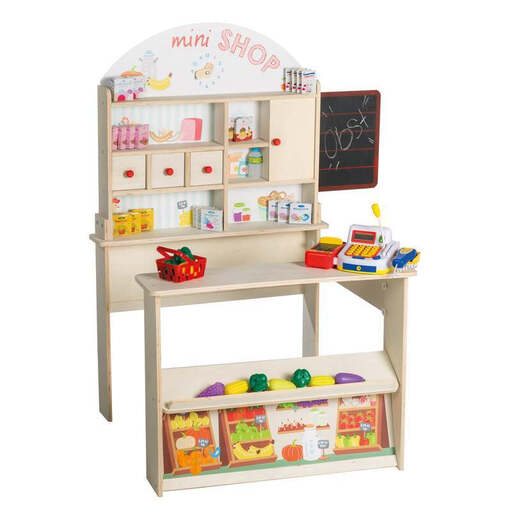
Why This Fits Their Persona: For families looking for an indoor alternative to the mud kitchen to enable creative role-play even in bad weather. Ideal for apartments or homes without direct garden access.
The sturdy plywood construction and thoughtful layout with a counter, drawers, and shelves provide long-lasting, frustration-free fun, avoiding the typical flaws of unstable, impractical toys.
Promotes social skills and an understanding of numbers and quantities. Offers plenty of storage space and a side chalkboard for added creativity.
A thoughtful selection of toys fosters children's creativity and development. Discover more products designed for safety, durability, and high play value.
1. How do you properly care for a wooden mud kitchen to make it last? Regular maintenance is crucial. Clean the surfaces after play and let them dry. Check the screw connections periodically. To permanently protect the wood, it is recommended to refresh the glaze every one to two years, depending on weather exposure, using a wood preservative suitable for children's toys.
2. From what age is an outdoor play kitchen suitable? Most models are suitable for children aged approximately 1.5 to 8 years. It's important that the child can stand securely and easily reach the work surface. Younger children should always be supervised when playing with water. The roba play kitchen, for example, is designed for children from 18 months and up.
3. Does a wooden mud kitchen need to be brought inside for the winter? It is highly recommended. Although many models are considered weather-resistant, storing it in a dry place (e.g., a basement or garage) or covering it with a waterproof tarp will significantly extend its lifespan. This protects the wood from frost and constant moisture, which prevents cracking and mould.