
Lieferung heute & morgen

Qualitätsgarantie

Willkommens-Angebote freischalten: KOSTENLOSE Lieferung | Bis zu 80 % RABATT | Kostenlose 30-Tage-JoyPlus-Testphase
App herunterladen
A wooden mud kitchen is more than just a toy; it's a gateway to creativity and nature-based discovery in your own garden. Here, children can experiment to their heart's content with sand, water, leaves, and soil. However, the selection is vast, and not every model delivers on its promises. Before you make a decision, it's important to understand the most common defects, which often only become apparent after a few months and can spoil the fun.
This guide will show you the crucial criteria for a durable and safe wooden mud kitchen and help you make an informed choice.
Many products on the market look sturdy at first glance but reveal their weaknesses only after exposure to the elements and intensive use. Watch out for these three common pitfalls:
To avoid the problems mentioned above, you should check three essential aspects before buying. These define the longevity, safety, and play value of a children's garden kitchen.
The material is the heart of any wooden mud kitchen. Solid wood is the foundation, but its treatment is crucial for outdoor use.
A well-designed outdoor play kitchen is distinguished by practical details that enhance the play experience.
Safety is the top priority for children's garden toys. Check for objective features that indicate a safe construction.
Not every child has the same needs. Here are some recommendations tailored to different requirement profiles.
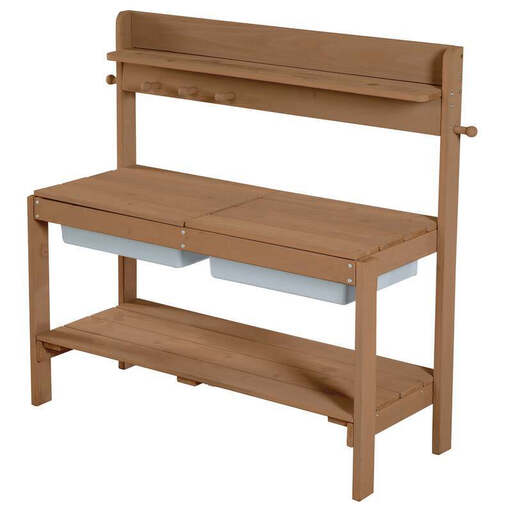
Why This Fits Their Persona: This model is a classic and versatile mud kitchen, ideal for children who love to get creative in the garden. It meets all the core requirements for a functional outdoor play station.
The construction of weather-resistant stained solid wood with child-friendly rounded corners addresses the flaws of instability and poor safety. The two removable plastic tubs and generous storage shelf solve the problem of impractical designs.
The 3-in-1 design allows it to be used as a workbench, play table, or mud table. In winter, the kitchen can be repurposed indoors as a craft table, extending its usability.
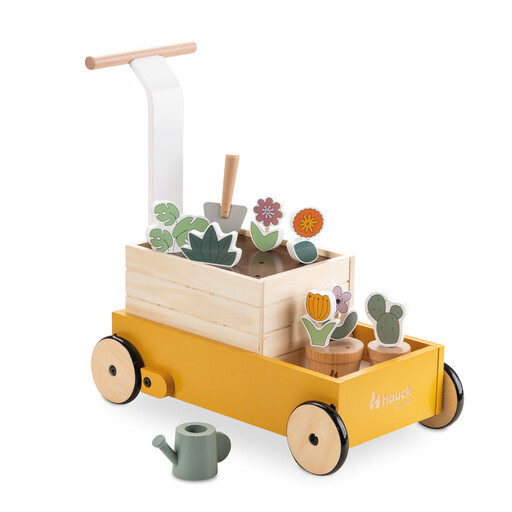
Why This Fits Their Persona: For toddlers from 12 months who are not yet motorically ready for a standing mud kitchen. This baby walker combines support for their first steps with garden-themed role play.
The braking system allows the wheel speed to be adjusted to the child's walking ability, ensuring stability. The wood used is FSC-certified, indicating a responsible material source.
The dual function as a walking aid and a toy promotes both gross and fine motor skills. The large cargo area can also be used to transport other toys.
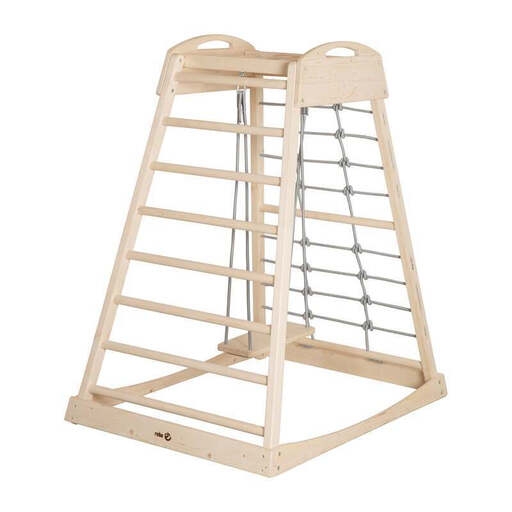
Why This Fits Their Persona: An alternative for families looking for a versatile wooden play structure that encourages physical activity. It's a great addition or alternative to a stationary play kitchen and trains strength and coordination.
The solid natural wood construction with rounded edges and a weight capacity of up to 70 kg demonstrates a stable and safe design. Its clear focus on movement avoids the pitfall of overloaded, impractical multi-function toys.
Promotes motor skills and balance according to Montessori principles. The equipment, including a climbing rope, gymnastic rings, and a solid wood swing, offers varied play incentives.
We've compiled a complete, up-to-date list of products that fully meet these strict selection criteria and safety regulations.
The longevity of a wooden mud kitchen heavily depends on its care. For stained wood, it's recommended to renew the protective layer once a year, preferably in the spring, with a weatherproof wood stain suitable for children's toys. Clean the plastic tubs regularly and empty any water after play. To protect the wood from extreme weather in winter, the kitchen can be covered with a tarp or stored in a sheltered place like a garage or basement.
A wooden mud kitchen is generally suitable for children from about 1.5 to 2 years old, as soon as they can stand safely and independently. The crucial factor is the work height, which should allow for comfortable play. For younger children who are already showing interest in garden activities, thematically appropriate baby walkers or lower play tables can be a good precursor.
Yes, many models can be used flexibly. Especially during the winter months, a children's garden kitchen can be repurposed into a creative craft table indoors. The tubs are then perfect for storing pens, modelling clay, or craft materials. Check the dimensions beforehand to ensure the kitchen fits into the intended space.