
Lieferung heute & morgen

Qualitätsgarantie

Willkommens-Angebote freischalten: KOSTENLOSE Lieferung | Bis zu 80 % RABATT | Kostenlose 30-Tage-JoyPlus-Testphase
App herunterladen
A wooden play kitchen is more than just a toy—it's a hub for creativity, role-playing, and early learning experiences. But the market is crowded and confusing, and many models overpromise and underdeliver. As a Joybuy Product Recommendation Officer, I see daily which features truly matter and which are designed as pure marketing traps. This guide will help you make an informed decision and find a play kitchen that will bring joy for years to come.
Before we look at recommended models, it's important to understand the common issues that often only become apparent after purchase.
To avoid the pitfalls mentioned above, you should focus on three key aspects. These determine the durability, safety, and play value of any play kitchen.
The choice of material is fundamental to stability and durability.
Regardless of the material, smooth, rounded edges and sturdy assembly with no visible screws on the work surfaces are a must-have for safety.
Define where the kitchen will primarily be used before you buy.
A good play kitchen with accessories is distinguished not by the quantity but by the quality of its included items. Accessories made of wood or metal are more durable than thin plastic. For a play kitchen with lights and sound, the effects should be realistic and robust. A hob that lights up and sizzles when a pot is placed on it enhances immersive play more than a multitude of uncoordinated buttons.
Here are some models that stand out based on objective features for various needs and scenarios.
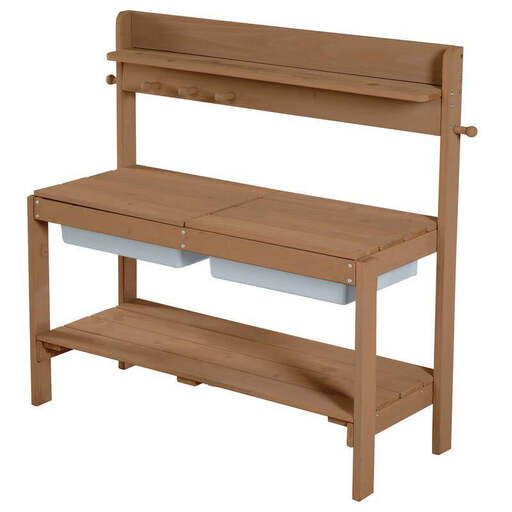
Why This Fits Their Persona: Ideal for families looking to create a durable outdoor play area. This kitchen is specifically designed for play with sand, water, and mud, and it withstands the elements.
The weather-sealed solid wood prevents swelling and rot, thus avoiding the 'short-lived outdoor model' trap.
Two removable plastic tubs for easy cleaning; can be used indoors as a craft table during winter.

Why This Fits Their Persona: Perfect for parents seeking a long-lasting indoor kitchen that grows with their child. The realistic design and interactive features encourage role-playing.
Its sturdy, FSC-certified wood construction and thoughtful light and sound effects bypass the pitfalls of flimsy design and overloaded electronics.
Height-adjustable for extended use; hob with realistic sound and light effects; high-quality accessories made of wood and stainless steel-look material.
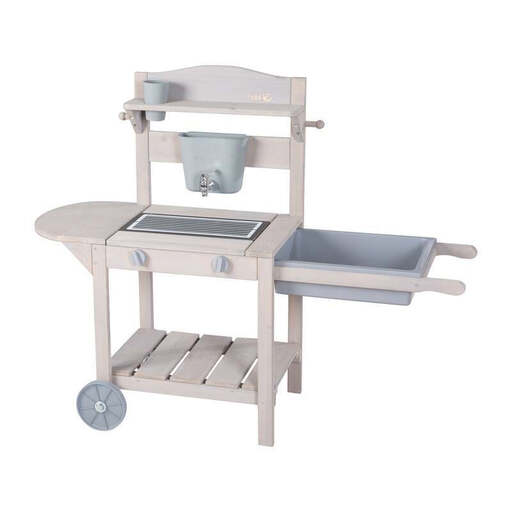
Why This Fits Their Persona: For families who value flexibility. This mobile BBQ kitchen can be moved effortlessly from the playroom to the patio thanks to its wheels, offering versatile play fun.
The sealed solid wood construction is robust enough for occasional outdoor use, while its mobility solves the problem of a fixed, impractical location.
Mobile thanks to wheels; functional faucet with a reservoir; printed grill surface for realistic BBQ play.
We've compiled a complete, up-to-date list of products that fully meet these strict selection criteria and safety regulations.
The recommended age varies by model. Simpler, lower-profile models like a mud kitchen are often suitable for children as young as 18 months. More complex play kitchens with small parts and advanced features, like many Miele play kitchens, are typically recommended for children aged 3 and up. Always observe the manufacturer's age recommendation to ensure safety.
Regular maintenance is crucial for longevity. Clean the surfaces with a damp cloth. For models made of sealed solid wood, the wood seal should be kept intact. It's advisable to cover the kitchen with a tarp when not in use or store it in a sheltered location during the winter months to protect it from extreme weather.
The included play kitchen with accessories usually provides a good starter set for immediate play. Sets with sturdy pots, pans, and cooking utensils made of wood or metal are often sufficient. Additional play food can expand the role-playing experience but is not essential to get started.