
Lieferung heute & morgen

Qualitätsgarantie

Willkommens-Angebote freischalten: KOSTENLOSE Lieferung | Bis zu 80 % RABATT | Kostenlose 30-Tage-JoyPlus-Testphase
App herunterladen
A wooden play kitchen is more than just a toy—it's a space that fosters creativity, social skills, and fine motor development. However, the market is flooded with models of widely varying quality. Many parents invest in a wooden kitchen that starts to wobble after a few months, comes with useless accessories, or isn't weather-resistant enough for the garden.
As your Joybuy Product Recommendation Officer, I'm here to help you spot the common pitfalls and make an informed decision. This guide focuses on the critical features that define a durable and educationally valuable wooden kitchen for kids.
Before we dive into recommended models, it's important to understand the common issues that lead to disappointment.
To avoid these mistakes, you should base your selection on three objective criteria. These will help you assess a model's quality, regardless of marketing claims.
The longevity of a wooden kitchen for kids depends directly on the material.
The best play experiences happen when the kitchen mimics reality.
A play kitchen that doesn't fit a child's height will rarely be used. The work surface should be at about the child's hip level to allow for a comfortable and ergonomic posture. Some models offer a height-adjustable design that grows with the child, ensuring usability for several years.
Here are some models that, based on objective criteria, are well-suited for different needs and play scenarios.
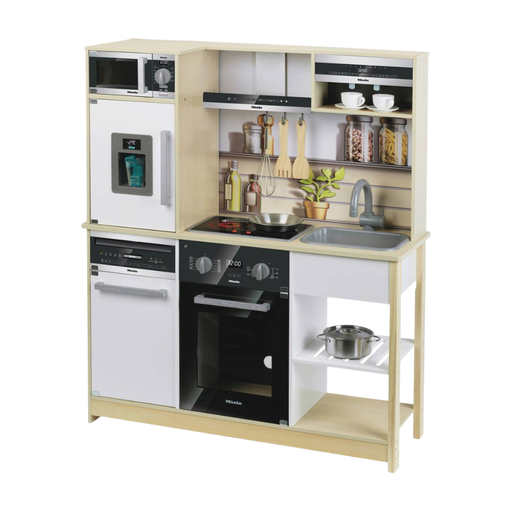
Why It's a Great Fit: Ideal for children who want a comprehensive and realistic kitchen experience indoors. The Miele design and extensive features, including a fridge, microwave, and espresso machine, mirror a modern kitchen.
The included metal and wooden accessories are high-quality and durable, avoiding the "useless accessory" trap. The construction from FSC-certified wood (MDF) is designed to be stable for indoor use.
Hob with realistic sound and light effects. Comprehensive features including a refrigerator with an ice dispenser.
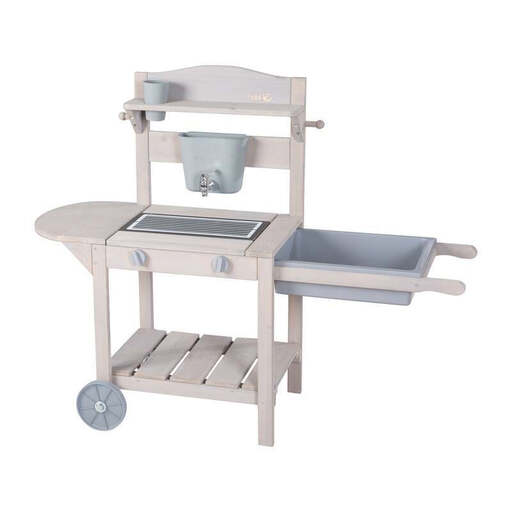
Why It's a Great Fit: Perfect for use in the garden or on the patio. The mobile design and robust materials are built for playing with sand, water, and mud.
The weather-resistant, stained solid wood prevents the rapid deterioration that occurs with unsuitable outdoor kitchens. The construction is explicitly designed for outdoor use.
Mobile thanks to wheels, includes a functioning tap and a removable plastic tub for easy cleaning.

Why It's a Great Fit: A long-term investment for families looking for a kitchen that adapts to their child's growing height, ensuring it remains ergonomic and playable for many years.
The height-adjustable feature solves the problem of an incorrect, unergonomic worktop height, which often occurs with fixed models after a child grows for a year or two.
Height-adjustable design for extended use. Includes a hob with light and sound effects, as well as high-quality accessories.
We've compiled a complete, up-to-date list of products that fully meet these strict selection criteria and safety regulations.
Simpler models, especially mud kitchens, are often suitable for children as young as 18 months, as they encourage sensory play. More complex kitchens with small play kitchen accessories and electronic features like lights and sound are generally recommended for children aged 3 and up. Always check the manufacturer's age recommendation.
For indoor wooden kitchens, wiping the surfaces with a slightly damp cloth is sufficient. For an outdoor kitchen for kids, proper care is crucial for longevity: empty water basins and tubs after each use to prevent standing water and algae growth. Cover the kitchen with a protective cover when not in use to shield it from the elements.
Most play kitchens are delivered for self-assembly. The process typically requires one adult and, with a detailed manual, is comparable to assembling a small piece of furniture. Plan for 30 to 90 minutes for assembly, depending on the model.