
Lieferung heute & morgen

Qualitätsgarantie

Willkommens-Angebote freischalten: KOSTENLOSE Lieferung | Bis zu 80 % RABATT | Kostenlose 30-Tage-JoyPlus-Testphase
App herunterladen
A wooden play kitchen is more than just a toy. It's a place where children learn through imitation, unleash their creativity, and develop motor skills. However, with so many options available, choosing the right model can be a challenge. This guide is designed to help you navigate the choices, presenting objective criteria that are crucial when deciding on a wooden kitchen for your child. We will also showcase a selection of models that stand out for their specific features.
To make an informed decision, you should consider a few fundamental product features. These criteria will help you find a durable play kitchen that is perfectly suited to your child.
The material is a critical factor for the durability and safety of a play kitchen. Models made of wood, often from MDF (medium-density fibreboard), offer a robust and stable construction. Look for certifications like the FSC seal, which indicates wood from responsibly managed forests. Equally important are a high-quality finish, rounded edges, and the use of saliva-resistant, non-toxic paints to ensure your child's safety.
A kitchen's play value is largely determined by its features. A play kitchen with lights and sound on the hobs or microwave enhances realism and captivates children. Check which play kitchen accessories are included. High-quality sets often come with pots, pans, and cooking utensils made of metal or wood, which are more durable than plastic versions. Elements like a refrigerator, an oven, or a sink with a removable basin further expand the play possibilities.
The dimensions of the play kitchen should suit the child's age and height, as well as the available space in their room. An ergonomically appropriate worktop height is important for comfortable play. Some models, such as certain Theo Klein kitchens, offer a height-adjustable feature. These "grow-with-me" kitchens are a sustainable investment, as they can be used for several years.
Based on the criteria mentioned above, we have compiled a selection of models that are distinguished by their specific features.
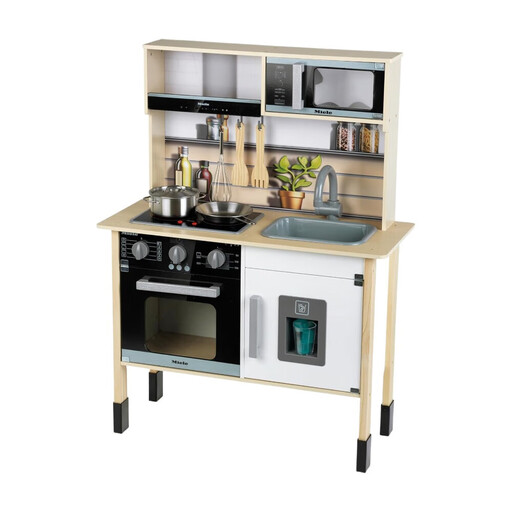
What makes this model stand out This compact Miele play kitchen features a modern design, is made from high-quality MDF wood, and offers a comprehensive set of features within a small footprint. The battery-operated hob with two-stage light and sound functions provides a realistic cooking experience.
Advantages
Who is this model for? This model is an excellent choice for families looking for a fully-featured yet space-saving wooden kitchen for kids. It is suitable for children aged 3 and up who enjoy realistic role-playing.

What makes this model stand out The standout feature of this Theo Klein kitchen is its height-adjustability, allowing it to grow with your child. The ceramic hob with sound effects and the stainless steel and wood accessories offer a wide range of play opportunities.
Advantages
Who is this model for? Ideal for parents and grandparents looking for a long-lasting solution that will accompany a child for several years. Its adaptability makes it a particularly sustainable choice.
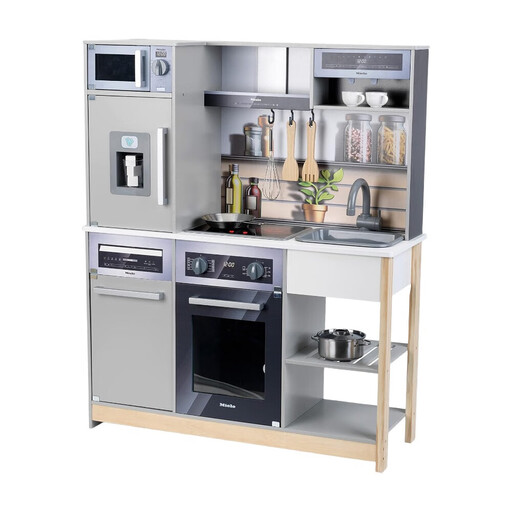
What makes this model stand out This large, modern family kitchen in the Miele design offers an exceptionally comprehensive range of features that leaves little to be desired. In addition to the standard elements, it includes an espresso machine and a refrigerator with an ice dispenser.
Advantages
Who is this model for? This model is aimed at anyone who has enough space and is looking for a play kitchen with maximum features. It is ideal for little gourmets who want to act out every aspect of cooking.
Haven't found the right model yet, or are you looking for more accessories to expand the world of play? Explore our entire range of Kids Play Kitchen Sets and find the perfect equipment for budding young chefs.
1. From what age is a wooden play kitchen suitable? Play kitchens are generally suitable for children from around 3 years of age. At this age, their fine motor skills and understanding of role-play are sufficiently developed. It is important to always follow the manufacturer's age recommendation and pay attention to warnings about small parts that could be a choking hazard.
2. What skills does a wooden play kitchen promote? A wooden kitchen playfully promotes various skills. These include creativity and imagination in role-playing, social skills when cooking with friends or siblings, fine motor skills when handling accessories, and an understanding of daily routines and healthy eating.
3. What should you look for when buying a Miele play kitchen? When considering a Miele play kitchen, which is licensed and produced by manufacturers like Theo Klein, you should pay attention to the specific features of each model. Compare the features (e.g., a play kitchen with lights and sound), the included accessories, the materials used (MDF, solid wood), and the dimensions to ensure the kitchen meets your requirements and fits your available space.