
Lieferung heute & morgen

Qualitätsgarantie

Willkommens-Angebote freischalten: KOSTENLOSE Lieferung | Bis zu 80 % RABATT | Kostenlose 30-Tage-JoyPlus-Testphase
App herunterladen
A wooden play kitchen is more than just a toy. It's a hub for creativity where children can playfully imitate everyday routines and develop social skills. However, the market can be overwhelming, and not every wooden play kitchen lives up to its promises. Before you make a decision, it's crucial to understand the most common pitfalls, which often only become apparent after the purchase.
As your Joybuy Product Recommendation Officer, I'm here to help you see through the marketing hype and make an informed choice. In this guide, we'll focus on the objective criteria that define a high-quality wooden play kitchen.
Many well-intentioned purchases end in disappointment. Watch out for these three typical problems to avoid making a poor choice:
To separate the good from the bad, you should check three core parameters. These are crucial in determining the kitchen's durability, safety, and overall play value.
The material is the cornerstone of any wooden play kitchen. Pay attention to the following points:
The right size is crucial for your child to play comfortably.
Modern play kitchens often include realistic features that significantly enhance the fun.
Here are some recommendations tailored to different needs and profiles.
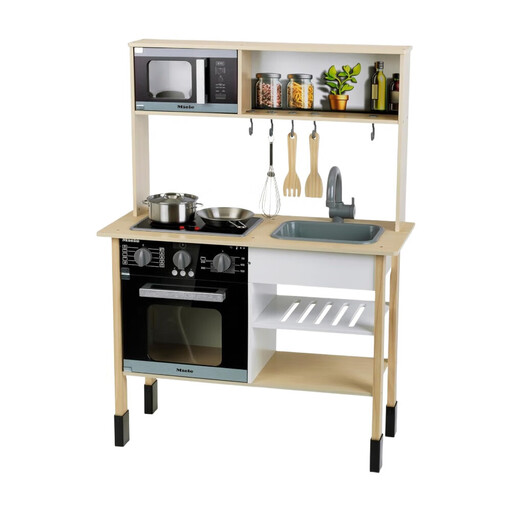
Why it's a match: This model offers a balanced combination of high-quality wood construction, interactive features, and thoughtful accessories. It's ideal for parents looking for a reliable and engaging starter play kitchen.
The kitchen is made from high-quality wood, not just a "wood-look" finish. The included metal and wood accessories are durable, avoiding the cheap plastic accessory trap.
Hob with sound and dual light effects for a realistic play experience. Includes a microwave and a removable sink.

Why it's a match: Perfect for families looking for a long-term solution. Its height-adjustability ensures the kitchen remains ergonomic for years of play, preventing it from being outgrown too quickly.
This model solves the problem of unstable or quickly outgrown designs with its solid, height-adjustable construction. The wood is also FSC-certified.
The worktop height is adjustable, extending its lifespan. Includes a hob with sound and light effects, plus stainless steel and wood accessories.
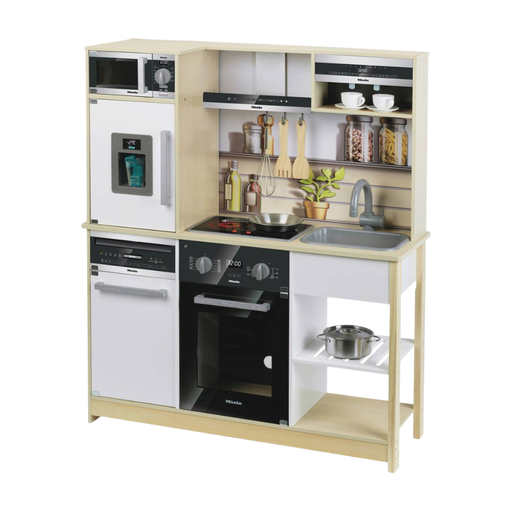
Why it's a match: Ideal for siblings or children who want a comprehensive play experience. At over 80 cm wide and packed with appliances, it offers plenty of space and inspiration for collaborative play.
The large, stable construction made from FSC-certified wood provides a durable play environment. Integrated appliances (espresso machine, fridge) eliminate the need to buy low-quality separate accessories.
Extensive features including a refrigerator with an ice dispenser and an espresso machine. Offers ample space for creative role-playing.
We've compiled a complete, up-to-date list of products that fully meet these strict selection criteria and safety standards.
Generally, a play kitchen for ages 3 and up is recommended. At this age, children begin to develop complex role-playing scenarios and imitate everyday activities. It is important that the chosen model has age-appropriate safety features, such as rounded edges, a stable construction, and non-toxic materials. Adult supervision is recommended during play.
The assembly effort varies by model and manufacturer. Most kitchens are delivered as a kit with detailed, step-by-step instructions. Plan to set aside enough time for assembly, which should be done by an adult. It is advisable to check all screw connections for tightness after assembly and at regular intervals to ensure lasting stability.
Yes, models with electronic features like a light-up hob or realistic cooking sounds typically require batteries (e.g., AA type). You can find the exact details on the type and number of batteries needed in the product description. In most cases, batteries are not included and must be purchased separately.