
Lieferung heute & morgen

Qualitätsgarantie

Willkommens-Angebote freischalten: KOSTENLOSE Lieferung | Bis zu 80 % RABATT | Kostenlose 30-Tage-JoyPlus-Testphase
App herunterladen
A wooden play kitchen is more than just a toy; it's a space that fosters creativity and social skills. However, the selection is vast, and not every model lives up to its promise. Many parents invest in a wooden kitchen for their children assuming they're buying a durable, high-quality product, only to discover defects shortly after. This guide will help you navigate the common pitfalls and make an informed decision.
Before you decide on a model, you should be aware of the most common issues that often only become apparent after the purchase.
To avoid a bad purchase, you should check three essential criteria. These objective parameters will help you objectively assess the quality of a wooden play kitchen for kids.
The material is crucial for stability and safety. Pay attention to the following points:
The right size is essential for long-lasting fun.
Modern play kitchens often offer realistic features that enhance the play value.
Based on the criteria mentioned, we have identified some models that are suitable for different needs and space constraints.
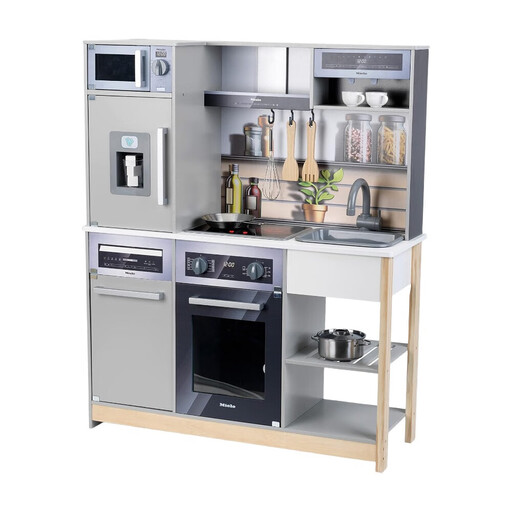
Why This Fits Their Persona: Ideal for families looking for a large, fully equipped play kitchen that is also suitable for multiple children. The Miele design and extensive features like a refrigerator with an ice dispenser and an espresso machine offer a realistic play experience.
The construction from FSC-certified wood ensures stability. The included metal and wood accessories are durable and match the quality of the kitchen.
Battery-powered hob with realistic light and sound effects; extensive equipment including a microwave and refrigerator.

Why This Fits Their Persona: Perfect for parents looking for a long-term investment. The height-adjustable countertop allows the kitchen to be adapted to the child's growing height, extending its usability for several years.
The problem of a play kitchen becoming too small too quickly is solved by the height-adjustable design. The material, made from sustainable wood (FSC-certified), ensures stability throughout its entire lifespan.
Three different height settings; hob with sound and light effects; high-quality accessories made of stainless steel and wood.
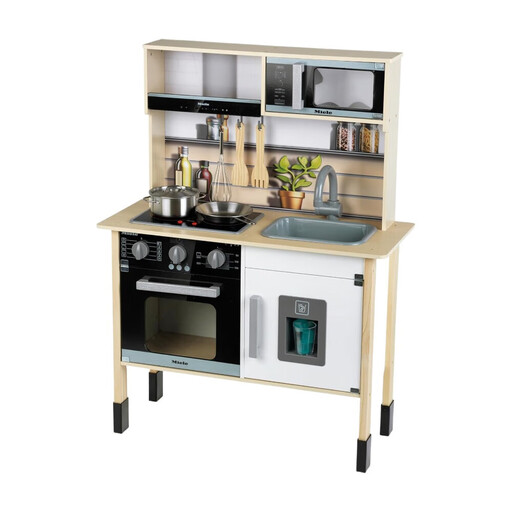
Why This Fits Their Persona: This Miele play kitchen is a great choice for smaller apartments or children's rooms. It offers the essential features and high-quality design of the larger models on a more compact footprint.
Despite its compact size, this model relies on a sturdy construction of high-quality MDF wood. The equipment is well-thought-out and not overloaded with unnecessary filler items.
Space-saving design; hob with two-stage light and sound function; includes high-quality cooking utensils made of metal and wood.
We've compiled a complete, up-to-date list of products that fully meet these strict selection criteria and German safety regulations.
Most manufacturers recommend their models as a play kitchen for children aged 3 and up. At this age, children begin to develop complex role-playing games and have the necessary fine motor skills to handle the accessories safely. When making your selection, always pay attention to the manufacturer's age recommendation and check for any small parts that could pose a choking hazard.
The assembly is generally comparable to that of a small piece of furniture. Most models come with detailed step-by-step instructions and all the necessary screws. It is advisable to check all parts for completeness before starting and to carry out the assembly with two people. The assembly time varies between 30 and 90 minutes, depending on the model.
The seal of the FSC (Forest Stewardship Council) is an internationally recognised certification system for more sustainable forest management. When you buy an FSC wooden toy, you can be sure that the wood used comes from forests that are managed according to strict ecological and social principles. This includes protecting endangered species, upholding workers' rights, and preserving the functions of the forest.