
Lieferung heute & morgen

Qualitätsgarantie

Willkommens-Angebote freischalten: KOSTENLOSE Lieferung | Bis zu 80 % RABATT | Kostenlose 30-Tage-JoyPlus-Testphase
App herunterladen
A wooden play kitchen is more than just a toy—it's a hub for creativity, role-playing, and learning everyday routines through play. But the market can be overwhelming, and not every model that looks great at first glance will live up to its promise during daily use. As your Joybuy Product Recommendation Officer, I'm here to help you spot the common pitfalls and make an informed decision that ensures years of playtime enjoyment.
Many well-intentioned purchases end in disappointment because crucial details were overlooked. Watch out for these three common problems to avoid a poor investment:
play kitchen with lights and sound sounds appealing, but these electronic components are often low-quality. They fail quickly, the batteries are constantly drained, and the sounds are more annoying than engaging. The focus should be on a solid core construction that encourages imaginative play.kids' kitchen with accessories separately can unexpectedly drive up the total cost.To find a durable and educationally valuable wooden kitchen for kids, you should check three core criteria before making a decision.
The material is the heart of any wooden play kitchen. Solid wood is robust, but also heavy and expensive. High-quality, thicker MDF (medium-density fibreboard) panels are an excellent and stable alternative, provided they are well-finished. Pay attention to the following:
A play kitchen must fit the child's height so they can play comfortably and without poor posture. The countertop height is the most important guideline here:
educational toy for ages 3+ that grows with your child.A good role-play kitchen mimics reality in a meaningful way. Turning knobs with a clicking sound, a removable sink, and doors that open and close smoothly are more important than flashing lights. If electronic features are included, they should be robust. An included starter set of accessories like a pot, pan, and cooking utensils is a clear bonus and allows for immediate fun.
Based on these quality criteria, we have identified a few models from our range that are suitable for different needs.
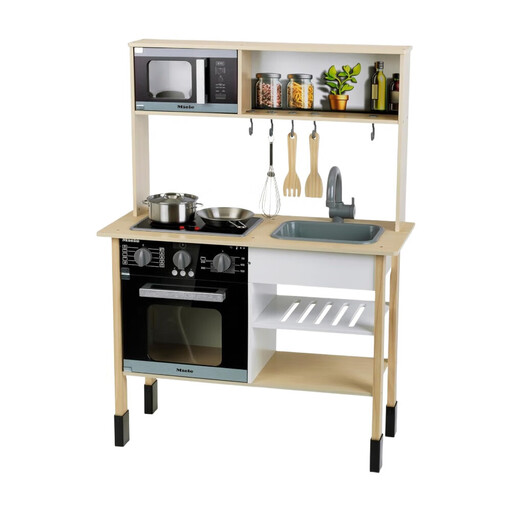
Why it's a great fit: The elegant and minimalist Miele design blends seamlessly into modern living spaces. It's ideal for parents who value aesthetics and want a toy that doesn't look out of place in the living room.
The high-quality wood construction provides essential stability. It also includes a stylish set of metal and wooden cookware, avoiding the hidden accessory cost trap.
Combines authentic brand design with a sturdy wooden build and interactive elements, including a hob with light and sound functions.
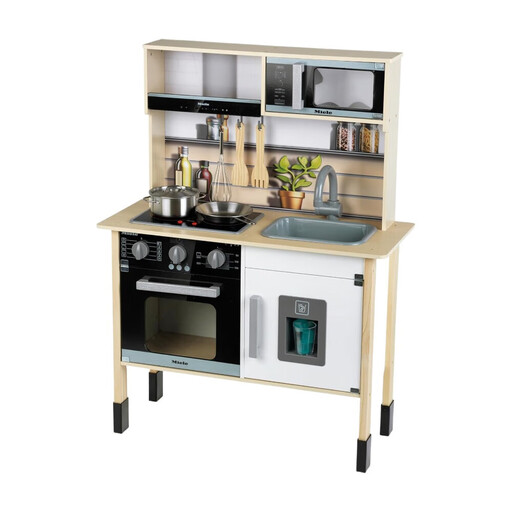
Why it's a great fit: For children who want more realistic features. This kitchen expands the play possibilities with a refrigerator and an ice dispenser, providing even more inspiration for complex role-playing scenarios.
The use of high-quality, FSC-certified MDF wood ensures a stable base. The integrated light and sound effects come from a reputable brand (Theo Klein), suggesting greater durability than no-name products.
Expanded feature set with a refrigerator and ice dispenser for an exceptionally realistic and varied play experience.
We've compiled a complete, up-to-date list of products that fully meet these strict selection criteria and safety standards.
As a rule, play kitchens are an excellent choice for children from around 3 years of age. At this stage, children begin to show a keen interest in role-playing and imitating adult activities. A wooden kitchen for kids specifically helps to develop fine motor skills, language development, and social skills.
Cleaning is straightforward. Wooden surfaces should be wiped with a soft, slightly damp cloth. Avoid harsh cleaning agents or excessive water, as this can damage the material. It's also a good idea to periodically check that all screw connections are tight and retighten them if necessary.
This depends on what's included with the specific model. Many sets already come with a basic starter kit. To enhance the play experience, purchasing additional play food, dishes, or kitchen appliances can be a great idea. This encourages creativity and provides new inspiration for play.