
Lieferung heute & morgen

Qualitätsgarantie

Willkommens-Angebote freischalten: KOSTENLOSE Lieferung | Bis zu 80 % RABATT | Kostenlose 30-Tage-JoyPlus-Testphase
App herunterladen
A wooden play kitchen is more than just a toy—it's a space for creativity, role-playing, and learning about daily routines through play. But the market is crowded, and not every model delivers on its promises. Before you make a decision, it's crucial to understand the common weaknesses that can quickly spoil the fun.
This guide, created by the Joybuy Product Recommendation Officer, will help you separate the wheat from the chaff. We focus on objective criteria and show you what really matters when making your choice, so you can create a durable and safe play environment for your child.
Many products are advertised with appealing photos, but the reality is often quite different. Pay close attention to these three points to avoid disappointment:
play kitchen with light and sound can spark the imagination. However, these modules are often poorly integrated, the batteries drain quickly, or the sound effects are excessively loud and of poor quality. When the electronics fail after a short time, you're left with an expensive but non-functional component.mud kitchen.To make an informed decision, you should focus on verifiable features. The following two parameters are crucial for the durability, safety, and play value of a wooden play kitchen.
The material is the heart of any wooden play kitchen. There are significant differences here:
outdoor kitchen for kids. MDF (Medium-Density Fibreboard) is a common material, but its quality varies greatly. Look for sufficient board thickness and a high-quality, smooth coating.A good play kitchen is more than just a wooden frame. Its functionality determines how long and how intensively it will be used.
play kitchen with accessories is convenient for getting the fun started right away. Check whether the pots, pans, and cooking utensils are also made from high-quality materials (wood, metal) and are appropriately sized for small hands.Based on these objective criteria, we have identified several models that are suitable for different needs and scenarios.
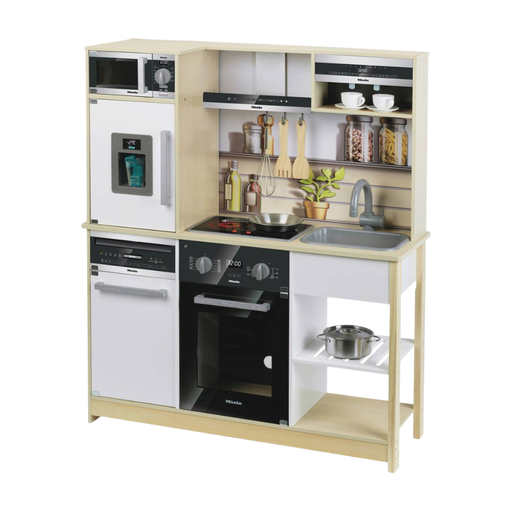
Why this model is a great fit: Ideal for families looking for a fully equipped Miele play kitchen for the playroom. It combines a wooden construction with numerous realistic appliances like a microwave, espresso machine, and a hob with light and sound effects.
The construction from FSC-certified wood provides a solid foundation. The electronic features are designed as a central part of the Miele design, not just as an afterthought.
Comprehensive features, including high-quality metal and wood accessories, for a complete play experience right out of the box.
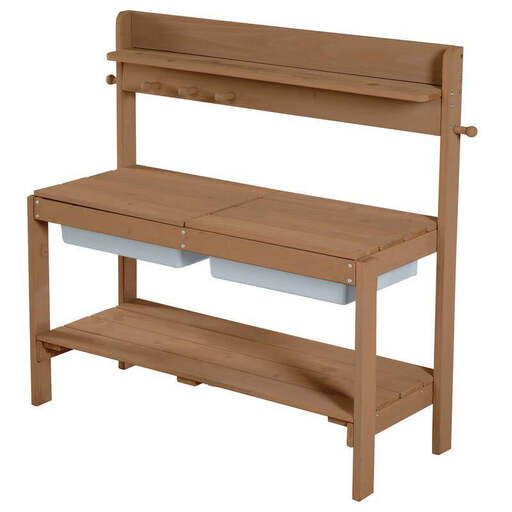
Why this model is a great fit: This mud kitchen is designed for outdoor use. It's perfect for sand, water, and mud, and can be used indoors as a craft table during the winter. Suitable for a wide age range from 1.5 to 8 years.
It solves the problem of limited versatility with its 3-in-1 function. The weather-resistant glazed solid wood is significantly more robust and durable than standard MDF, avoiding the pitfall of unstable construction.
High durability and flexibility thanks to its robust build and suitability for year-round use, both indoors and out.

Why this model is a great fit: A sustainable choice for parents looking for a long-term investment. The height-adjustable feature allows the kitchen to adapt to the child's size, ensuring it can be used for several years.
This model directly addresses the problem of a limited lifespan. Instead of focusing on many small gimmicks, it relies on a thoughtful, durable core feature—adaptability.
The height-adjustability makes the kitchen a companion through multiple stages of growth. The construction from FSC-certified wood underscores its focus on sustainability.
We have compiled a complete, up-to-date list of products that meet these strict selection criteria and safety regulations.
Suitability largely depends on the specific model. Simple and particularly sturdy kitchens, like a mud kitchen without small parts, can be suitable for children as young as 18 months. More complex play kitchens with lots of accessories and electronic features are often recommended for children aged 3 and up. A key reason for this is the risk of choking hazards from small parts. Therefore, always check the manufacturer's age recommendation on the packaging.
Care is straightforward. For indoor kitchens made of MDF or wood, wiping with a dry or slightly damp, soft cloth is usually sufficient. Avoid harsh cleaning agents. While an outdoor kitchen for kids made of glazed solid wood is more weather-resistant, it still requires care. It's advisable to empty water containers after play and to cover the kitchen or store it in a sheltered place when not in use to maximise its lifespan.
Most models are delivered for self-assembly. The level of difficulty varies depending on the manufacturer and the complexity of the kitchen. A detailed assembly manual is typically included. Plan enough time for assembly; help from a second person is often beneficial. Before the first use, and at regular intervals thereafter, check that all screws are tight to ensure stability and safety.