
Lieferung heute & morgen

Qualitätsgarantie

Willkommens-Angebote freischalten: KOSTENLOSE Lieferung | Bis zu 80 % RABATT | Kostenlose 30-Tage-JoyPlus-Testphase
App herunterladen
A wooden play kitchen is more than just a toy. It's a hub for creativity, a tool for learning social skills, and often a centrepiece of a child's room that brings joy for years. However, with so many models and features available, the choice can be overwhelming. This guide offers an objective overview and presents a selection of models to help you make an informed decision.
To find a suitable and durable model, several key criteria should be considered. The following points will help you objectively compare the features of different play kitchens.
The material is a crucial factor for the durability and safety of a play kitchen. Models made from wood, especially those with FSC certification, are sourced from demonstrably responsible forestry. Look for a stable construction, meticulous craftsmanship with no sharp edges, and the use of non-toxic paints and finishes. A sturdy wooden play kitchen for kids can withstand even intense play and will remain a safe place to play for a long time.
A play kitchen's play value is largely determined by its features. A play kitchen with accessories like pots, pans, and cooking utensils allows for play right out of the box. Interactive elements enhance realism and fascination. A play kitchen with lights and sound on the hob simulates real cooking processes and encourages imaginative role-play. Consider which elements—such as an oven, a microwave, or a sink—would be most appealing to your child.
The kitchen's dimensions should suit the child's age and height, as well as the available space in their room. A height-adjustable play kitchen offers a clear advantage here: it grows with your child, ensuring an ergonomic playing height for several years. For younger children, a play kitchen for ages 3 and up is typically well-proportioned, as it is designed for the motor skills and reach of this age group.
Based on the criteria mentioned, we have compiled a selection of models that stand out for their specific features.

Why it stands out: This model from the Theo Klein brand combines a licensed Miele design with thoughtful functionality. Its height-adjustability makes it a particularly sustainable investment in long-term play.
Pros:
Who it's for: For families looking for a durable play kitchen that adapts to their child's size and who value sustainable materials and a well-known brand design.
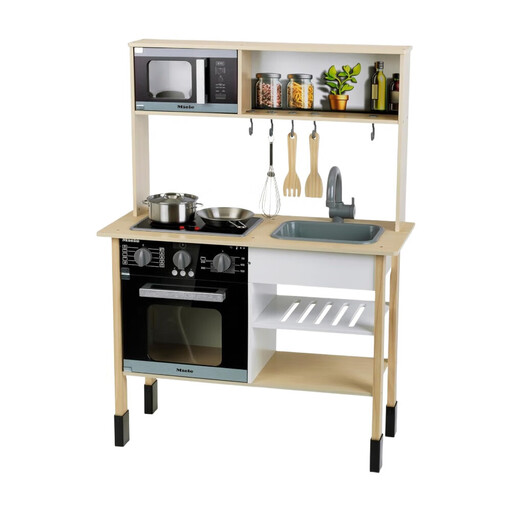
Why it stands out: This Miele play kitchen impresses with its clean, white design that blends harmoniously into many interior styles. It offers a classic set of features for budding little chefs.
Pros:
Who it's for: Ideal for buyers seeking an aesthetically pleasing model with all the essential play functions who also appreciate the authentic Miele design.
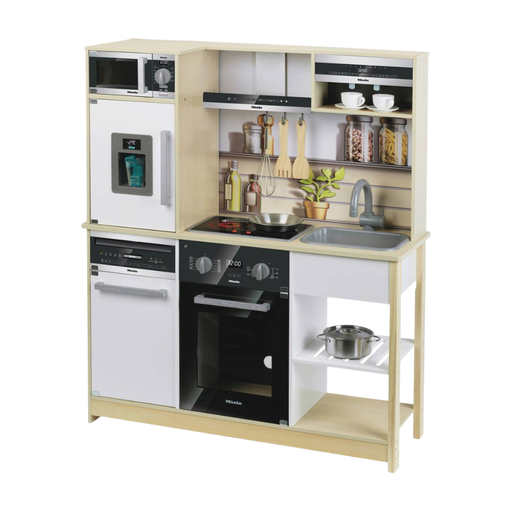
Why it stands out: The "Family Kitchen" is the most comprehensive model in this selection. With additional appliances like an espresso machine and a refrigerator with an ice dispenser, it offers exceptionally diverse play opportunities.
Pros:
Who it's for: Perfect for families looking for a large, fully-equipped play kitchen that offers maximum scope for imagination and is also suitable for playing together with friends or siblings.
The models presented here provide a good overview of the possibilities. However, if you are looking for other designs, sizes, or specific accessories, you are sure to find the right product in our wider selection.
? Explore the full range of play kitchens and role-play toys here
Most manufacturers recommend their wooden kitchens for children aged 3 and up. At this age, motor skills are usually developed enough for children to handle accessories safely. They also begin to engage in complex role-playing, where imitating everyday activities like cooking takes centre stage. Always follow the manufacturer's age recommendation and pay attention to warnings about small parts that could be a choking hazard.
The FSC (Forest Stewardship Council) seal is an international certification system for more sustainable forest management. If an FSC wooden kitchen bears this seal, it means the wood used comes from forests managed according to strict ecological and social principles. Purchasing such a product supports forest conservation and the responsible use of resources.
Assembly should always be carried out by an adult. Follow the manufacturer's enclosed assembly instructions precisely. It is important to tighten all screws firmly to ensure the kitchen's stability and prevent it from wobbling or tipping over during play. The installation of batteries for light and sound effects should also only be done by adults. Check all connections periodically.