
Lieferung heute & morgen

Qualitätsgarantie

Willkommens-Angebote freischalten: KOSTENLOSE Lieferung | Bis zu 80 % RABATT | Kostenlose 30-Tage-JoyPlus-Testphase
App herunterladen
A wooden play kitchen is a centerpiece in many playrooms, encouraging creative role-playing. However, the selection is vast, and not every model lives up to its product photos. Before you make a decision, it's helpful to understand the most common pitfalls that can lead to disappointment and wasted money.
Many buyers focus on appealing designs while overlooking crucial quality features. Three common problems are:
To make an informed decision, you should focus on objective, verifiable criteria. The following three parameters are crucial for the quality and long-term play value of a wooden play kitchen.
The foundation of any good wooden kitchen is its material. Look for a solid build. Models made from solid wood or thick, sturdy MDF panels offer greater stability than thin particle board. An important indicator of sustainably and responsibly sourced wood is the FSC certification.
The craftsmanship is just as important. All edges and corners should be carefully rounded to minimise the risk of injury. The surfaces should be smoothly sanded and treated with water-based paints that are certified as safe for children's toys.
The kitchen's dimensions must be appropriate for the child's age and height. A key measurement is the counter height—the height of the work surface. For children aged 3 and up, a counter height between 45 cm and 55 cm is generally suitable. A large wooden play kitchen can be a worthwhile investment if multiple children will be playing with it simultaneously or if you want it to last for several years. Check the overall dimensions (width, height, depth) to ensure the kitchen will fit well in the intended space.
Interactive elements significantly enhance the play value. A play kitchen with lights and sounds on the hobs or microwave provides a more realistic experience. Turning knobs with clicking sounds, doors with magnetic closures, and a removable sink are also practical details.
When it comes to a wooden kitchen with accessories, quality is more important than quantity. A set of sturdy pots, pans, and cooking utensils made of wood or metal is often more sensible than a large quantity of small plastic accessories. Brands like Theo Klein often offer realistic replicas of well-known household appliances, such as a Miele play kitchen, which make role-playing more authentic.
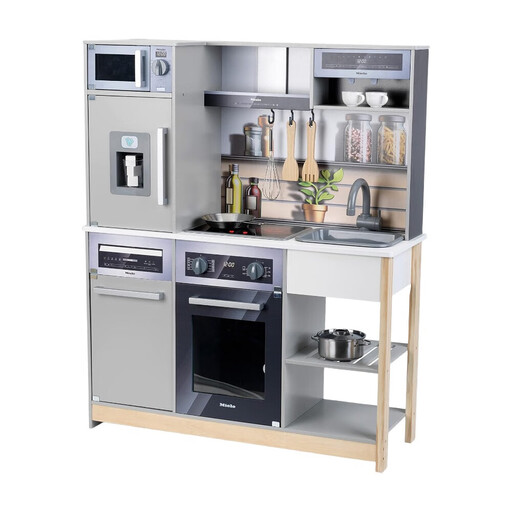
Why This Fits Their Persona: Ideal for families looking for a durable, fully-equipped, and central play station for the playroom. The realistic Miele design and its size are suitable for years of intensive play, even with siblings or friends.
According to the manufacturer, the kitchen is made from FSC-certified wood and features a stable construction. Its size and interactive features are tailored for children aged 3 and up, avoiding the problem of impractical dimensions.
All-in-one solution with a battery-operated hob (light and sound), microwave, and extensive accessories made of metal and wood.
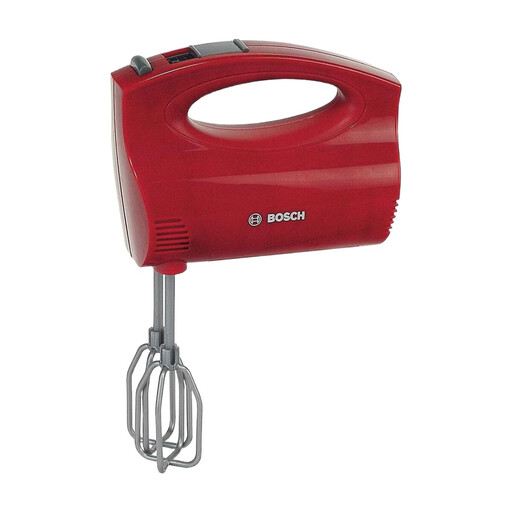
Why This Fits Their Persona: A great choice for families who want to test their child's interest in kitchen role-play with a smaller, high-quality accessory before investing in a full kitchen.
Instead of buying a large but unstable play kitchen, this is an investment in a single, robust brand-name toy. It offers a focused and functional play experience without the risk of a large, unused toy.
Battery-operated function with rotating, child-safe whisks for a realistic feel. The authentic Bosch design sparks creativity.
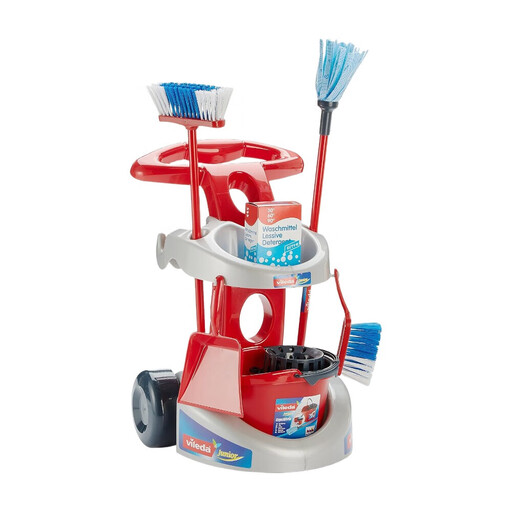
Why This Fits Their Persona: Perfect for children who love to imitate adult household chores. This set expands role-play beyond cooking and fosters an understanding of everyday tasks.
This set focuses on a specific play activity and is designed to be robust and functional. It's an alternative to a potentially unsuitable play kitchen and offers high, standalone play value.
Comprehensive accessory set including a mop, bucket with a wringer, broom, and dustpan. The trolley is easy to assemble and move.
We've compiled a complete, up-to-date list of products that fully meet these strict selection criteria and German safety regulations.
A play kitchen for ages 3 and up is generally a good recommendation. At this age, children begin to develop complex role-playing games and imitate the actions of adults. For younger children, you should ensure that the model does not contain any small, swallowable parts and has an especially sturdy construction.
The assembly effort varies depending on the model and manufacturer. Most wooden kitchens are delivered as a flat-pack kit and require adult assembly. Plan for between 30 minutes and two hours, depending on the kitchen's complexity. It is advisable to check the screw connections after a period of use and retighten them if necessary to maintain stability.
Look for recognised seals and certifications. The FSC seal stands for wood from responsible forest management. Information about the lacquers and paints used can often be found in the product description. Manufacturers who prioritise safety typically use water-based paints and state that their products comply with European safety standards for toys (e.g., EN 71).