
Lieferung heute & morgen

Qualitätsgarantie

Willkommens-Angebote freischalten: KOSTENLOSE Lieferung | Bis zu 80 % RABATT | Kostenlose 30-Tage-JoyPlus-Testphase
App herunterladen
A wooden playpen provides a protected space where babies can safely explore the world while parents have their hands free for a moment. But the selection is vast, and choosing the right model requires careful consideration. A height-adjustable wooden playpen adapts to your child's growth and is easier on parents' backs. This article outlines the key criteria for making your choice and presents a selection of models to help you decide.
The decision for a safe playpen for babies depends on several factors that should be tailored to your living situation and your child's needs.
Safety is the top priority. Look for sturdy construction and high-quality craftsmanship. Wooden models are durable and blend seamlessly into most living spaces. It is crucial that the paints and materials used are saliva-resistant and free of harmful substances. Products manufactured according to current safety standards, such as DIN EN 12227:2010-12, offer a reliable guide. The spacing of the bars should be narrow enough to prevent a child's head from passing through, avoiding entrapment hazards.
A height-adjustable playpen is particularly practical. In the first few months, the base can be positioned at the highest level, making it ergonomic for parents to place the baby in and lift them out. As soon as the child becomes more mobile and can pull themselves up, the base must be lowered for safety. A playpen with wheels increases flexibility, as it can be easily moved from one room to another. Locking brakes on the wheels are essential to ensure it remains securely in place. For families with limited space, a foldable playpen is ideal, as it can be quickly and compactly stored when not in use.
Playpens are available in various shapes and sizes. A square 100x100 cm playpen offers a generous play area, while a hexagonal playpen is an interesting alternative that also provides plenty of room to play. Smaller, rectangular models are well-suited for more compact living spaces. Aesthetics also play a role: a white playpen has a modern and bright look, while natural wood radiates warmth and cosiness.
Here is a selection of models that stand out for their specific features and functionality.

What Makes It Stand Out This model from roba combines mobility with a space-saving folding feature. Its modern bi-colour design and flat wooden bars make it a practical and visually appealing solution for everyday use.
Advantages
Who It's For Ideal for parents looking for a flexible solution for smaller living spaces who want to easily store the playpen when needed.
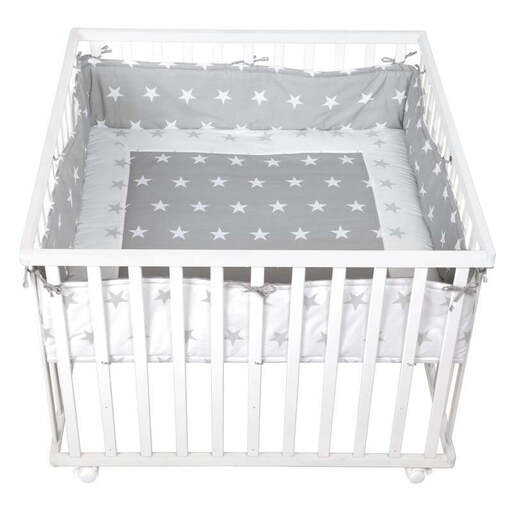
What Makes It Stand Out This square 100x100 playpen offers a generous area for playing and cuddling. The white finish and the included "Little Stars" fabric liner create a cosy and safe space for babies. According to the manufacturer, it was developed in Germany in compliance with the DIN EN 12227:2010-12 safety standard.
Advantages
Who It's For Suitable for families who want to set up a permanent and spacious play area in the living room or nursery and who value a complete set with a matching liner.
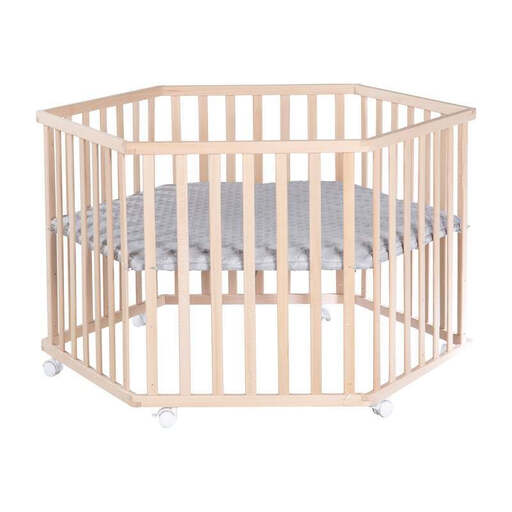
What Makes It Stand Out The hexagonal playpen from roba, made of solid beech wood, is an eye-catcher in any room. It combines the sturdiness of solid wood with high functionality, featuring six locking castors and a three-level height adjustment. The quilted fabric insert ensures comfort.
Advantages
Who It's For Perfect for parents who prefer an exceptionally sturdy and durable wooden playpen made of solid wood and appreciate a unique shape that offers plenty of freedom of movement.
A playpen only becomes a truly cosy spot with the right accessories. A soft mat or an extra blanket enhances comfort and provides a sense of security for your child.
If you are looking for a high-quality and safe blanket, discover our selection of baby blankets to make your child's play area even more comfortable.
1. When is a playpen useful? A playpen is useful from the moment a baby starts to roll over or crawl, typically around 4 to 6 months of age. It provides a safe area as the child becomes more mobile. It can be used up to the age of about 24 months or until the child attempts to climb out. Always follow the manufacturer's weight and age recommendations.
2. How high should a playpen be set? For newborns and babies who cannot yet sit up, the highest base position is ideal. It is more ergonomic for parents when placing the baby in and lifting them out. As soon as the child can sit up independently or pull themselves up on the bars, the base must be lowered to the lowest level for safety to prevent them from falling out.
3. What is the difference between a 'Laufstall' and a 'Laufgitter'? In common German usage, the terms Laufstall and Laufgitter are used synonymously. Both refer to a safe, enclosed play area for babies and toddlers, defined by bars. Their function and purpose are identical. In English, terms like "playpen" and "play yard" are similarly used interchangeably.