
Lieferung heute & morgen

Qualitätsgarantie

Willkommens-Angebote freischalten: KOSTENLOSE Lieferung | Bis zu 80 % RABATT | Kostenlose 30-Tage-JoyPlus-Testphase
App herunterladen
Choosing a child's first puzzle is a special moment. A wooden puzzle for a 1-year-old should not only entertain but also support their development. However, the market is flooded with products that often fail to deliver on their promises. Many parents invest in toys that turn out to be unsuitable, unsafe, or frustrating for their child.
As your Joybuy Product Recommendation Officer, I'm here to help you identify the common pitfalls and make an informed decision. We will focus on the objective criteria that define a good first puzzle for toddlers.
Common Pitfalls When Buying Wooden Puzzles for Toddlers:
To avoid disappointment, you should check three key product features before buying. These define the safety, play value, and durability of a puzzle for toddlers.
Material safety is non-negotiable. Look for products explicitly declared as non-toxic. A key indicator of responsibly made wooden toys is the FSC seal. It guarantees that the wood comes from sustainably managed forests. The following points are also crucial:
At one year of age, fine motor skills develop rapidly. A wooden peg puzzle must support this developmental step, not hinder it. The crucial features are:
An educational wooden toy should be challenging in an age-appropriate way without being overwhelming. For a child from 12 months, the focus is on fundamental skills:
Based on the objective criteria mentioned above, we have identified several products suitable for different requirements.
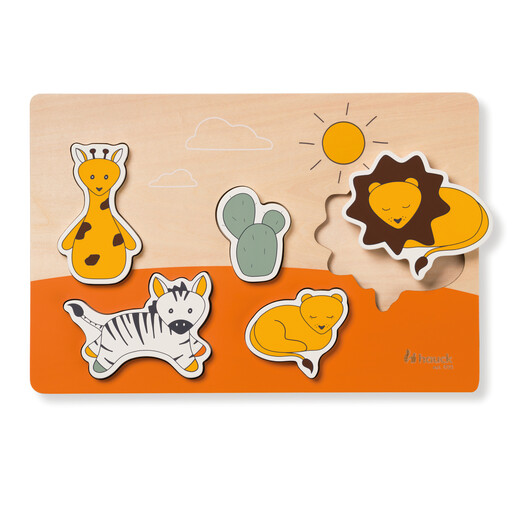
Why This Fits Their Persona: Ideal for toddlers having their first experience with puzzles. The design, featuring individual, clearly defined animals and large pieces, prevents them from feeling overwhelmed and provides quick moments of success.
It avoids the pitfall of over-complexity. The pieces are large, each represents a complete animal, and the knobs are sized for small fingers. The rounded edges and sturdy construction meet safety requirements.
Specifically promotes hand-eye coordination and learning to name animals. The puzzle is made from FSC-certified wood.
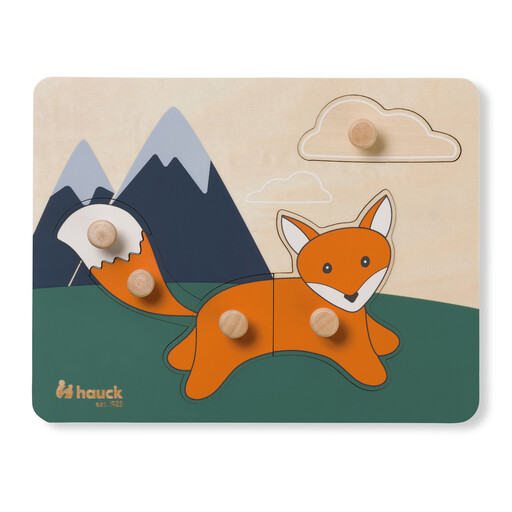
Why This Fits Their Persona: Suitable for children who already have some puzzle experience and are ready for the next step. Here, multiple pieces must be combined to form a single animal shape, which challenges cognitive skills more intensely.
It offers an age-appropriate increase in complexity. Although more challenging, the pieces remain easy to handle thanks to the wooden knobs, and the total number of pieces is manageable, which prevents frustration.
Specifically trains shape recognition and the logical assembly of parts. This model is also made from FSC-certified wood and has rounded edges for safe play.
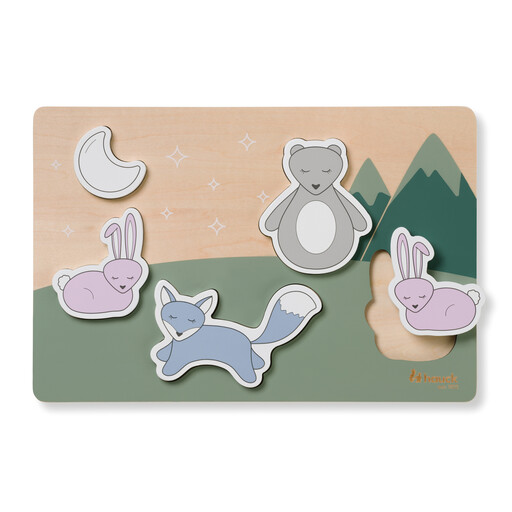
Why This Fits Their Persona: For parents who place special value on ecological responsibility and verifiably sustainable materials. The forest theme is a perfect thematic match for the material's origin.
It directly addresses the pitfall of vague material claims. The explicit statement "made from wood from FSC-certified forests" provides reliable, transparent information about the origin and quality of the raw material.
Combines playful learning fun with the peace of mind that comes from using an ecologically responsible product. The design is child-friendly, safe, and, like the other models, promotes fine motor skills.
We have compiled a complete, up-to-date list of products that fully comply with these strict selection criteria and stringent safety standards.
Look for several key features: The pieces must be large enough to not pose a choking hazard. The wood should be smooth and splinter-free, with rounded edges. Check for non-toxic, saliva-resistant paints and ideally, safety certifications like the CE mark and material certifications such as FSC.
Wooden toys should never be submerged in water or cleaned with harsh chemicals. Simply wipe the surfaces with a slightly damp cloth and then dry them thoroughly. This removes dirt without damaging the wood or the paint. Always follow the manufacturer's care instructions.
A wooden peg puzzle is typically suitable from around 12 months of age. At this point, many children begin to develop their pincer grasp and purposefully reach for objects. A simple peg puzzle with large knobs is the ideal starting point for training hand-eye coordination and fine motor skills.