
Lieferung heute & morgen

Qualitätsgarantie

Willkommens-Angebote freischalten: KOSTENLOSE Lieferung | Bis zu 80 % RABATT | Kostenlose 30-Tage-JoyPlus-Testphase
App herunterladen
Finding the first puzzle for a toddler can be a challenge. The market is flooded with options, but not every toy advertised as "educationally valuable" lives up to its promise. A well-chosen wooden puzzle for a 1-year-old is more than just a pastime; it's a fundamental tool for fostering a child's development.
However, many parents and gift-givers fall into common traps that lead to frustration for the child and unnecessary expenses. Before you make a decision, it's crucial to understand the most frequent shortcomings, which often only become apparent after the purchase.
A thoughtful purchase based on objective criteria ensures the toy is safe and fulfils its long-term purpose as a wooden educational toy.
To avoid a bad buy, you should focus your attention on three core areas. These parameters define the quality and suitability of a puzzle for toddlers far more than colourful packaging or marketing promises.
The child's safety is the top priority. Since toddlers often explore toys with their mouths, the quality of the materials is non-negotiable.
The first puzzle for toddlers should be designed to specifically encourage motor skills without overwhelming them.
A good wooden puzzle is an effective motor skills toy for ages 12 months and up. It supports development on multiple levels simultaneously.
Based on the criteria above, we have curated a selection of products that are suitable for different needs and preferences.
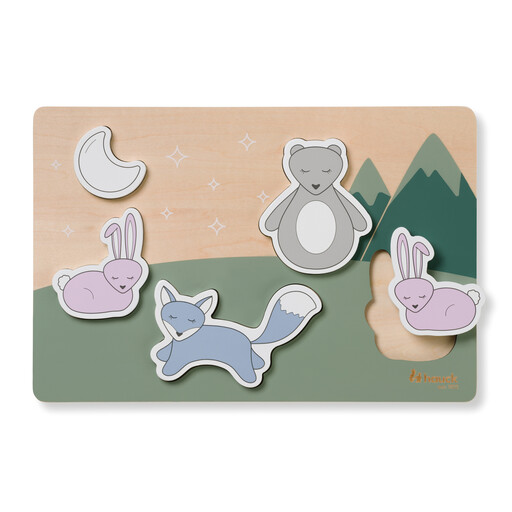
Why This Fits Their Persona: This puzzle offers all the fundamental features for a successful start. It's a solid choice for parents looking for a safe and educationally sound toy without immediately investing in a premium product. Ideal for testing a child's interest in puzzles at an accessible price point.
The puzzle pieces are designed as whole shapes without separate knobs, which eliminates the risk of small parts coming loose. The FSC certification also provides assurance regarding the material's origin.
Made from FSC-certified wood; clear, simple animal shapes encourage initial naming and matching.
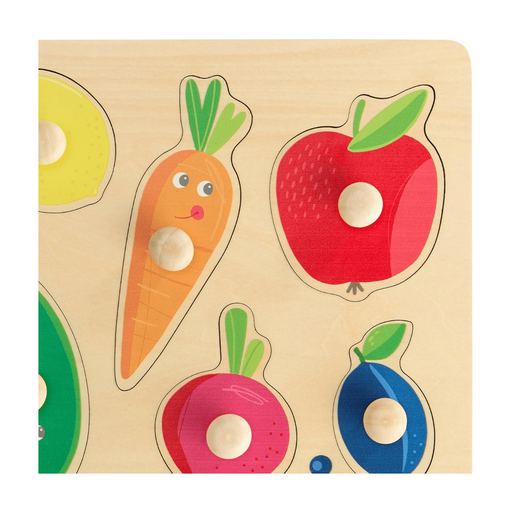
Why This Fits Their Persona: For anyone who values maximum quality, durability, and German manufacturing. Haba is an established brand known for its robust and thoughtfully designed wooden toys. This puzzle is an investment in a durable toy that can be passed down to siblings.
The extra-large, solid wooden knobs are extremely sturdy and firmly attached to the puzzle pieces, minimising the risk of them coming loose. The high-quality craftsmanship of the wood prevents splintering and rapid wear.
Extra-large, ergonomic grasping knobs for the smallest hands; made in Germany from sustainably printed wood.
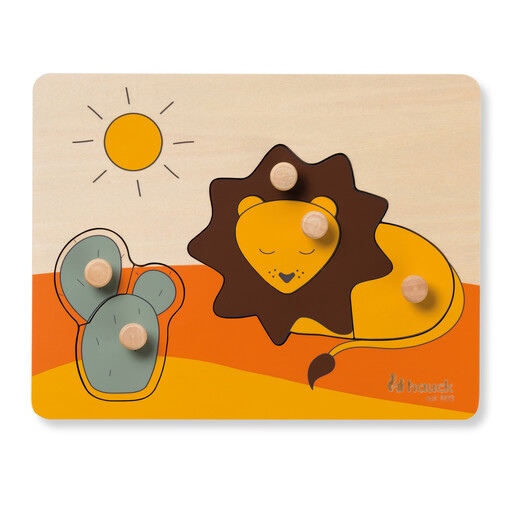
Why This Fits Their Persona: This puzzle is suitable for children who have already had some experience with simple peg puzzles. It introduces a slightly higher level of complexity, as multiple pieces form a single figure. It challenges the child not just to match a shape, but to combine related parts into a whole.
Although the figure consists of multiple pieces, the individual parts are still large and chunky enough to meet the safety requirements for a baby puzzle for 1-year-olds. The rounded edges and FSC wood ensure safe handling.
Fosters an early understanding of how to assemble shapes into a picture; made from FSC-certified wood with practical wooden knobs.
We have compiled a complete, up-to-date list of products that fully meet these strict selection criteria and German safety regulations.
Look for the CE mark and compliance with the EN 71 toy safety standard. Check the material for high-quality, splinter-free craftsmanship and a certification like FSC. The pieces must be large enough that they cannot be swallowed—a good rule of thumb is that they should not be able to fit through the inner tube of an empty toilet paper roll.
A cloth lightly dampened with water is usually sufficient for cleaning. Do not use harsh cleaning agents or disinfectant sprays, as they can damage the paint and the wood. The toy should never be submerged or soaked in water, as the wood can swell. It should be dried immediately after wiping.
A peg puzzle with knobs is generally suitable from around 12 months of age. The knobs support the development of the pincer grasp, an important fine motor skill. It is crucial that the knobs are large, securely attached, and easy for a small child's hand to grip.