
Lieferung heute & morgen

Qualitätsgarantie

Willkommens-Angebote freischalten: KOSTENLOSE Lieferung | Bis zu 80 % RABATT | Kostenlose 30-Tage-JoyPlus-Testphase
App herunterladen
Choosing the first puzzle for a toddler is an important decision. A well-chosen wooden puzzle for ages 1+ is more than just a toy; it's a fundamental tool for early childhood development. However, the market is flooded with products of widely varying quality and educational value. Many parents invest in toys that quickly prove to be unsuitable or even unsafe. This guide will help you navigate common purchasing pitfalls and make an informed choice.
Before we dive into the selection criteria, it's important to understand the typical problems that lead to frustration for both child and parent.
To avoid the mistakes mentioned above, you should focus on three objective parameters when making your selection. These form the basis for a safe and enriching play experience.
The most crucial aspect of toys for toddlers is their safety. Pay attention to the following points:
For a child around one year of age, the ability to purposefully grasp and place objects is still developing. A first puzzle for a baby must take this into account.
A good wooden peg puzzle specifically promotes cognitive skills. It's not just about fitting a piece into a slot, but also about understanding relationships.
Based on the objective criteria above, we have identified several products suitable for different developmental stages and preferences.
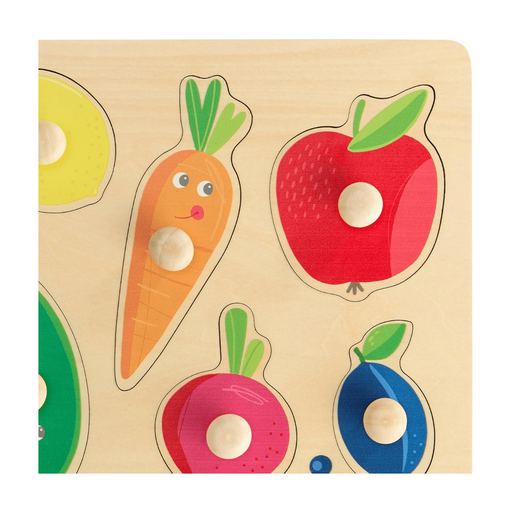
Why This Fits Their Persona: Ideal for toddlers who are just beginning to grasp objects with purpose. This puzzle focuses on the most fundamental skill: grasping and placing pieces using very large, ergonomic knobs.
As a product from Haba Wooden Toys, a manufacturer focused on safety, this puzzle uses non-toxic materials and a robust construction, according to the manufacturer's specifications. The extra-large knobs are securely attached, minimising the risk of them coming loose.
The combination of simple shapes (fruit) and clear colours makes it a perfect tool for first-time shape and colour learning. The large knobs are specially designed for the motor skills of children aged 12 months and up.
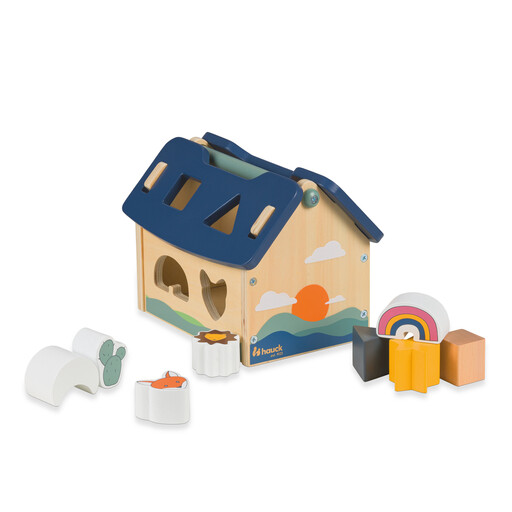
Why This Fits Their Persona: For parents seeking a versatile toy that goes beyond a simple peg puzzle. It combines shape sorting with a three-dimensional object, offering long-term play value.
According to the manufacturer, it uses FSC-certified wood, addressing concerns about materials. The blocks are chunky and large enough to not pose a choking hazard. The removable roof prevents frustration, as the pieces can be easily retrieved.
This is a multifunctional motor skills toy for ages 12 months and up: a shape sorter, peg toy, and storage box all in one. It promotes an understanding of spatial relationships and object permanence.
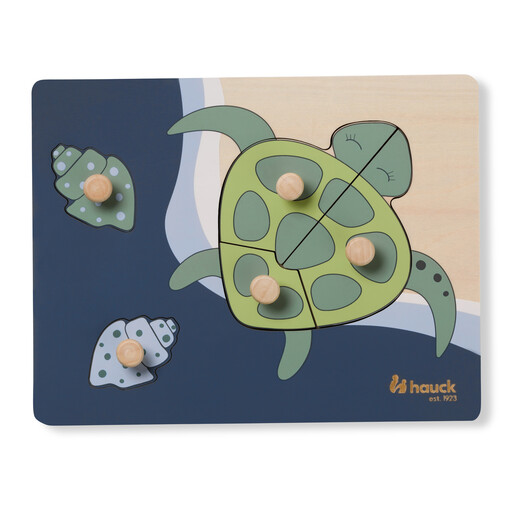
Why This Fits Their Persona: Perfect for fans of traditional peg puzzles who are looking for an engaging design and a slight increase in complexity over beginner puzzles.
The design, featuring rounded edges and the use of FSC-certified wood (according to the manufacturer), ensures a high degree of safety. The practical wooden knobs are child-friendly and robust.
In addition to shape recognition, it also promotes memory and concentration, as multiple pieces combine to form a complete picture (a turtle). The charming design encourages repeat play.
We have compiled a complete, up-to-date list of products that fully meet these strict selection criteria and German safety regulations.
Wood is a natural material and should not be submerged in water or cleaned in a dishwasher. To clean it, simply wiping the surface with a slightly damp cloth is usually sufficient. For heavier soiling, a mild soap solution can be used. It's important to wipe the wood dry immediately afterwards to prevent it from swelling.
A first puzzle for a baby is typically appropriate from around 12 months of age. At this point, most children can sit up stably, and their hand-eye coordination and pincer grasp are developing. Start with a simple grasping puzzle for toddlers with 3 to 5 pieces and large, easy-to-grip knobs.
Look for the CE mark, which confirms compliance with EU safety standards. The DIN EN 71 standard for toy safety is particularly important. Part 3 (EN 71-3) regulates the migration of certain elements and is crucial for the safety of paints. Certifications like FSC or PEFC for the wood are an additional mark of quality. Also, trust your senses: if the toy has a strong chemical smell, be cautious.