
Lieferung heute & morgen

Qualitätsgarantie

Willkommens-Angebote freischalten: KOSTENLOSE Lieferung | Bis zu 80 % RABATT | Kostenlose 30-Tage-JoyPlus-Testphase
App herunterladen
A wooden puzzle is more than just a pastime. It can be an educational toy that supports child development, a brain teaser for kids and adults that sharpens concentration, or simply a joyful creative project. However, the market is crowded, and not every product lives up to its promises. Misleading material claims or inappropriate age recommendations can quickly lead to a purchase you'll regret.
As your Joybuy Product Recommendation Officer, I'm here to help you identify the crucial criteria. This guide will show you how to avoid common pitfalls and select a wooden puzzle that truly serves its purpose.
Before you make a decision, it's important to understand the typical issues that can diminish the fun and even pose safety risks.
To avoid a bad purchase, focus on objective and verifiable features. The following three parameters are critical for quality, safety, and long-lasting enjoyment of the product.
Safety, especially with children's toys, is non-negotiable. Look for the following labels and properties:
The term wooden puzzle covers a wide range of products. The right choice depends heavily on the user's age and interests.
Consider what the puzzle will primarily be used for. Are you looking for a thoughtful gift idea for a birthday? Do you need a durable educational toy for everyday family life? Or do you want to build a sophisticated model as a decorative object for yourself? The occasion largely determines whether a simple peg puzzle or a complex 3D model is the right choice.
Here are three recommendations tailored to different user profiles and needs.
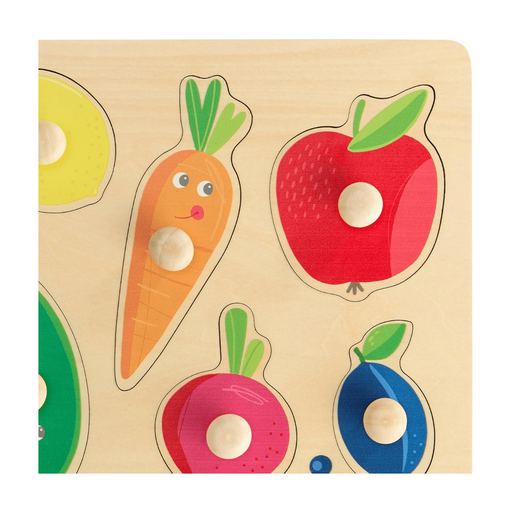
Why This Fits Their Persona: Specifically designed for toddlers aged 12 months and up. The large, sturdy wooden knobs are ideal for small hands and support the development of fine motor skills. The puzzle playfully introduces first colours and shapes.
Avoids the safety trap with high-quality wood craftsmanship and printing using a sustainable, non-toxic foil technique. The large pieces and secure knobs minimise the choking hazard.
Specifically promotes fine motor skills and hand-eye coordination. The clear age recommendation and simple design prevent the child from being overwhelmed.
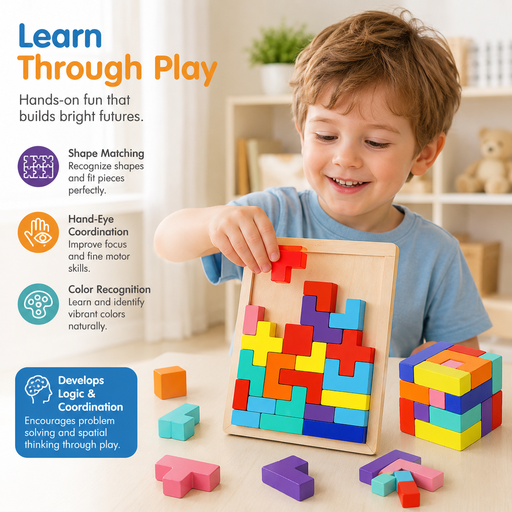
Why This Fits Their Persona: This is a versatile brain teaser for the whole family. It can be used as a simple building game for younger children or as a challenging logic puzzle for older kids and adults.
Sidesteps the trap of vague age recommendations. Its open-ended play concept adapts to the skill level of each player, thus avoiding under- or over-stimulation.
Promotes logical thinking, pattern recognition, and creativity. The longevity of the game principle ensures lasting value for many years.
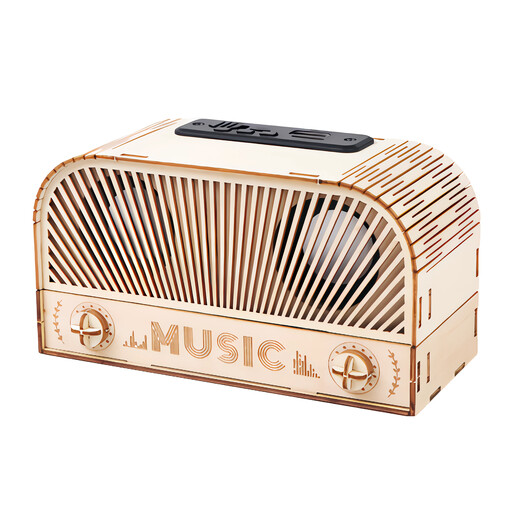
Why This Fits Their Persona: This product is ideal for adults who enjoy a hands-on challenge and have an affinity for technology. It's more than a puzzle—it's a construction project with a functional result.
Avoids the trap of non-functional designs by combining the construction process of a 3D puzzle with a tangible, useful end product: a working Bluetooth speaker.
A unique combination of craftsmanship, technology, and art. An exceptional gift idea that provides a sense of accomplishment and creates a collectible object.
We have compiled a complete, up-to-date list of products that fully meet these strict selection criteria and relevant safety regulations.
A slightly damp, soft cloth is usually sufficient for cleaning. Do not use harsh cleaning agents or immerse the puzzle in water, as the wood could swell and the paint could be damaged. Wipe it dry immediately after cleaning.
This depends heavily on the model's complexity. Simple kits with a few large pieces can be suitable for children from around 6 to 8 years old with supervision. Complex mechanical models with hundreds of parts, on the other hand, are generally aimed at teenagers and adults. Always check the manufacturer's age recommendation on the packaging.
Look for the CE mark as a basic requirement. The puzzle pieces must be large enough that they cannot be swallowed (a rule of thumb is a diameter of more than 3 cm). The paints used should be explicitly declared as saliva-resistant or non-toxic. Additionally, the wood surface must be smooth and free of splinters or sharp edges.