
Lieferung heute & morgen

Qualitätsgarantie

Willkommens-Angebote freischalten: KOSTENLOSE Lieferung | Bis zu 80 % RABATT | Kostenlose 30-Tage-JoyPlus-Testphase
App herunterladen
The search for a child's first puzzle is often more exciting than expected. The market offers a wealth of options, but not every wooden puzzle advertised as "educationally valuable" delivers on its promise. As a Joybuy Product Recommendation Officer, I see every day what truly matters and which details are often overlooked. Before you make a decision, you should know the typical pitfalls that lead to frustration instead of joy in the playroom.
A common problem is the discrepancy between the age recommendation and the actual ease of use. A puzzle might be labelled for children 12 months and up, but knobs that are too small or imprecisely cut shapes can quickly overwhelm little hands. Another pitfall is vague information about material safety. A note like "made of wood" is not enough. Without specific information on the varnishes, paints, and the origin of the wood, a residual risk remains. Finally, a poorly thought-out design, where the puzzle pieces cannot be clearly assigned to a shape, leads to confusion rather than learning success.
To find a suitable and durable wooden toy for your toddler, you should check three central aspects. These criteria will help you distinguish marketing promises from genuine product features.
The most important criterion for toys in this age group is health and safety. Since toddlers also explore their environment with their mouths, the material and paints must be completely safe.
A wooden puzzle for 1-year-olds should promote motor skills, not frustrate them. The design is crucial for this. To start, peg puzzles or wooden knob puzzles are the best choice.
A good motor skills toy for ages 1 and up combines fun with targeted development. a well-designed puzzle supports cognitive development on multiple levels.
Based on the criteria mentioned, we have identified some products that are suitable for different requirements.
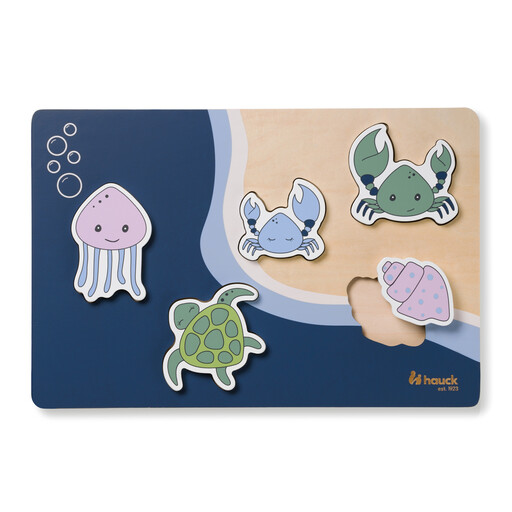
Why This Fits Their Persona: Ideal for parents looking for a straightforward, safe, and classic first puzzle. The focus is on fundamental motor skills and simple shape recognition without distracting complexity.
This peg puzzle avoids the trap of unclear materials by using FSC-certified wood and explicitly mentioning its rounded edges. The large, grippable pieces are designed for small hands and fit precisely into the cutouts.
Specifically promotes hand-eye coordination and animal recognition. The sustainable material and robust construction ensure long-lasting fun.
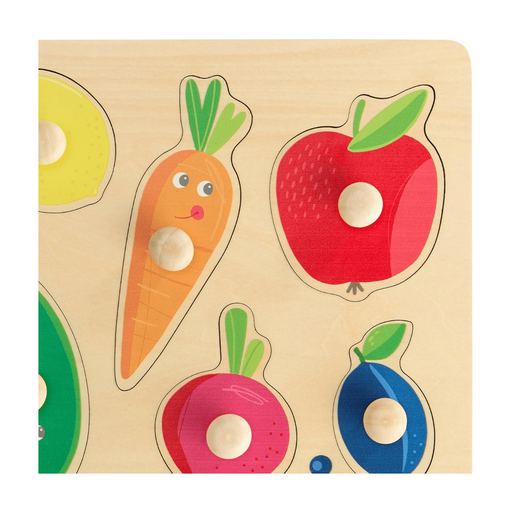
Why This Fits Their Persona: Perfect for parents seeking an educational toy that goes beyond pure motor skills. This puzzle playfully introduces the naming of colours and fruits, thereby also promoting language development.
This peg puzzle avoids the trap of a frustrating design with its extra-large, easy-to-grasp wooden knobs. The clear, colourful motifs are easy to match, and the high-quality wood meets high safety standards.
Combines the development of fine motor skills, hand-eye coordination, and shape recognition with the first steps in learning colours and words. Made from solid wood.
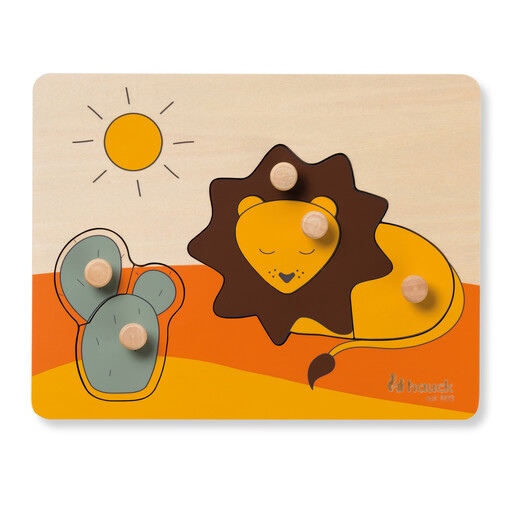
Why This Fits Their Persona: For buyers looking for a slight step up from the classic peg puzzle. Here, it's not just about matching one shape; multiple pieces combine to form an animal—an interesting variation on the shape puzzle.
This puzzle avoids the trap of being overwhelming through a clever design: although it consists of several pieces, the shapes are designed to be assembled logically. The practical wooden knobs and FSC-certified wood ensure safety and ease of handling.
In addition to shape recognition, it also promotes memory and the logical assembly of parts into a whole. The charming design and harmonious colours appeal to children.
We have compiled a complete, up-to-date list of products that fully meet these strict selection criteria and rigorous safety regulations.
Look for three specific features: First, a certification like FSC for the wood. Second, an explicit statement that saliva-resistant, water-based paints were used. Third, meticulous craftsmanship with completely rounded edges and securely attached parts to minimise the risk of injury and choking.
Use a slightly damp, soft cloth to wipe the surfaces. If necessary, a drop of mild soap can be added. Wipe it dry immediately afterwards. Never submerge the wooden toy completely in water or use harsh chemical cleaners, as this can damage the wood and the finish.
Most children show interest in such activities around the age of 12 months. Signs include your child purposefully grasping objects, trying to put things into containers, and developing a basic interest in shapes and colours. A simple baby peg puzzle with 3 to 5 pieces is a good starting point to observe your child's abilities without overwhelming them.