
Lieferung heute & morgen

Qualitätsgarantie

Willkommens-Angebote freischalten: KOSTENLOSE Lieferung | Bis zu 80 % RABATT | Kostenlose 30-Tage-JoyPlus-Testphase
App herunterladen
A wooden puzzle for babies aged 1+ should encourage little hands to grasp, match and explore. In practice, however, designs vary considerably when it comes to handles, material information and difficulty. A low price or an appealing animal design alone tells you little about whether a peg puzzle for babies will really suit everyday play.
Some puzzle pieces may look large enough in product photos, but what matters is how easy they are to handle. For children aged 12 months and over, flat pieces without suitably sized handles can often be difficult to pick up. A wooden peg puzzle with easy-to-reach handles makes it easier for little ones to remove and replace the pieces independently.
A puzzle may be approved for children aged 12 months and over, yet still be too complex for a child of that age. Multi-piece animal pictures, tight-fitting spaces or lots of similar shapes can make a puzzle more challenging. A simple peg puzzle with clear outlines is usually easier to follow as a first puzzle than one with lots of small components.
“Wooden toy” is not a precise description of the material. Look for clear information about the source of the wood, its surface finish and how to clean the toy. For an FSC-certified wooden toy, the FSC label indicates that the wood comes from certified sources. However, it does not replace checks for damage, splinters or loose small parts.
For a wooden puzzle for babies aged 12 months and over, the manufacturer’s age recommendation should match your child’s stage of development. Look for:
The age recommendation is not a promise of developmental benefits. Check that your child can grip the pieces safely and supervise them while they play.
When choosing sustainable baby toys, it’s worth checking the specific product details. Important points include:
The toy should only be used for its intended purpose. Before each use, check for cracks, splinters, loose handles and other damage. Damaged parts should be kept out of reach of toddlers.
A wooden animal puzzle combines matching shapes with naming animals. Picking up and replacing the pieces gives children the chance to practise grasping and hand–eye coordination. This can help develop fine motor skills through play, but it cannot guarantee any particular developmental outcome.
A Montessori puzzle for babies is often associated with independent learning. The label matters less than the design itself: your child should be able to understand the task, move the pieces independently and have plenty of time to explore.
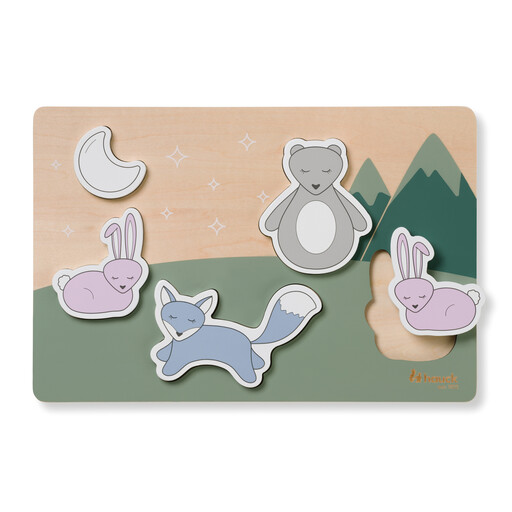
Why it suits this profile: This six-piece peg puzzle is designed as a manageable introduction to puzzles for children aged 12 months and over. The woodland animals offer a clear matching theme for short play sessions at home.
The product information gives an age recommendation of 12 months and over, and specifies FSC-certified wood and rounded edges. This makes some of the key buying criteria clear.
30 × 20,5 × 2 cm, FSC-certified wood and a woodland animal theme.
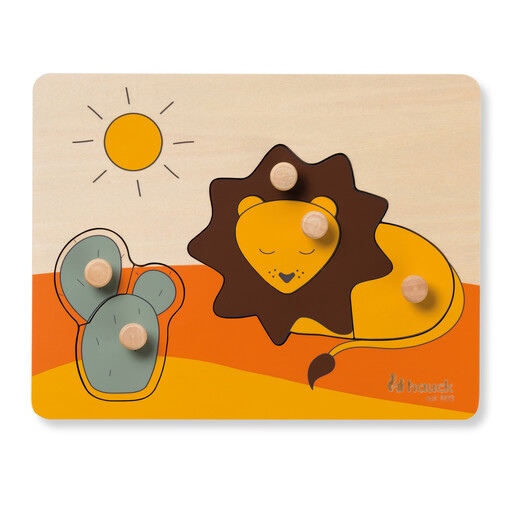
Why it suits this profile: The multi-piece lion shape adds an extra matching challenge for children who are ready for more than a simple peg puzzle.
The wooden knobs make the pieces easier to grip. The product information also specifies rounded edges, FSC-certified wood and an age recommendation of 12 months and over.
22 × 17 × 1 cm, a lion design and several pieces that form a figure when put together.
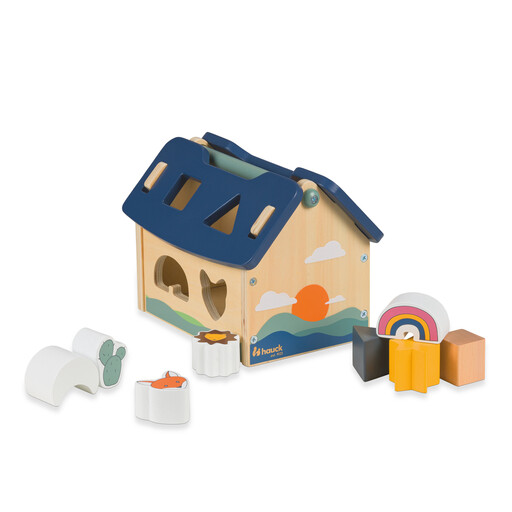
Why it suits this profile: This shape-sorting house is an alternative to a traditional animal puzzle. It’s a good fit for families looking to combine shapes, colours and storage in one toy.
The eight blocks can be stored inside the house, helping to keep loose pieces off the shelf. However, this does not replace checks for damage or adult supervision during play.
FSC-certified wood, eight shapes, a removable roof and a carrying handle.
We’ve put together a complete, regularly updated list of products that meet these strict selection criteria and the safety regulations in force in the EU.
Clean wooden puzzles with a dry, soft cloth. Depending on the manufacturer’s instructions, a slightly damp cloth may also be suitable. Do not soak the toy in water, clean it with harsh products or leave it exposed to high levels of moisture for long periods.
A useful routine is to:
A small number of clearly distinguishable pieces is often easier to manage when getting started. As well as the number of pieces, consider their size, the shape of the handles and how well they fit. A six-piece puzzle may be just as suitable as a simpler peg toy with fewer pieces, as long as the components are easy to grip.
How long it lasts depends on the materials, workmanship, how often it is used and how well it is cared for. FSC-certified wood tells you about the source of the material, but it does not guarantee a particular lifespan. Regular checks and dry storage help you spot wear and tear early.
A peg puzzle can involve grasping, matching and hand–eye coordination through play. It should be seen as an activity, not a therapeutic product. The key things are a suitable age recommendation, easy-to-grip pieces and adult supervision.