
Lieferung heute & morgen

Qualitätsgarantie

Willkommens-Angebote freischalten: KOSTENLOSE Lieferung | Bis zu 80 % RABATT | Kostenlose 30-Tage-JoyPlus-Testphase
App herunterladen
A wooden puzzle for babies aged 1+ can be a great activity for their first attempts at sorting and fitting pieces into place. However, products vary considerably in terms of knob size, number of pieces, materials and safety information. A low price or appealing animal design alone tells you little about whether a puzzle is right for your child’s stage of development.
A first learning puzzle for a toddler should be easy to manage. If a baby’s peg puzzle has lots of small pieces or shapes that look very similar, matching them independently can be unnecessarily difficult. For a first puzzle, choose a few clearly recognisable pictures and slots that are easy to tell apart.
Flat pieces without knobs can be harder for little hands to pick up. A puzzle with wooden knobs or larger areas to grip can make it easier to handle. Even so, parents and gift-givers should follow the safety guidance: a knob does not automatically make a piece suitable for unsupervised play.
Terms such as ‘natural’ or ‘sustainable’ only tell you so much without specific details. Check the materials used, the recommended age and the cleaning instructions. If you’re buying an FSC-certified wooden toy, the product description should explicitly state that the wood is FSC-certified. The FSC label relates to the origin of the wood; it does not replace checking the individual toy for damage.
A wooden puzzle for children aged 12 months and over should have a clear age recommendation. Also check:
Small parts need particular attention when it comes to children under three. Check the puzzle before each use and remove any damaged pieces from play.
The size of the base affects how steady the puzzle is on the floor or a table. Product dimensions such as 30 × 20 × 1.6 cm or 22 × 17 × 2 cm make it easier to compare options. The shape of the knobs also matters: rounded wooden knobs can make pieces easier to pick up, while very small or flat pieces require more finger control.
When choosing sustainable wooden toys, it’s helpful to look for information about the type of wood, certification and surface finish. A smooth surface with rounded edges reduces the risk of sharp corners, but it’s no substitute for regular checks. Wooden puzzles should generally be wiped clean with a slightly damp cloth. Soaking them in water or using harsh cleaning products can damage the wood and its finish.
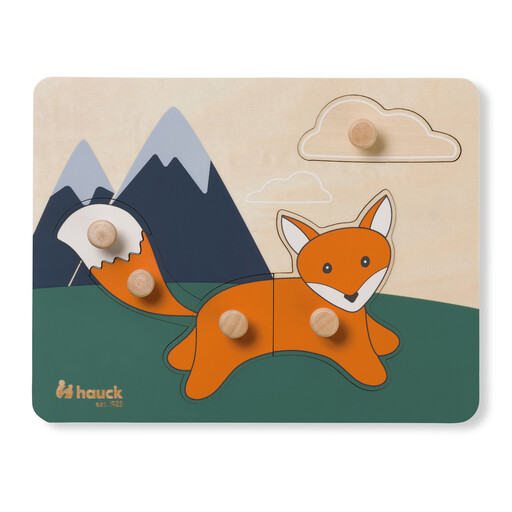
Why this product suits this profile: This compact wooden animal puzzle measures 22 × 17 × 2 cm and is recommended for children aged 12 months and over, according to the product details. The wooden knobs make the pieces easier to pick up and fit into place.
The clear age recommendation and described knob design help you avoid a first puzzle that’s too complex or difficult to grip.
FSC-certified wood, according to the product description; animal design with shapes to match, plus wooden knobs for easy gripping.
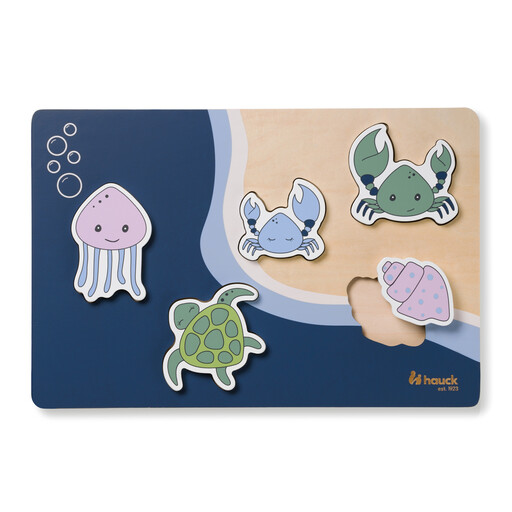
Why this product suits this profile: The larger base, measuring 30 × 20 × 1.6 cm, provides a clear playing area. The nautical design is a good choice for parents who want to combine matching shapes with naming animals.
Rounded edges, easy-to-grip pieces and a stated age recommendation of 12 months and over address some of the key things to look for.
FSC-certified wood, according to the manufacturer; wipe-clean surface and rounded design.
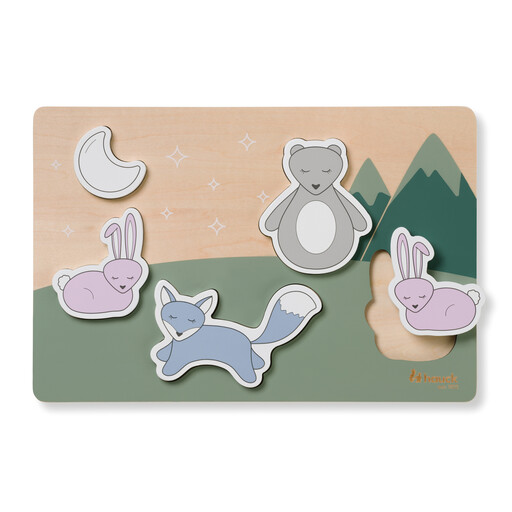
Why this product suits this profile: The woodland design is a good choice for families looking for a classic peg puzzle featuring animals. The base measures 30 × 20.5 × 2 cm and can be wiped clean, according to the manufacturer.
Information about age, materials, dimensions and checking for splinters makes it easier to carry out regular checks as part of family life.
FSC-certified wood, according to the product information; six pieces and rounded edges, as described.
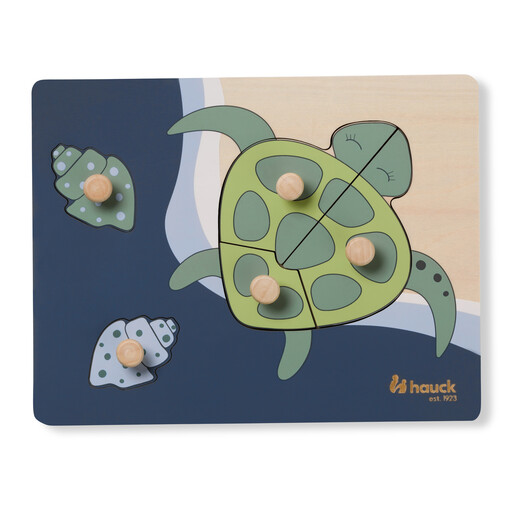
Why this product suits this profile: The turtle design combines animal recognition with shape-matching and sorting. The wooden knobs are designed for little hands that are learning to grasp objects deliberately.
The product description gives an age recommendation of 12 months and over, as well as rounded edges and easy-to-reach knobs.
FSC-certified wood, according to the supplier; combines an animal design with shape recognition and gripping practice.
We’ve put together a complete, regularly updated list of products that meet these strict selection criteria and the safety regulations in force in the EU.
A wooden puzzle designed to help develop fine motor skills shouldn’t be treated as a test of ability. Let your child have a go first, and name the pictures or colours if they show an interest. This encourages you to communicate together without promising a particular learning outcome.
Store the pieces somewhere dry and out of children’s reach when the puzzle isn’t in use. Wipe the surface with a soft, slightly damp cloth, and check the edges, knobs and joints regularly. If you find cracks, splinters or loose pieces, stop using the product.
There’s no set number of pieces that’s right for every child. To start with, a puzzle with a few clearly recognisable pieces and large areas to grip is usually easier to manage than one with lots of small elements. The key things to consider are the age recommendation, the shape of the pieces and your child’s individual stage of development.
A puzzle with wooden knobs can make it easier to pick up and fit the pieces into place. However, it must be specifically intended for your child’s age. Check the knobs regularly, and only let children play with small puzzle pieces under supervision.
How long it lasts depends on the materials, construction, care and how often it’s played with. Storing it somewhere dry, wiping it gently and checking for damage can help extend its useful life. You can’t determine how long a puzzle will last from the material alone.