
Lieferung heute & morgen

Qualitätsgarantie

Willkommens-Angebote freischalten: KOSTENLOSE Lieferung | Bis zu 80 % RABATT | Kostenlose 30-Tage-JoyPlus-Testphase
App herunterladen
A wooden puzzle for children can introduce numbers, shapes, colours and logical thinking through play. But for a toy to become part of family life or nursery activities, bright designs alone aren’t enough. The right-sized pieces, a clear layout and easy-to-understand safety information all matter.
An age recommendation alone doesn’t tell you whether a puzzle is right for a child. Small, loose pieces may not be suitable for younger children. So, also check:
A puzzle with larger pieces can be easier to get to grips with. For children under three, check particularly carefully whether the product is intended for their age group.
Phrases such as ‘educationally valuable’ or ‘boosts intelligence’ aren’t technical product specifications. A learning puzzle for children can encourage sorting, comparing and matching. However, it can’t guarantee a particular developmental benefit or outcome.
More informative details include:
Some products may be supplied in a random colour or design, as stated in the product title. If you’re looking for a particular animal design or colour combination as a gift, check this detail before you buy. The pack size matters too: each of the products featured here is described as 1 pack.
Product information for a wooden toy for children should be as specific as possible. In particular, check:
A CE mark isn’t an independent quality seal. It indicates that the manufacturer declares the product is intended to meet the applicable EU requirements. The information provided for each individual product is therefore important.
A number puzzle, shape puzzle or animal puzzle should suit the child’s stage of development. Large pieces that are easy to hold can make it easier to get started. With a shape-sorting puzzle, it’s also worth checking whether each piece fits into one specific space or whether there are several possible solutions.
Older pre-school children may enjoy more complex challenges, such as a wooden Tetris puzzle, where shapes are put together to make a pattern. A memory game for children, on the other hand, focuses more on recognising pictures, colours or pairs.
Wooden puzzles are often used on the floor or at a table, or played with in groups. A smooth surface that’s easy to reach makes cleaning simpler. Store the pieces somewhere clean and dry, and check them regularly for:
For the products mentioned, the manufacturer’s description recommends following the instructions and supervising children where appropriate for their age and the activity.
The products below differ in their play style and intended use. Before buying, continue to check the recommended age, piece size and safety information on the relevant product page.
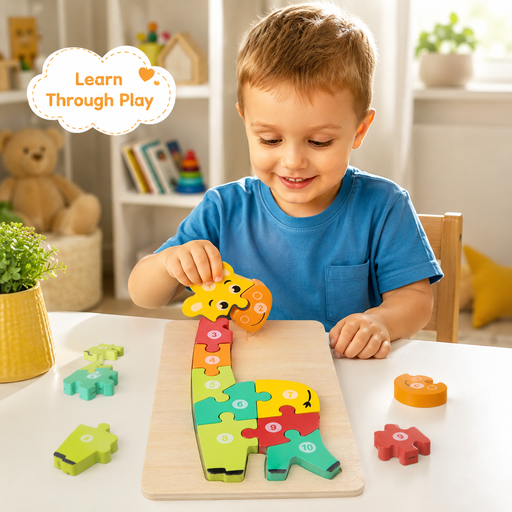
Why this product suits this profile: The giraffe design and number theme make this a good choice for families looking for a clearly laid-out number puzzle to enjoy together.
The product title specifically mentions larger pieces. This makes it easier to check the piece size rather than relying on the design alone.
A wooden puzzle with an animal design and number theme, supplied as one pack for family time or indoor play.
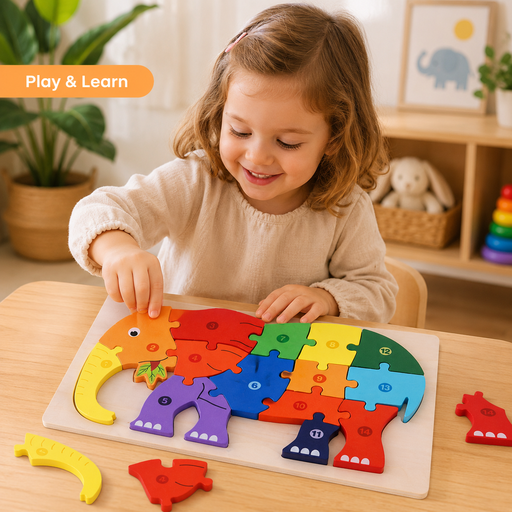
Why this product suits this profile: Combining colour and shape recognition, this wooden toy will appeal to shoppers looking for more than one type of matching activity.
The product description specifically mentions colour and shape recognition. This makes it clearer how the puzzle works than a broad, unsupported claim about developmental benefits.
An elephant design, with colour and shape matching, intended for family play.
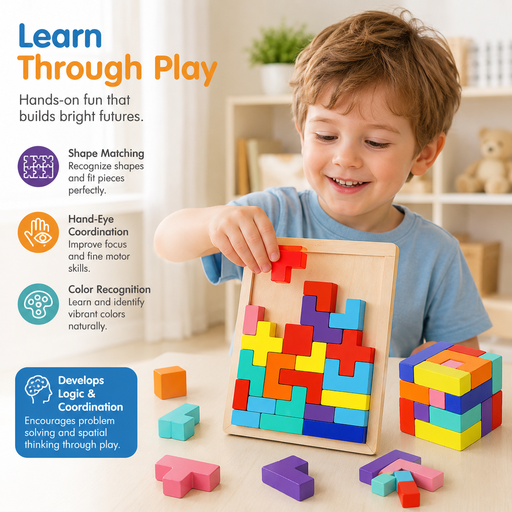
Why this product suits this profile: This wooden Tetris puzzle is designed for children who enjoy building patterns from several blocks, as well as settings with different groups of children using it.
The description explains that children put patterns together and use logical thinking as part of the game. This helps shoppers decide in advance whether the activity suits their needs.
Build patterns with wooden blocks, with a focus on logical thinking and the option of indoor play.
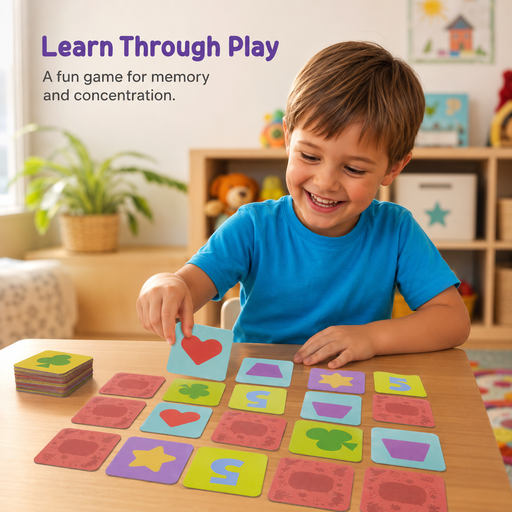
Why this product suits this profile: This memory game for children is made for playing together and can make a thoughtful gift for a range of occasions.
The product description specifically mentions memory practice and colour and shape recognition. This makes the intended activity clear.
A memory game with cards, colours and shapes, ideal for creative play, family game time and gifting.
We’ve put together a complete, regularly updated list of products that meet these strict selection criteria and the safety regulations applicable in the EU.
A gift for children should suit not only the occasion but also the child’s age and interests. Animal designs and number puzzles can be a fun indoor activity for Christmas or Halloween. Before buying, though, check that the child can already handle the pieces safely.
For nurseries and early years settings, it’s also worth considering:
Only describe a product as a learning toy for ages 3+ if that matches its official age recommendation. A puzzle can help develop fine motor skills as children pick up, turn and fit the pieces. This doesn’t guarantee a particular developmental outcome.
It depends on the size of the pieces, how the puzzle works and the manufacturer’s guidance. For children under three, take particular care with any small parts. For a learning toy recommended for ages 3+, parents should also check whether their child can hold and use the pieces safely. Supervision is a good idea for younger children or when they’re trying a new activity.
Its lifespan depends on the quality of the woodwork, how it’s used and how it’s stored. Keeping it dry, cleaning it carefully and checking for cracks or splinters can help it last longer. If it’s used frequently in a setting, regular visual checks are recommended.
Price alone won’t tell you whether a puzzle is right for a child. Instead, compare the material details, piece size, pack contents, how the puzzle works, age recommendation and safety information. A simple number puzzle may be enough to get started, while a wooden Tetris puzzle or memory game offers a different kind of challenge.